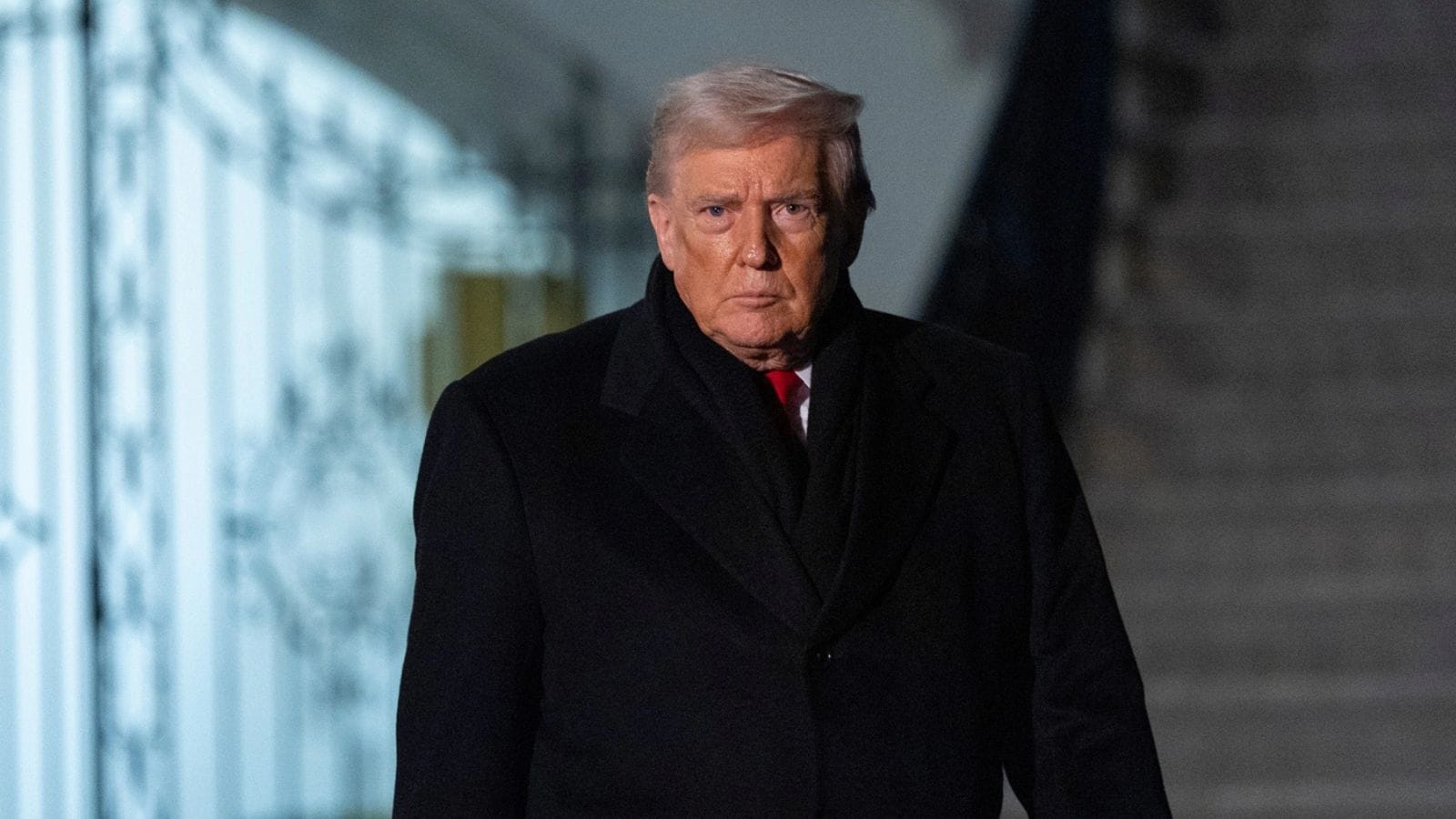
US President Donald Trump has projected a combative stance throughout the Iran war, but behind the scenes, he has been grappling with risk, uncertainty and the potential fallout of a prolonged conflict. He has grown increasingly frustrated about the absence of fast and favourable outcomes in West Asia, a region he once described as “blood and sand”. Trump has oscillated between other focus areas such as the ballroom, the midterm polls and golf. At one point, with minutes to his deadline failing which he had vowed to destroy the Iranian civilisation, he listened to officials discuss cryptocurrency and artificial intelligence policy, according to The Wall Street Journal.
The strain on the President became evident after a US jet was shot down in Iran, with two airmen missing. According to the report, Trump “screamed at aides for hours”, questioned allied support, and repeatedly referenced the failed 1979 hostage rescue under Jimmy Carter, which he had described as “what a mess.” However, in an interview to NBC, he attempted to play down the event’s impact, insisting on diplomatic efforts in spite of the escalation, saying “No, not at all. No, it’s war. We’re in war.”
While both airmen were eventually rescued, Trump quickly reverted to a hardline tone. In his Truth social post, he warned Iran to reopen the Strait of Hormuz, writing: “Open the… Strait… or you’ll be living in Hell.” The route carries roughly a fifth of global oil supplies, and its strategic importance could be understood from this very fact.
— Rapid Response 47 (@RapidResponse47) April 5, 2026
Despite the strong rhetoric, the Journal reports that Trump has shown hesitation in private. He resisted sending US troops to seize Kharg Island, a key Iranian oil export hub, over concerns that American forces would be “sitting ducks” and could face “unacceptably high” casualties, according to people familiar with the matter.
The conflict has already stretched beyond the six-week timeline Trump had initially suggested, with the Journal noting that the deadline has been “already missed”. The prolonged war has disrupted shipping routes and energy markets, with the Strait of Hormuz remaining at the centre of global economic concerns.
Even as fighting continues, diplomatic backchannels remain active. The Journal reported that US officials are “eyeing more talks in Pakistan”, while Pakistan has continued efforts to mediate between US and Iran, according to multiple reports. Iranian Foreign Ministry spokesperson Esmaeil Baghaei stated Monday that Pakistan is currently the “only official mediator” between Washington and Tehran.
Iran Recognizes Pakistan As Sole Official Mediator in Talks With US
Iranian Foreign Ministry spokesman Esmaeil Baqaei said Pakistan is currently the only official mediator in the diplomatic process pic.twitter.com/E6ViTaSN7G
— Tasnim News Agency (@Tasnimnews_EN) April 20, 2026
Trump’s approach has swung between escalation and negotiation. Several of his public threats, including warnings of further strikes, were described by officials as “improvisational” and “not part of a national security plan”, the Journal reported. Critics have argued that while there have been “astonishing military successes”, they do not necessarily add up to US’s victory in the war.
At the same time, Trump has remained focused on domestic implications. According to the Journal, he has been tracking polling data and market reactions closely, with advisers warning that the war could weigh on Republican prospects. He has also urged aides to “watch the markets”, reflecting concern over rising fuel prices and broader economic fallout.
The heavily litigated under-construction White House ballroom is also a cynosure and a dear project. When guests came to attend a meeting of Kennedy Center officials in March, Trump talked to some of them about the ballroom instead. “Out came drawings showing a large hole in the ground—he was amazed at all that could be built underneath,” the report says.