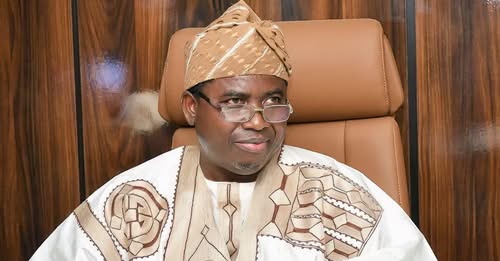
By Dr. John B. Mahwel
Firstly, I am a product of the Faculty of Law, University of Jos, having obtained my Diploma in Law, Bachelor of Laws (LL.B), Master of Laws (LL.M), and PhD all from the same institution. In that sense, I can rightly be described as “made in Jos.” I will forever remain grateful to the Faculty of Law and the University of Jos, my alma mater.
For the purpose of this piece, I must also express my appreciation to both Hon. Solomon Dalung and Prof. Joash Amupitan, SAN as well as to all present, former, and retired professors and lecturers of the Faculty of Law, University of Jos who taught me as a student. I am particularly proud that this Faculty has produced such distinguished individuals, alongside many other notable personalities who have contributed meaningfully to society at both local and international levels. Of the two individuals under discussion, one is a former Honourable Minister of the Federal Republic of Nigeria, while the other is the current Chairman of INEC. This is indeed a great honour and blessing to the Faculty.
In terms of their states of origin, Hon. Dalung is from Plateau State, while Prof. Amupitan is from Kogi State. I am also from Plateau State. However, my position in this matter is not influenced by sentiment but by my membership of the 2009 graduating class and my duty to set the record straight.
My Acquaintance with both Personalities:
I first met Prof. Amupitan as a Diploma student, when he taught me Law of Evidence, a course I later had the privilege of teaching alongside him for about thirteen years before his eventual appointment as INEC Chairman.
After completing my Diploma programme, I gained Direct Entry admission into the Faculty of Law. Upon resumption, the first person I encountered was Hon. Solomon Dalung, who was then my 200 Level Coordinator. At that time, I was not particularly close to Prof. Amupitan, as he did not teach me again until my 400 Level, when he handled Law of Evidence once more.
My First Encounter with Hon. Solomon Dalung in the classroom was quite striking. Unlike the conventional appearance of law lecturers in formal suits, he often appeared in full traditional attire and even brought water in a calabash rather than a bottle. While this initially surprised many students, we gradually became accustomed to his distinctive style.
His dressing reflected his teaching personality, authoritative, bold, and uniquely expressive, setting him apart from the conventional academic mould. Hon. Dalung did not remain long in academic service, as he later ventured into politics, contesting for a seat in the House of Representatives against Hon. Beni Lar. It later became known that her father, the late Solomon Lar, had been his political benefactor.
Following the unsuccessful bid, Hon. Dalung sought to return to the Faculty. In 2013, we both attended the interview, myself and others for regularization, and he for re-engagement. Although he was not reappointed at the time, destiny had greater plans for him, as he was later appointed a Minister of the Federal Republic of Nigeria just two years later.
A Notable Experience with Prof. Amupitan
Let me briefly recount an important experience with Prof. Amupitan before addressing the central issue of this piece. As a member of the 2009 graduating class, Law of Evidence was one of my best courses in the 400-level. At the time, I had no idea that I would later return to teach the same course.
Unknown to me, Prof. Amupitan kept records of students he considered outstanding. A few months after completing my NYSC in Ondo State, I received a call informing me that I had been appointed a Graduate Assistant in the Faculty of Law owing to my outstanding performance at the LL.B class. After receiving the letter, I proceeded to the Faculty of Law to report. Upon seeing me, Prof. Amupitan was delighted. He immediately opened his drawer and showed me a recommendation letter he had written to the Vice Chancellor in support of my employment, though he had not yet submitted it.
Remarkably, I had already been appointed.
He congratulated me and advised that the entry point for Law Lecturers is Assistant Lecturer and not Graduate Assistant, and he took immediate steps to correct the anomaly. He also indicated his intention to mentor me, particularly because of my performance in Law of Evidence. He did this out of goodwill, and it was for the system, not because of any personal or ethnic connection, but purely on merit.
On the Issue of Integrity
As a member of the 2009 graduating class, I consider it necessary to clarify the aspersion cast by Honourable Dalung on the integrity of Professor Amupitan. I will like to state outright that Professor Amupitan, having been a student under him and worked closely with him, is a man of integrity and one of the best Deans to have served in the Faculty of Law, University of Jos. The record is there for everyone to see. I think it will be unfair if I don’t come out to speak this gospel truth since Honourable Dalung said the students of the 2009 set are still alive and they could confirm from them. Professor Amupitan’s reputation speaks for him, and a lot of his colleagues and students are so unhappy about Hon Dalung’s attempt to rubbish his reputation for political reasons. This type of politicking frightens some of us.
To the best of my knowledge, there was indeed an issue relating to result processing during our time. At that period, examination scripts were manually marked, and results were prepared and forwarded to departmental secretaries for electronic processing. This system created gaps in the chain of custody, which were unfortunately exploited by some individuals to manipulate and upgrade students’ results, often without the knowledge of lecturers or Faculty authorities. These irregularities were largely traced to non-academic staff.
Professor Amupitan had recently been appointed as the Dean of the Faculty in 2009, and there were a series of complaints of result manipulation and several errors contained in the final year results that year. Importantly, it was the lecturers themselves who detected these discrepancies and reported to him. He then ordered an investigation. The result of the investigation confirmed that some students had indeed been awarded unmerited grades, and the Faculty decided to reflect their true grades. I recalled when the result was finally approved, Professor Amupitan was even out of the country, and the Faculty Board of Examiners was chaired (in his absence) by another respected Professor of law, who is also a Senior Advocate of Nigeria.
The minutes and proceedings of the Faculty Board Meeting where the result was approved will show clearly that the allegation was untrue. Consequently, corrective measures were implemented, and the affected results were reviewed and reverted to their original scores.