The country’s powerful state planner decreed Monday that the deal must be cancelled — four months after it was sealed. In doing so, it’s targeting a US tech juggernaut with little to no business operations in China and a startup that, while originally from China, had legally moved to Singapore.
The two companies have spent months operating on the assumption that the deal was wrapped up. The startup’s employees have already moved into Meta offices in Singapore, while its executives have joined the US firm’s high-profile AI team. Investors in Manus, including Tencent Holdings Ltd., ZhenFund and HongShan, have already received their payouts, according to people familiar with the matter.
One big question will be whether Beijing has the power to force the Manus deal’s reversal — and, if so, how. Meta quickly responded on Monday to the National Development and Reform Commission’s terse announcement by saying it had complied with applicable laws and hoped for an “appropriate resolution,” without elaborating.
Also Read: China’s industrial profits surge as reflation offsets cost shock
“The Manus incident shows the challenges of regulating Chinese-origin capital, talent and intellectual property once they go offshore,” said Stefanie Kam, assistant professor at the China Programme, Institute of Defense and Strategic Studies, Nanyang Technological University, Singapore. “The policy significance lies in the uncertainty the case exposes: What actually moves offshore when an AI company moves offshore?”
China’s regulators have long wielded power far beyond their counterparts in most other countries. They cracked down on Alibaba Group Holding Ltd. co-founder Jack Ma and forced the company’s finance arm, Ant Group Co., to pull its initial public offering just days ahead of a planned listing in 2020.
In one case with parallels to the Manus situation, Beijing forced Didi Global Inc. to unwind its 2021 IPO on the New York Stock Exchange because of regulatory concerns. The leading ride-hailing provider had to delist in the US and hasn’t been able to float its shares on another exchange since. Its market valuation is about $17 billion.
That Beijing is pressing Meta to reverse course on the Manus deal speaks to the depth of its concerns over the deal — and more broadly its control over development of AI by startups across the country. Domestic critics have argued the sale robbed China of valuable AI technology and handed it over to the country’s biggest geopolitical rival.
Still, it’s not clear whether the deal can be reversed in any meaningful way. The startup has already shared its code with Meta, and it’s been incorporated into the US company’s services, one of the people said. Forcing Manus’ founders and investors to return money to Meta risks accomplishing little beyond giving the American company access to critical technology for free.
Also Read: Chinese carmakers debut headlights that project movies and navigation cues
“The Manus decision is largely symbolic — unwinding the deal is impractical at this point since capital and technology transfers were complete,” said Laila Khawaja, research director of Gavekal Technologies.
The Chinese government has little leverage over Meta. Its primary services, including Facebook and Instagram, are already banned in the country. “Beijing’s remaining leverage lies in controlling the cross-border movement of Manus executives and potentially forcing their resignations from Meta,” Khawaja said.
Beijing had already begun to tighten scrutiny of other tech firms in the wake of the Manus deal. In recent weeks, the NDRC and other agencies have told key AI startups, including Moonshot AI and Stepfun, they should reject capital from US investors unless explicitly approved, Bloomberg News reported last week. Regulators have also decided on similar restrictions for ByteDance Ltd., which owns TikTok and is the most valuable startup in the country.
The Manus decision is the first time authorities have publicly announced a verdict using a 15-year-old foreign investment review mechanism, according to Liu Xu, a research fellow at the National Strategy Institute of Tsinghua University. It’s impossible to determine the impact on other M&A transactions involving foreign entities, but it’s clear now that deals related to advanced technologies are subject to close scrutiny, Liu said.
If a foreign acquisition targets Chinese companies in high-tech sectors such as AI, or firms with high valuations, those cases could come under strict security review, he said. “Also under a spotlight are deals that could result in loss of control over key patents, or technologies falling into foreign hands,” he said.
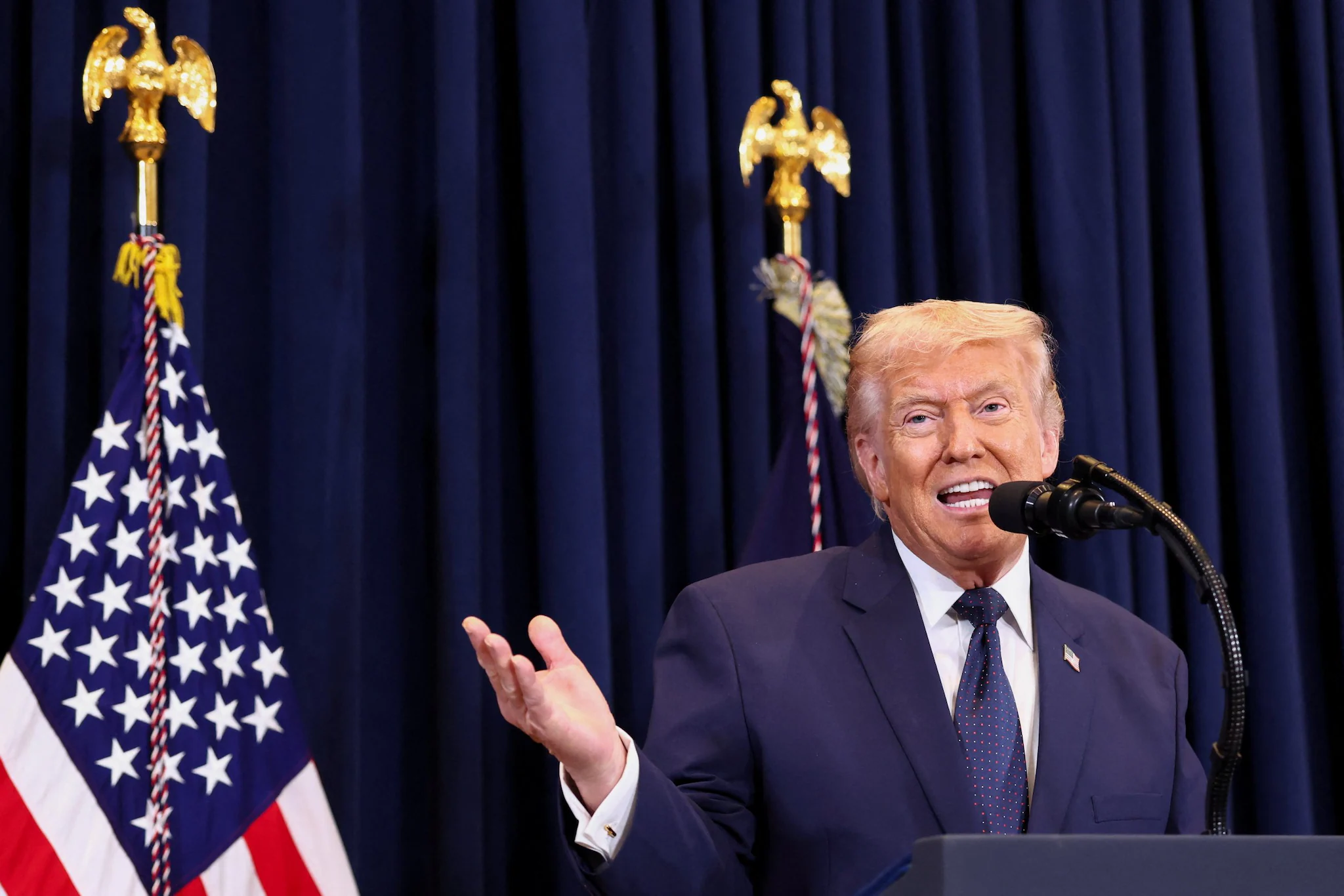
The Manus decision comes just weeks before US President Donald Trump and China’s Xi Jinping are scheduled to meet at a high-profile summit, where the two leaders are expected to discuss investments, access to technology, artificial intelligence and trade. It’s not clear whether Meta’s acquisition is critical enough to the US administration to become part of the talks.
Meta cut the deal for Manus as part of its effort to catch up with rivals such as Alphabet Inc.’s Google, OpenAI and Anthropic PBC. Manus was supposed to help Meta leapfrog into a leading position in the hot sphere of AI agents, or services that use artificial intelligence to execute tasks.
Also Read: Iran shares new proposal with US to reopen Strait of Hormuz, delay nuclear talks
AI agents are self-directed, self-driven systems that can carry out tasks such as drafting research notes, analysing stocks and planning entire travel schedules — without humans controlling the actions. They are now seen as key to making AI productive — as well as revenue-generating. Meta has been plowing billions into fine-tuning its AI agent arsenal.
The real impact of the NDRC decision may not be on Manus, but on other tech entrepreneurs in China. Many Chinese tech firms have either shifted their bases to Singapore or considered such a move as they seek to expand internationally, raise capital, recruit global staff and loosen the oversight of Communist Party regulators.
“This move serves as a stark warning to other Chinese startups and talents considering the “de-Chinaing” template to access overseas capital and markets,” said Khawaja of Gavekal Technologies. “Beijing supports global expansion but wants to closely monitor such moves to prevent talent loss and technology leakage — a new challenge as China ascends in various technology sectors.”