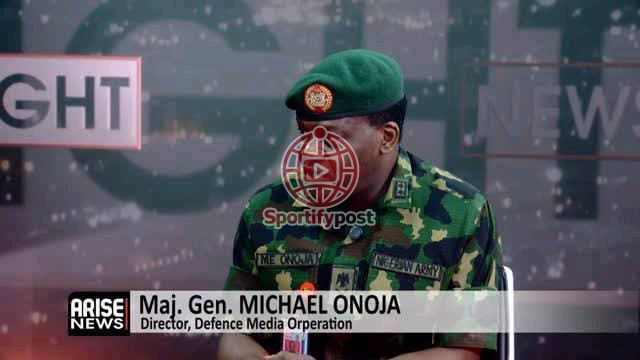
Major General Michael Onoja has clarified the role played by the United States military in the recent operation that led to the death of notorious ISIS commander, Abu-Bilal Al-Minuki, in the Lake Chad region. The clarification comes amid growing public debate and concerns over alleged foreign military involvement in Nigeria’s counterterrorism operations.…....
According to statements shared by Vanguard on Sunday, May 17, 2026, the military spokesman explained that the operation was conducted entirely by Nigerian troops, while the United States only provided intelligence and technical assistance. His remarks were aimed at addressing widespread speculation that foreign soldiers directly participated in the mission.
The elimination of Abu-Bilal Al-Minuki had generated significant reactions across the country, especially after reports suggested that foreign intervention may have played a role in the operation. Several commentators questioned whether such involvement could undermine Nigeria’s sovereignty and independence in handling security matters.
Among those who voiced concern was Islamic cleric and former military officer, Sheikh Ahmad Gumi. He reportedly criticized the idea of foreign military participation in Nigeria’s internal security affairs, arguing that the presence of foreign fighters on Nigerian soil would be unacceptable.
However, Major General Onoja dismissed claims that foreign troops took part in combat operations. He emphasized that Nigerian forces independently carried out the mission on the ground, while foreign support was limited to intelligence gathering and surveillance assistance.
“There were no foreign boots on the ground during this operation. What we received were intelligence, surveillance, reconnaissance support and other force enablers,” he stated.
The clarification has reignited discussions about the nature of military cooperation between Nigeria and the United States in the ongoing fight against terrorism in West Africa. While some analysts believe international intelligence sharing is necessary to combat increasingly sophisticated terrorist networks, others continue to express concerns about the extent of foreign involvement in regional security operations.
The Lake Chad region has remained a major hotspot for insurgent activities for several years, with security agencies across West Africa intensifying efforts to dismantle terrorist groups operating within the area. Nigerian authorities have repeatedly maintained that collaboration with international partners is focused on strengthening intelligence and operational capabilities rather than allowing direct foreign combat participation.