As the US and Iran struggle to strike a deal to end the ongoing war in the Middle East, American President Donald Trump has on multiple occasions warned that the oil infrastructure there is waiting to explode due to the piling up of crude oil following the blockade in the Strait of Hormuz.
In April, Trump said, “If they don’t get their oil moving, their whole oil infrastructure is going to explode. You know what that means? Because they have no place to store it and because they have no place to store it, if they have to stop it … something happens underground that essentially renders it in very poor shape and you never recover fully.”
Soon after, in an interview with Fox News, he reiterated his warning: “When you have, you know, lines of vast amounts of oil pouring through your system, if for any reason that line is closed because you can’t continue to put it into containers or ships, which has happened to them, what happens is that line explodes from within, both mechanically and in the earth.”
On the Hugh Hewitt Show earlier this month, Trump repeated his claim: “You know, their oil, when you turn off the oil, underground, and the mechanical too, but underground has a tendency in like almost 100% of the cases, to literally explode and just destroy everything around it. And you can never get that oil again.”
So, can Iran’s oil depots really explode owing to the mounting pressure? Should this be a matter of concern for Iran?
Though Trump’s claim does have a factual basis, it won’t happen the way he is saying. Iran’s oil is not going to blow up on its own. Let us look at what is happening and what the risk is.
Oils piling up after Hormuz blockade
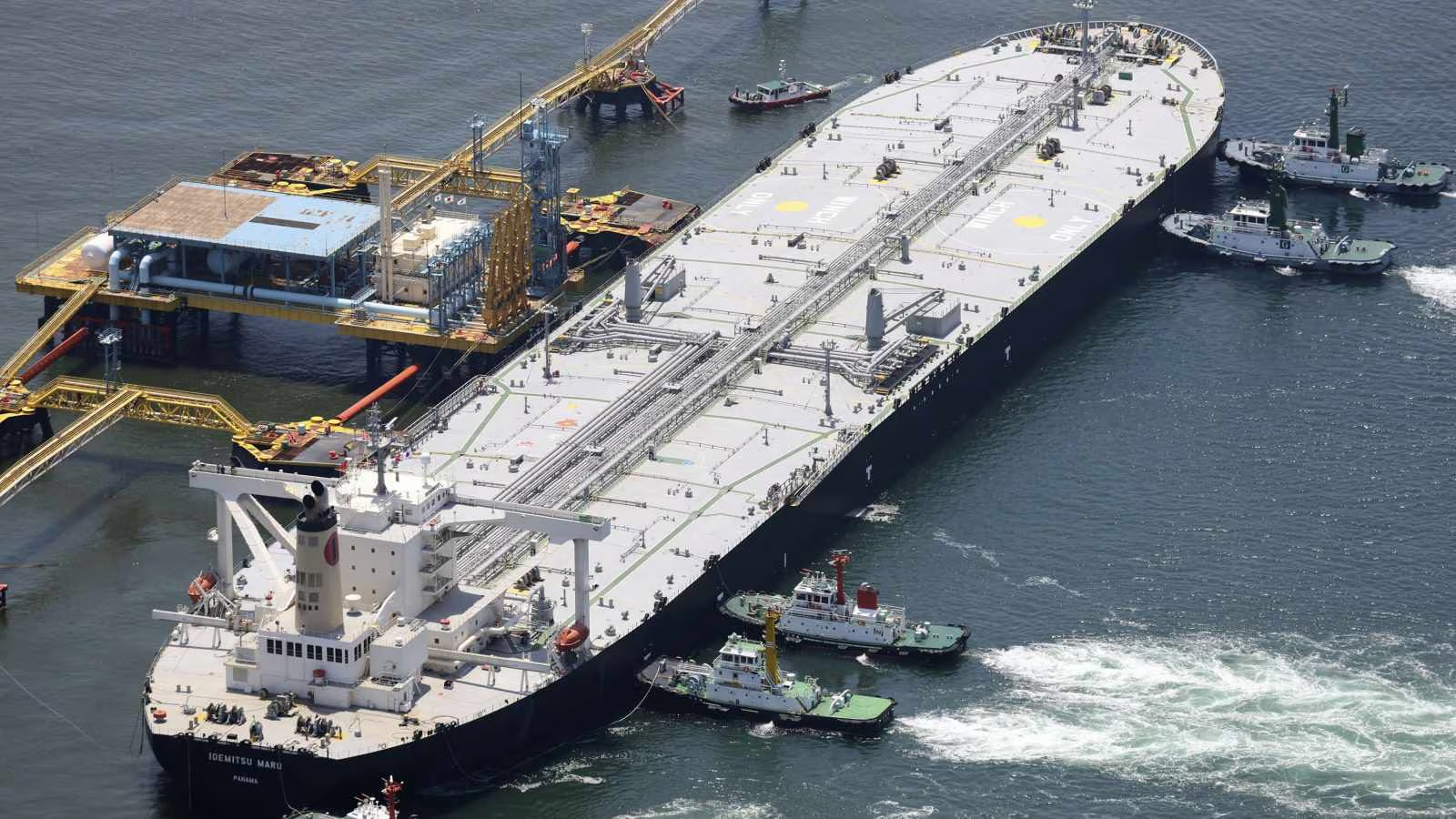
Shortly after the US-Israel joint attack on Iran in late February, Tehran effectively shut down the Strait of Hormuz, a strategically crucial waterway for the transit of global energy supplies. With no movement through the channel, the local energy producers soon ran out of storage spaces for the oil and gas that was piling up. Several neighbouring Middle Eastern wells were shut off.
Story continues below this ad
After the United States started blockading the strait, Iran, too, had to shut down its own wells this month.
What does shutting in of oil wells mean?
Shutting off oil wells can lead to an imbalance in the pressure underground, resulting in deformation of the structure underneath. These transformations can damage reservoirs, which in turn can also impact nearby wells.
Water can seep in, equipment can be damaged, sand and debris can settle into them, pumps and lift systems can get corroded easily, and concrete casing and tubing can get degraded. Any or all of these can reduce potential output, cause leaks, and result in the release of harmful gas.
In rare cases, these can cause explosions.
What do analysts say?
According to CNN, analysts said that there are hardly any chances of an explosion or any serious damage. “The US blockade of Iran’s oil exports will not cause catastrophic, or even very serious, damage to its upstream oil industry,” CNN quoted Robin Mills, a non-resident fellow at Columbia’s Center on Global Energy Policy, as saying. “If and when the blockade is relaxed, Iran will probably be able to resume production promptly.”
Story continues below this ad
Wells have remained shut for extended periods earlier, too. During the COVID-19 lockdown, the world ran out of places to store oil, and producers, including those in Iran, had shut in their wells without experiencing any significant damage. The oil industry is well equipped to handle such shutdowns.
— with inputs from CNN