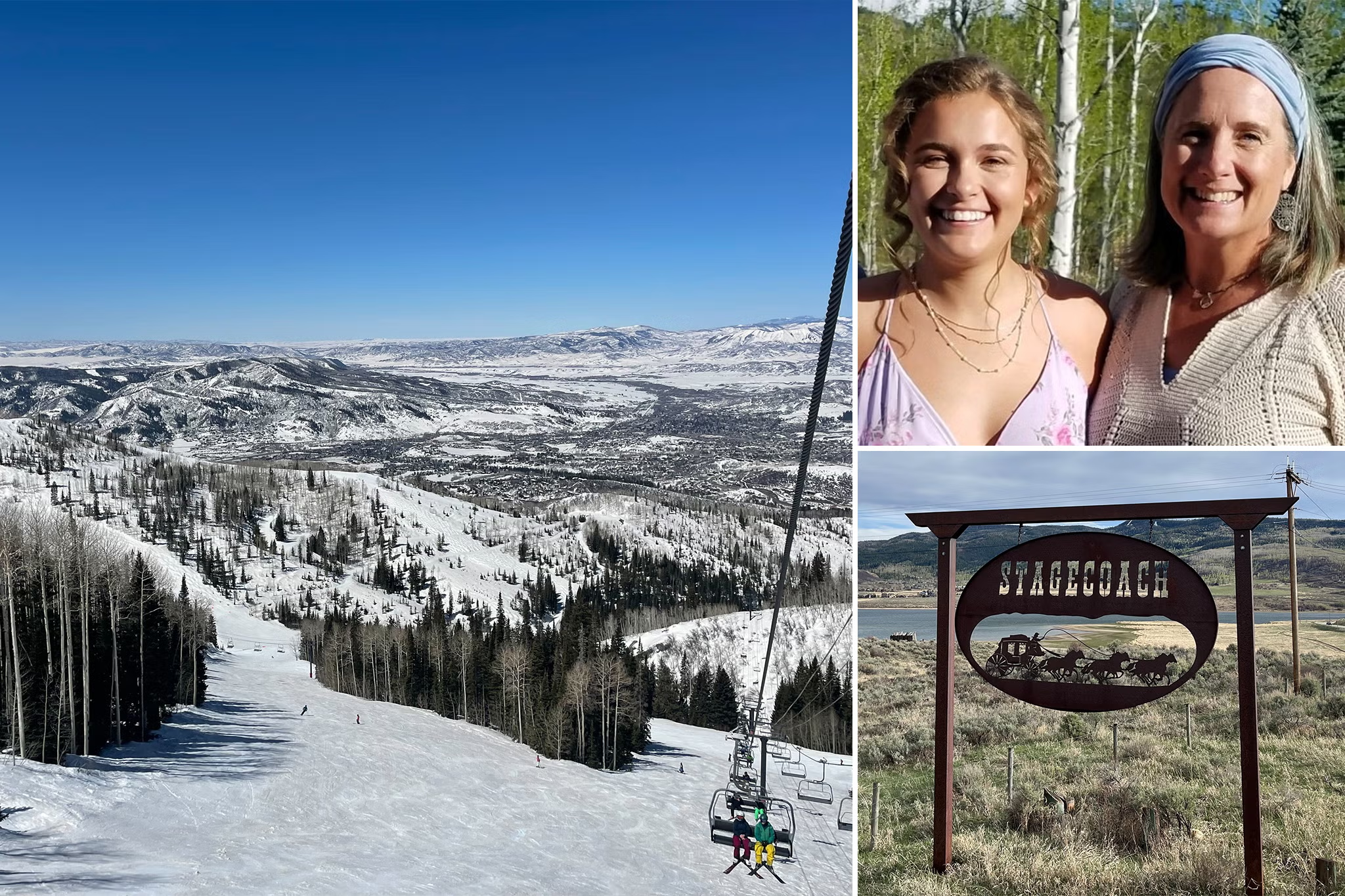
Michelle Petix raised her two daughters in the rural haven of Steamboat Springs, in northwestern Colorado, where they spent their childhoods skiing freely with friends or swimming in the river on balmy summer days.
“We lived off the grid, plowed our own road, built our home board by board,” Petix, 57, said of her family’s idyllic life in Routt County. “Tourism and ranching are truly a unique mixed vibe. We need a community to survive out in the rural areas.”
Tourism is the main driver of the local economy, powered by tens of thousands of visitors who come to “Ski Town USA” to hit the slopes, fly fish on local rivers, or attend the professional rodeo series held at the base of Colorado’s oldest public ski area, in operation since 1915.
Managing the influx of tourists while preserving the area’s ranching culture and history is a delicate balance. But Petix and others in the community fear that balance could soon be upended by a powerful real estate developer’s proposal to open a private luxury mountain resort for the ultra-rich just 20 miles down the road.
“I predict that after a lifetime of serving our community, we will be forced to move and drive out of here with empty mansions and a private ski resort in our rear-view mirror,” Petix, a non-profit consultant who moved to the town in the 1990s, told The Independent.
Steamboat Springs has an abundance of small-town charm. Every year since 1914, main street closes down to make way for a winter carnival, featuring competitions with local ranchers on horseback pulling kids behind on skis. Its small but mighty population of 13,000 has produced more winter Olympians than any other town in the U.S.
It was once a relatively affordable place to live, particularly compared to the glamorous, five-star ski resorts of Aspen and Vail, a few hours’ drive away.
But in recent years local teachers, firefighters, ranchers and families who have lived in the Steamboat area for decades have been priced out and affordable housing is in short supply. The pandemic is partly to blame after the area experienced an explosion of growth as more part-time residents took advantage of remote working and moved out of big cities.
Now, the median price of single-family home in Routt County is $1.4 million, a city council member told The Independent. It’s part of a broader trend of rising property prices in ski towns across western states, including Idaho’s Sun Valley, Jackson Hole in Wyoming, Utah’s Park City, and California’s Lake Tahoe.
The housing crisis in Steamboat Springs could deepen if Discovery Land Company—a globally renowned developer whose homes have been bought by the likes of Jeff Bezos, Mark Zuckerberg, Justin Timberlake, Tom Brady, and Bill Gates—is allowed to open its proposed Stagecoach Mountain Ranch, campaigners say.
The Independent spoke with dozens of residents who are divided over the ambitious project, as well as environmental groups, legal experts, and county officials. Those opposed fear the resort would change the fabric of the community forever, destroying its centuries old ranching culture, and becoming the latest wrecking ball to ways of life out West.
Stagecoach Mountain Ranch would consist of 613 luxury homes – 250 homes would have an average value of $8 million, local realtors estimated. The private 5,000-acre ski resort would have two gondolas, several communal ski mountain lodges with bars and restaurants, an equestrian center, spa, and indoor swimming pool. None of this, though, would be accessible to the locals unless they become members by purchasing one of the exclusive homes if Stagecoach is anything like Discovery’s Yellowstone Club in Big Sky, Montana.
“Our thinking is that we are not going to be open to the public,” Discovery’s founding partner Ed Divita said at a Steamboat community meeting in 2024. “We are not Alterra. We are not Vail.”
While some residents support the plans and say the new resort will create revenue, jobs, and contribute towards improved roads, a new cell tower and upgrades to water and sewage plants, others are fiercely opposed.
“We will never be able to set foot there,” Petix’s 25-year-old daughter, Corey Petix, told The Independent. “It just does not reflect Colorado culture.”
“If history is any lesson for other Discovery Land projects, our valuations will sky rocket, and so will our tax bills,” Michelle Petix added. She believes that what could unfold in Steamboat Springs is “the Billionaire Wilderness effect happening in real time” that she fears will “destroy” the community.
Petix was referring Yale professor Justin Farrell’s book exploring the extreme wealth divide in the West, and featuring the Yellowstone Club, often cited by people in these parts as a cautionary tale. The club was opened in 1999 and has been managed by Discovery since 2009.
Farrell infiltrated the Yellowstone Club in 2020 to study the habits of the ultra-rich, and how their relationship with nature has driven some of the worst income inequality in the country. Some 50 to 80 of the club’s members are billionaires with “gold-plated references”, for whom the $500,000 refundable deposit and $78,000 annual membership, according to Forbes, is simply pocket change.
Yellowstone Club is one of more than 30 private communities Discovery has developed and operates worldwide. Other U.S. locations include Lake Tahoe, Austin, Nashville, Las Vegas, Kaua’i, and the Hamptons. It also has sprawling complexes in Dubai, Italy, Scotland, Costa Rica, Mexico, and multiple sites in the Caribbean.
“One of the concerns I hear most often from community members is the loss of our small-town culture,” Steamboat Springs City Council member Gail Garey told The Independent. “We are facing a housing crisis for our workforce with the median price of $1.4 million for a single-family home in Routt County,” Garey said, adding that she was not speaking on behalf of the entire council. “Families and 25 to 44 years olds are leaving at an alarming rate.”
Discovery submitted its Stagecoach proposal to Routt County in December 2024. The company is reported to be in partnership with the Wittemyer family, who is understood to own most of the land where the proposed resort will be built.
In a statement to The Independent, Discovery said it was “deeply committed to strengthening” Routt County’s economy through its Stagecoach Mountain Ranch project, touting job opportunities, “expanding affordable housing,” investing in “essential infrastructure, and prioritizing sustainability.”
The Wittemyer Group did not respond to a request for comment.
Over the last several months public comments shared with the county, who are ultimately responsible for signing off the project, show the concerns are wide-ranging. But the lack of affordable housing is one of the most prominent, according to The Independent’s review of submissions.
“We don’t need a playground for the super rich,” wrote Mary Ann and John Duffey, who have lived in Routt County for 30 years.