We stand today at a deeply significant
crossroads. We are gathered in a season where
our spiritual realities are colliding directly with
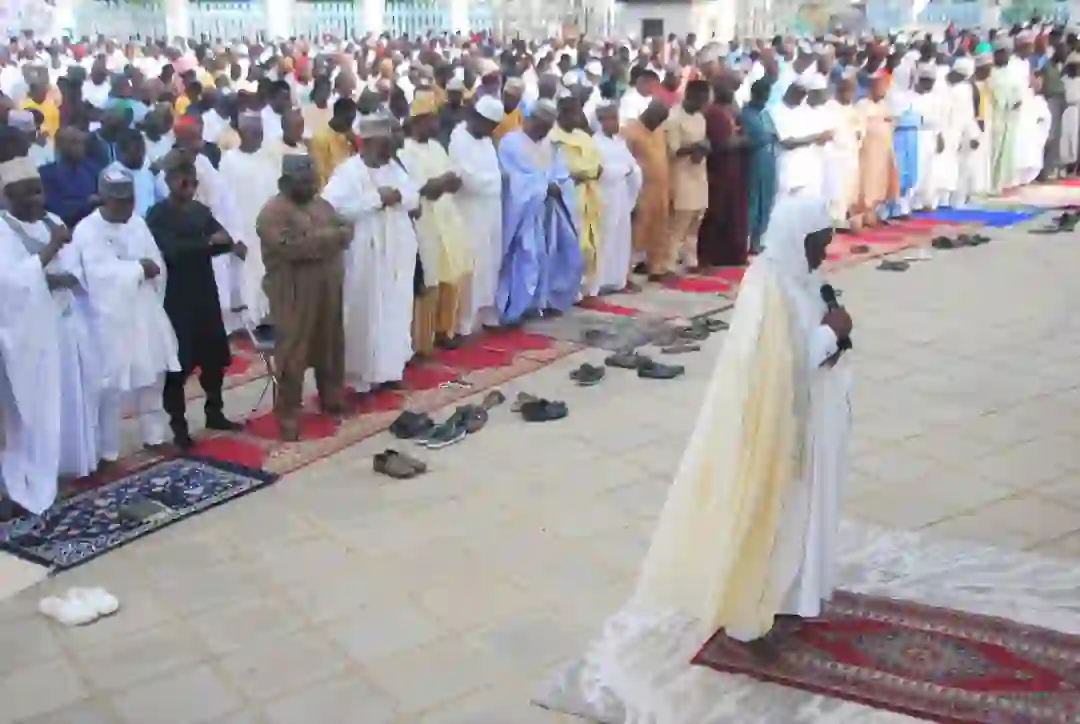
our civic responsibilities. We are fresh off the
sacred days of Eid el Adha—the Festival of
Sacrifice—and yet, everywhere you look, the
political posters are going up, the rallies are
gathering steam, and the air is thick with the
rhetoric of the Nigerian political season.
Many people ask, “What has faith got to do with
politics? Keep religion in the place of worship
and leave the state to the politicians.” But that is
a mistake. Faith is the moral anchor of any
society. If our faith does not inform ourcharacter, then our civic spaces will fall into
decay.
Today, let us look at the intersection of faith,
politics, and the ultimate test of righteous
leadership: the fulfillment of a promise.
The Lesson of Eid el Adha: A Covenant Sealed
in Sacrifice
To understand the weight of a promise, we must
look at the spiritual foundation that led to the
celebration of Eid el Adha. We remember the
timeless narrative of Prophet Ibrahim (Abraham)
and his son, Ismail.
Ibrahim was a man who waited decades for a
child. Yet, when tested by the Almighty to
sacrifice that which was dearest to him, he did
not waver. Why? Because Ibrahim understood
that a covenant with God is absolute. Look at
how Allah describes Prophet Ismail’s defining
trait in the Holy Qur’anWe are entering the political season. This is
the period when our national landscape
transforms into a marketplace of lofty
manifestos and grand promises.
Politicians are coming into our communities,
our palaces, and our places of worship. They are
smiling, shaking hands, distributing handouts,
and making absolute pronouncements:
“We will provide 24-hour electricity.”
“We will secure every inch of Nigerian soil.”
“We will revive the economy and create
millions of jobs.”
But as Nigerians, we have grown familiar with
a painful pattern. In our political space,
promises are often treated like campaign
sugar—sweet to the ear, but quickly dissolved
the moment the oath of office is taken. Once
the gates of the State House or the legislative
chambers slam shut, the voters who stood in
the scorching sun are too easily forgotten.
Let it be known clearly: our faith heavily judges
this behavior. In Islam, breaking a promise is not
just bad politics; it is a fundamental flaw in a
person’s faith. Allah swt says in the Holyoath of office, only to turn around and break
their promises to the poor, the vulnerable, and
the ordinary citizen, is walking a path of spiritual
destruction.
Redefining Leadership Through Sacrifice and
Accountability
True leadership is not about the privileges of the
convoy or the immunity of the office; it is about
the heavy burden of the people.
The lesson of Ibrahim teaches us that leadership
requires personal sacrifice for the public good. If
a politician is not willing to sacrifice their greed,
their comfort, and their personal ambitions for
the progress of Nigeria, they have no business
asking for our votes.
Allah places a divine command on all covenants,
reminding us that we will face an ultimate audit
for every word we give to the public
And fulfill [every] commitment.
Indeed, the
commitment will be questioned [on the Day of
Judgment].”
When a political leader fails to fulfill a promise,
they break a covenant, and our people pay with
their lives. When they fail to fix healthcare or
education while diverting public funds, they
break a covenant, and the future of our youth is
compromised. Leadership is a trust, and
accountability is inevitable.
Our Charge as People of Faith
How then must we act in this political season?
We must move from passive observers to active,
principled participants.
Demand Accountability, Not Handouts: Stop
selling the future of your children for
temporary political patronage. If a candidatecannot show a track record of integrity and
keeping small promises in their private or
past public life, do not trust them with the
grand ones.
Reject Divisiveness: They will try to divide us.
They will say, “Vote for me because I share
your faith,” or “Vote for me because I am
from your tribe.” But ask yourself: Does a
broken road care about religion? Does
inflation choose its victims by ethnicity?
Look for leaders who genuinely embody the
sacrificial spirit of Eid el Adha—those who care
about the collective advancement of Nigeria
over personal or sectional enrichment.
Conclusion: Let Your Word Be Your Bond
Dear brothers and sisters, we cannot survive on
empty rhetoric anymoreLet this political season be different. Let the
lessons of Eid el Adha ring clearly in our hearts.
Let us remember that God honors those who
fulfill their promises and stand by their word.
To our politicians, we say: Be careful of the
words you speak on the campaign podium, for
you will account for every single one of them—if
not to the citizens of this nation, then surely to
the Almighty Creator.
To the citizens, we say: Stand firm, protect your
dignity, and vote with an informed conscience.
May we see a Nigeria where leaders treat their
promises as sacred bonds, and may our
collective choices lead us into a land of peace,
equity, and genuine prosperity