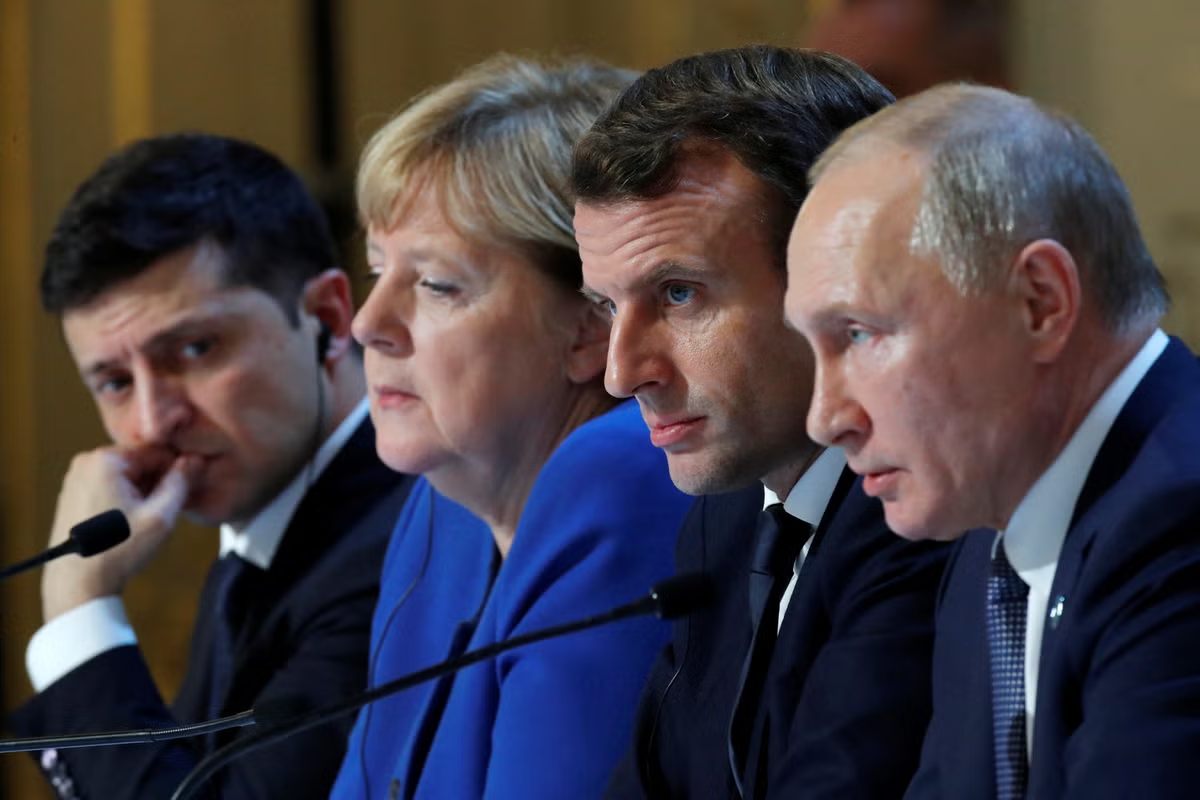
European leaders are considering sending former German chancellor Angela Merkel to represent the bloc in future talks with Vladimir Putin, according to a report.
EU foreign ministers will discuss potential candidates at a meeting in Cyprus next week after the Ukraine and the United States voiced their support for Europe to engage directly with Russia over the war, people briefed on the talks told the Financial Times.
The sources said other contenders to represent the bloc include former European Central Bank president Mario Draghi, Finnish president Alexander Stubb and his predecessor, Sauli Niinistö.
Vladimir Putin hinted earlier this month that he would be open to reopening lines of communication with Europe, ideally mediated by Gerhard Schröder, who was chancellor of Germany from 1998 to 2005. The EU’s Kaja Kallas promptly shot down the suggestion, suggesting he could not be impartial.
Merkel worked with Putin during her chancellorship and has since defended her record in pursuing diplomacy and closer ties with Russia.
While in power, she faced criticism from the US, Ukraine and eastern European allies over the Nord Stream 2 pipeline, which delivered natural gas from Russia to Germany.
After the full scale invasion of Ukraine, she said there was “no excuse” for Russia’s “brutal” attack and said sanctions over the 2014 annexation of Crimea “could have been stronger”.
However, on Monday she distanced herself from the idea that she would be the right person to lead talks with Russia now as she holds no power.
“I think the military support we’ve provided so far is absolutely the right thing to do,” she told WDR on Monday. “I also think it’s right that we do much more to create a deterrent effect beyond our support for Ukraine. What I regret is that, in my view, Europe is not making sufficient use of its diplomatic potential.”
With US-brokered talks between Russia and Ukraine at a standstill, and Donald Trump bogged down in Iran, the US administration has given Europe its blessing to reopen dialogue with Moscow, sources told the FT.
European Council president António Costa said earlier this month that the bloc was preparing for “potential” talks with Putin.
“They know it’s not working,” one told the newspaper of the current effort to end the war. The last round of talks fell apart in February just days before Trump joined Israel in attacking Iran, leaving diplomacy up in the air.
Trump has convened multiple rounds of talks with the warring sides to try to end the conflict, but no peace deal has emerged. Russia, which now occupies around a fifth of Ukraine, wants Kyiv to cede additional territory. Kyiv wants Russian troops to withdraw.
The warring sides agreed to a short, US-mediated ceasefire from May 9-11, coinciding with the anniversary of the Soviet victory over the Nazis in World War Two. Both sides said fighting continued along the frontline and accused each other of drone and artillery attacks.
Putin this month said he believed the war in Ukraine was coming to an end and that he would be willing to negotiate new security arrangements for Europe, with Schröder as his preferred partner.
But European Union foreign ministers were sceptical that Russia was ready to negotiate sincerely on peace and security for Europe, and dismissed any role for Schröder, who has worked for Russian state companies and cultivated a close relationship with Putin.
Germany’s Europe minister, Gunther Krichbaum, said Schröder did not have the credentials to be an “honest broker”.
“He is, and certainly has been, heavily influenced by Mr Putin,” Krichbaum said.
Ukrainian Foreign Minister Andrii Sybiha also rejected a role for Schroeder. But he said Europe could be involved in talks that would be “complementary” to US-led negotiations to end the war.