Suspected Ebola cases have been reported in a rebel-held area of eastern Democratic Republic of Congo’s South Kivu province, local officials confirmed on Thursday, hundreds of kilometres from the outbreak’s epicentre.
If confirmed, these cases would signal a worrying expansion of an outbreak that experts believe circulated for around two months in Ituri province – several hundred kilometres to the north – before being detected last week. The World Health Organisation declared the outbreak of the virus’ Bundibugyo strain, for which there is no vaccine, a public health emergency of international concern at the weekend.
The outbreak has been linked to 139 deaths and there were 600 suspected cases in eastern DRC’s Ituri and North Kivu provinces as of Wednesday, according to the WHO. Two cases have also been confirmed in neighboring Uganda.
Two suspected cases have been detected in South Kivu, regional health spokesperson Claude Bahizire said.
One died in Lwiro territory while the other is in isolation awaiting test results, he said.
Another local official, speaking on condition of anonymity, said the patient who died had recently come from Ituri.
Lwiro is controlled by the M23 rebel group, which seized control of large swathes of eastern DRC last year. An Ebola case was confirmed last week in M23-held Goma, the capital of neighbouring North Kivu province.
M23, which is backed by neighbouring Rwanda, said earlier this week that it was committed to working with international partners to contain the outbreak.
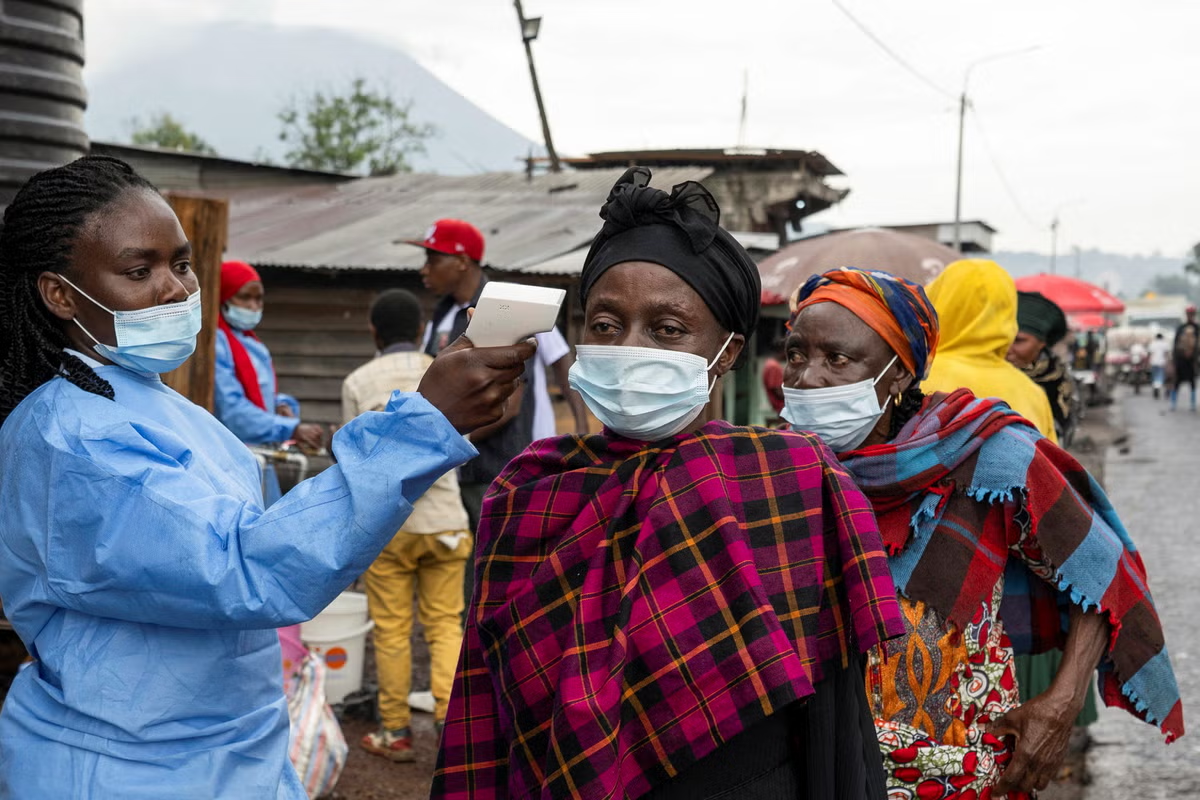
The response has been complicated by the virus’ presence in densely populated urban areas and widespread armed violence in eastern DRC.
A 2018-2020 outbreak in the region of the Zaire strain of Ebola was the second-deadliest on record, killing nearly 2,300 people. This time, first responders say they lack basic supplies, which some have attributed to foreign aid cuts by major international donors.
Bundibugyo virus disease (BVD) is one of the four species of orthoebolaviruse which causes Ebola, a viral haemorrhagic fever.
Bundibugyo is a less commonly encountered strain of Ebola, compared to the Zaire ebolavirus, and has caused just two previous outbreaks.
It was first detected in Uganda’s Bundibugyo district during a 2007-2008 outbreak that infected 149 people and killed 37 people. The second time was in 2012 in an outbreak in Isiro, Congo, where 57 cases and 29 deaths were reported.
The fatality rate is estimated to be between 30 per cent and 40 per cent.
As with other Ebola viruses, it is spread by contact with the blood or body fluids of a person who is infected with or has died from BVD. It is also spread by contact with contaminated objects (such as clothing, bedding, needles, and medical equipment), or by contact with animals, such as bats and nonhuman primates, that are infected with BVD.
Symptoms include fever, headache, muscle pain, weakness, diarrhea, vomiting, stomach pain, and unexplained bleeding or bruising (a late stage of illness).
There is no known vaccine or specific therapeutics against Bundibugyo virus, though early supportive care is lifesaving, according to the WHO.