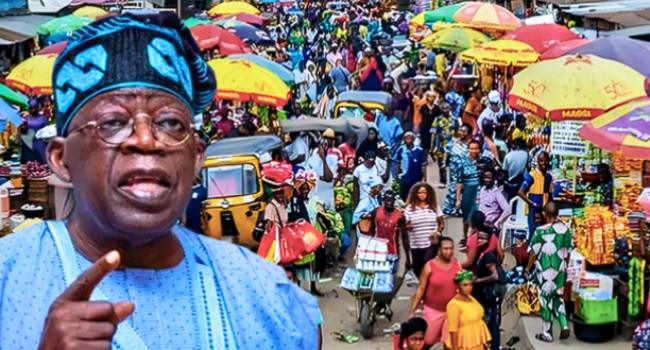
President Bola Ahmed Tinubu has said that the removal of fuel subsidy by his administration averted imminent national bankruptcy and laid the foundation for the gradual recovery of the economy.
This was revealed in a statement signed by the Special Adviser to the President on Information and Strategy. Bayo Onanuga on Friday, where Tinubu hosted state governors who visited him to celebrate Sallah and mark the third anniversary of his administration.
READ ALSO: Protest Rocks Ibadan Over Kidnapped Teachers, Schoolchildren
Governors in attendance included those of Lagos, Nasarawa, Jigawa, Sokoto, Kebbi, Taraba, Niger, Ekiti, Delta, Ondo, Edo, Adamawa, Benue, Enugu, Ogun and Kogi States, as well as the deputy governors of Borno and Kano.
Tinubu acknowledged that the decision to remove the subsidy was difficult and painful for many Nigerians, but maintained that it became necessary to prevent fiscal collapse and restore long-term economic stability.
According to him, years of subsidy payments had drained national resources and diverted investments away from critical sectors of the economy.
“It was challenging at the time, but we survived. We faced litigation and accusations. We survived them. Instead of bankruptcy, Nigeria has survived. The economy has recovered. It is growing. Agriculture is booming,” the President said.
He explained that ongoing reforms in infrastructure, agriculture, foreign exchange management, fiscal discipline and social investment were already beginning to restore investor confidence and improve economic prospects.
He also assured Nigerians that his administration would continue implementing people-oriented policies aimed at reducing hardship, creating jobs, strengthening food security and promoting inclusive growth.
Tinubu commended the governors for their cooperation and support, noting that stronger collaboration between the federal and state governments had contributed to economic stabilisation.
He said improved revenue allocation to states had enabled them to meet salary obligations, reduce dependence on borrowing and execute development projects.
“I’m glad governors are no longer borrowing from the federal government and asking for interventions and not knowing how to survive, how to pay salaries, no more. You kept the spirit, you kept the hope.”
”You persuaded our people to be patient and endure these three years of painful reform, during which we put the economy on a reset. Today, the benefits are showing,” he said.
The President added that macroeconomic indicators were improving, while infrastructure projects, including roads and housing developments, were being revived or completed.
He also expressed optimism about the agricultural sector, saying Nigeria could achieve food sovereignty if available land resources were effectively utilised.
Vice President Kashim Shettima, who was also in attendance, praised the President’s leadership, describing the subsidy removal as a bold reform that addressed long-standing challenges in the oil sector.
He said the administration had chosen not to delay difficult decisions but to confront structural problems head-on.
Kwara State Governor and Chairman of the Nigeria Governors’ Forum, Abdulrahman Abdulrazaq, said the policy had significantly increased revenue available to states, enabling them to clear salary and pension arrears and undertake infrastructure and social investment projects.
He added that states were now less dependent on borrowing and urged consideration of a new minimum wage benchmark of N100,000.
Imo State Governor and Chairman of the Progressive Governors Forum, Hope Uzodinma, also commended the President, saying the country had been stabilised and pulled back from the brink of collapse.
He said governors had assessed the administration’s performance and rated it highly for its reform efforts.
Earlier, Lagos State Governor Babajide Sanwo-Olu had welcomed his counterparts to Lagos for the Sallah celebration with the President and thanked them for their continued support for the administration.