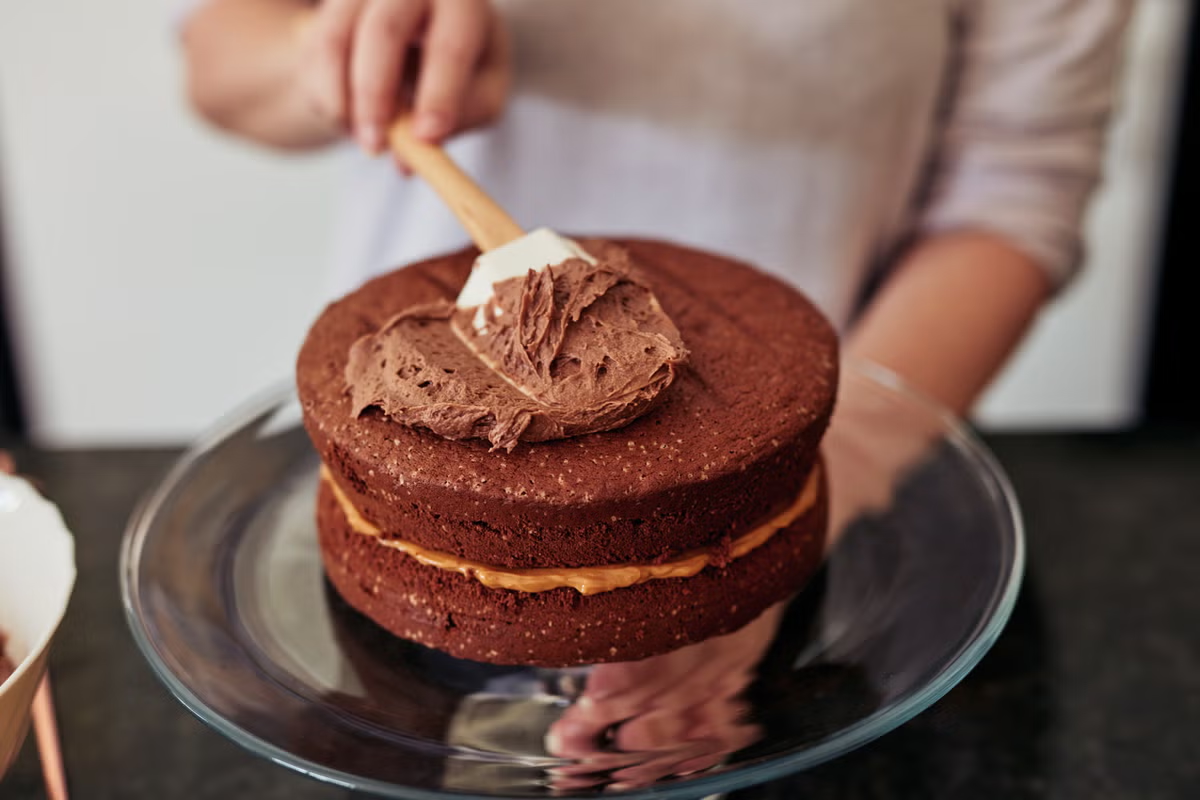
Have you ever baked or decorated a birthday cake?
Interest in elaborate cakes is booming, driven by social media trends and television shows such as Is It Cake?.
This means products such as edible glitter and colourful dyes are becoming increasingly common at children’s parties and other social events.
But a recent incident, where a young boy from Queensland was hospitalised after inhaling cake decorating powder, has raised concerns about the safety of these products.
And authorities have now announced a nationwide recall of the product in question.
“Cake dust” refers to many different products used to decorate cakes. This includes edible glitter, metallic-looking powders, coloured dusts that are brushed on to decorations, and liquid colours that are sprayed on to cakes using airbrushes.
These products are made of various substances. Some are a mixture of food colourings and sugar or starch. Some also contain pigments that give them a metallic or glitter-like appearance. These pigments may contain small amounts of aluminium, copper or zinc that, when eaten in large amounts, can be toxic to humans.
Many also contain amorphous silicon dioxide, which helps stop powders from clumping together. This is not to be confused with crystalline silica dust, which has been shown to cause a long-term lung disease called silicosis.
These substances aren’t inherently harmful, but can be dangerous if you are exposed to large amounts. However, how you consume them matters. For example, eating tiny amounts on the surface of a cake is very different to inhaling a concentrated cloud of fine powder.
This is because your lungs don’t process particles in the same way as your digestive system. Fine particles can travel deep into your airways, where your body then absorbs them. These particles may irritate lung tissue or trigger inflammation in both small and large airways. They may also block airways and reduce oxygen intake.
This can cause persistent coughing, wheezing and shortness of breath. If you have any of these symptoms, or notice your lips turning blue, visit the emergency department immediately.
Some cake decorating products are labelled “non-toxic” rather than “edible”. You might assume these terms are interchangeable, but they are not.
In the recent Queensland case, the metallic cake dust was reportedly labelled “non-toxic” and intended only “for use on removable parts” of cakes. However, it was sold next to other edible cake decorating products.
Unfortunately, this is not the first time such dusts have put people’s health at risk. Between 2018 and 2019, United States health authorities investigated multiple poisonings linked to metallic “luster dust” cake decorations. These products contained high levels of metals, including copper and zinc. The child from Queensland inhaled cake dust that also contained these metals.
Yes. This is because children have much smaller airways than adults, which can become blocked or irritated more easily. They also breathe more quickly relative to their body size, meaning they may inhale more potentially toxic substances at a time.
Children are often drawn to these metallic-looking cake products because they appear to be sparkly. They are also more likely to accidentally inhale cake dusts, for example while helping decorate cakes or blowing out candles.
In the Queensland case, the child inhaled about one tablespoon of gold cake dust before he started coughing, became unresponsive and ultimately spent days in an induced coma. It’s likely the inhaled dust entered the boy’s lungs, where it blocked his airways.
This case shows the importance of keeping toddlers away from anything they could swallow, or that may settle in their lungs.
It also underscores the need for more research and tighter regulation. Research should focus on what metals, pigments and fine particles are actually in cake decorating products. Companies must make labels clearer and more comprehensive, adding warnings – such as “avoid inhalation” or “keep away from children” – if appropriate. Regulators should also reconsider how these products are marketed and sold, particularly if they are commonly used around children.
Parents and keen bakers can still use cake decorating products safely, by taking some simple precautions.
Check the label
Always check the label on any cake decorating products, to ensure the product is edible and intended for food-related use.
Avoid imports
Some imported products may not meet local food safety standards, meaning their labels may be unclear or inaccurate. And it’s best to avoid buying products sold through overseas online marketplaces, as they are generally less regulated.
Use and store them with care