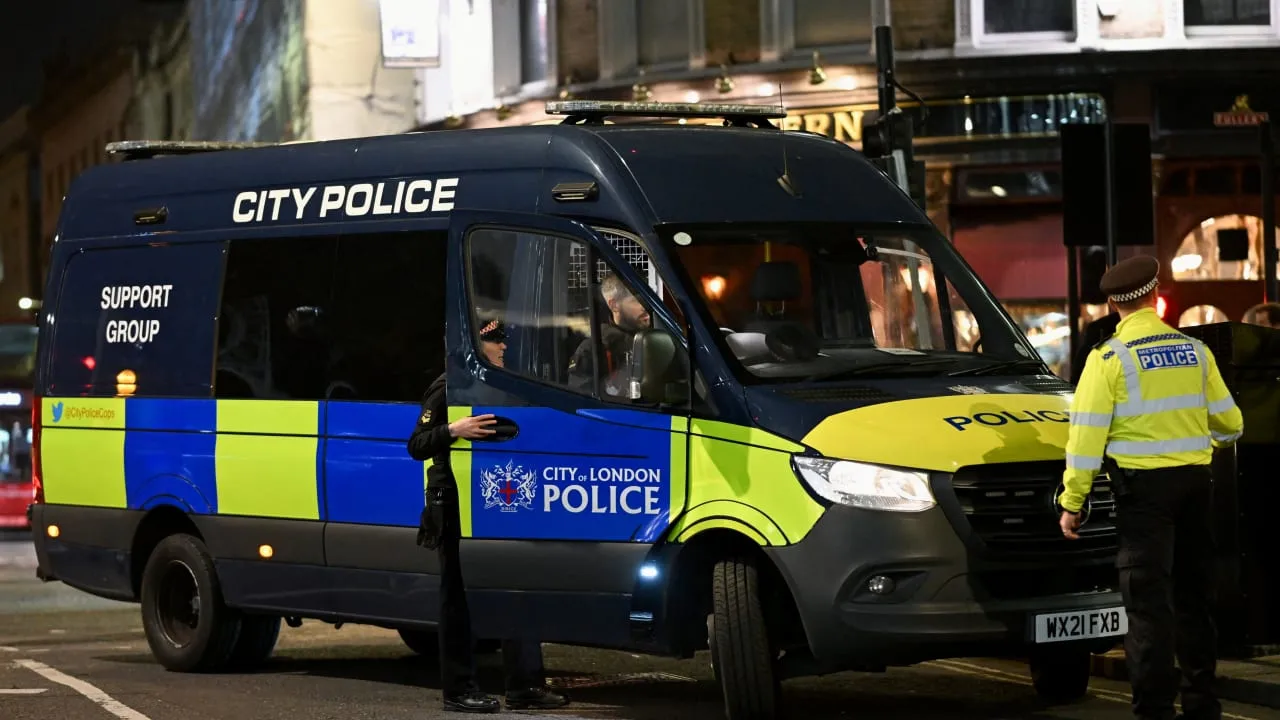
A team of Romanian men, acting as proxies for the Iranian government, carried out a knife attack on a journalist working for a Persian-language media organization in London, prosecutors told a British court on Monday.
Pouria Zaratifoukolaei, known as Pouria Zeraati, a British journalist of Iranian origin who works for Iran International, was stabbed in the leg three times as he was attacked near his home in Wimbledon, southwest London, in March 2024.
At the start of the trial of two of the three men accused of carrying out the stabbing, prosecutor Duncan Atkinson said they had targeted Zeraati, whose Saudi-funded TV employer is critical of Iran’s government and has been designated a terrorist organization by Tehran.
‘Deliberate, planned violence’
“This was no robbery, no fight that got out of control, it was deliberate, planned violence to achieve what it did, that is serious injury to its target,” Atkinson told London’s Woolwich Crown Court.
They had “committed a planned attack preceded by reconnaissance, and which was ordered by a third party acting on behalf of the Iranian state,” the prosecutor said.
Iran has denied any involvement in the incident.
Nandito Badea, 21, and George Stana, 25, both deny charges of wounding with intent and unlawful wounding. The third man accused of involvement, David Andrei, was arrested in Romania but is not involved in the trial.
Atkinson said Zeraati was an “obvious and readily identifiable target for violence to be inflicted by proxies” acting for Iran. He said posters had been put up in Tehran in November 2022 featuring pictures of journalists, including Zeraati, under the heading “Wanted: dead or alive.”
Islamic Republic turns to int’l proxies to carry out attacks
“In recent years, since 2005, the Islamic Republic has turned less to its own operatives and increasingly to use proxies such as criminal gangs to meet their threatened violence on their behalf,” Atkinson said.
“That has included attacks on persons in this country who have become targets of Iranian intimidation and, effectively, terror.”
Atkinson said Zeraati had been subject to “extensive reconnaissance,” and a year before, Stana had been arrested in the garden of his apartment with another man, in possession of latex gloves, scissors, and a mask.
On the day of the attack, Badea and Andrei confronted Zeraati as he crossed the street from his home to his car, the prosecutor said. Andrei held him, while Badea stabbed him at the top of his thigh before they fled to a getaway car driven by Stana, the prosecutor added.
The men, who were motivated by money, dumped the car and some clothing, and then took a taxi to Heathrow Airport from where they flew to Geneva, Atkinson said.
The trial, which is expected to last more than two weeks, continues.