Iran says some progress has been reached in talks with the US, but a deal “is not imminent”, as reported by The Guardian.
Speaking at a weekly briefing, foreign ministry spokesperson Esmail Baghaei said: “It is correct to say that we have reached a conclusion on a large portion of the issues… But to say that this means the signing of an agreement is imminent – no one can make such a claim.”
He pointed to what he called mixed messages from Washington and interference by Israel as reasons for delays.
Progress made, but key issues unresolved
Officials on both sides appear to agree that parts of a framework are in place. However, several issues remain unsettled.
Baghaei said any agreement must include a ceasefire in Lebanon and steps linked to shipping through the Strait of Hormuz, along with the lifting of US restrictions on Iranian ports.
Story continues below this ad
The United States, however, has indicated the focus would initially be on reopening the waterway and restarting nuclear negotiations.
US Secretary of State Marco Rubio said there was a “pretty solid thing on the table” and expressed hope a deal could still be reached, but added: “Either we will have a good deal or we will deal with this issue in another way.”
Strait of Hormuz central to talks
One proposal under discussion would reopen the Strait of Hormuz within 30 days of any ceasefire.
Iran would use that period to clear mines from the waterway, according to reports cited by The Guardian.
Baghaei said Iran and Oman were discussing how to manage the strait. He rejected claims Iran was trying to control it, saying any charges would be “fees for navigational services” rather than tolls.
Story continues below this ad
“We believe in the use of this international waterway for free trade and safe navigation,” he said. Iranian officials said internal divisions in the US were also affecting the talks.
Baghaei referred to “a wave of dismissals, contradictory statements, opposition from Congress and also opposition from parts of public opinion”.
The issue of frozen Iranian funds is also sensitive. Tehran is pushing for the release of billions of dollars held abroad, while critics in the US have warned against it.
Nuclear issue pushed to later stage
The proposed agreement does not immediately resolve key nuclear questions. Baghaei said the memorandum would only commit both sides to further talks within 60 days. Issues such as Iran’s stockpile of enriched uranium would be discussed later.
Story continues below this ad

Iran has said it is willing to reduce enrichment levels but will not send its uranium stockpile abroad. It has also suggested a temporary pause in enrichment, but not for as long as the US wants.
“Great deal or no deal”
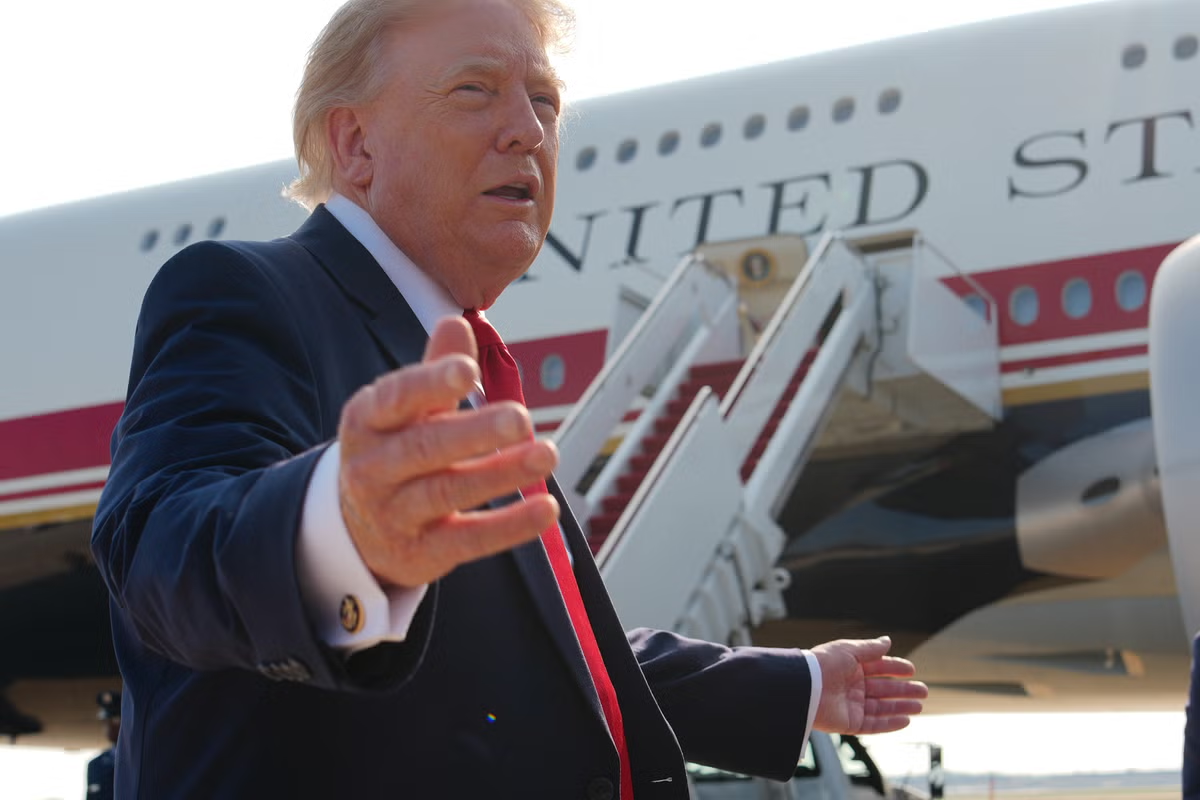
US President Donald Trump said the outcome would be decisive. “If I make a deal with Iran, it will be a good and proper one,” he said, adding it would be either “great and meaningful, or there will be no deal at all”.
He also called on several Middle Eastern countries to join the Abraham Accords, linking wider regional normalisation to the Iran talks.
However, the proposal has reportedly received little support from regional leaders.
Israel and regional concerns
Story continues below this ad
Iran accused Israel of trying to undermine the negotiations. Israeli opposition leader Yair Lapid described the emerging deal as “disturbing” and said Israel had limited influence over US decisions.
The deal, as it stands, does not address Iran’s missile programme or its support for regional groups.
Within Iran, some analysts see the talks as an attempt to manage tensions rather than resolve them.
There are also signs of domestic concern. Officials are considering restoring broader internet access after months of restrictions, amid worries about public reaction to rising prices and economic pressure.
At the same time, reports say executions in the country continue. Overall, while both sides acknowledge progress, the gap between expectations remains wide, and a final agreement does not appear close.