4 min readUpdated: Jun 10, 2026 01:47 PM IST
The war between Israel-US and Iran stands at a crucial juncture, with a fragile ceasefire being challenged by the renewed hostilities between the two sides, indulging in attacks and counterattacks.
Even as US President Donald Trump continues to maintain that he is very close to a “very, very good deal” with Iran, the escalation in recent days clouded hopes for an agreement to end the war.
The latest escalation
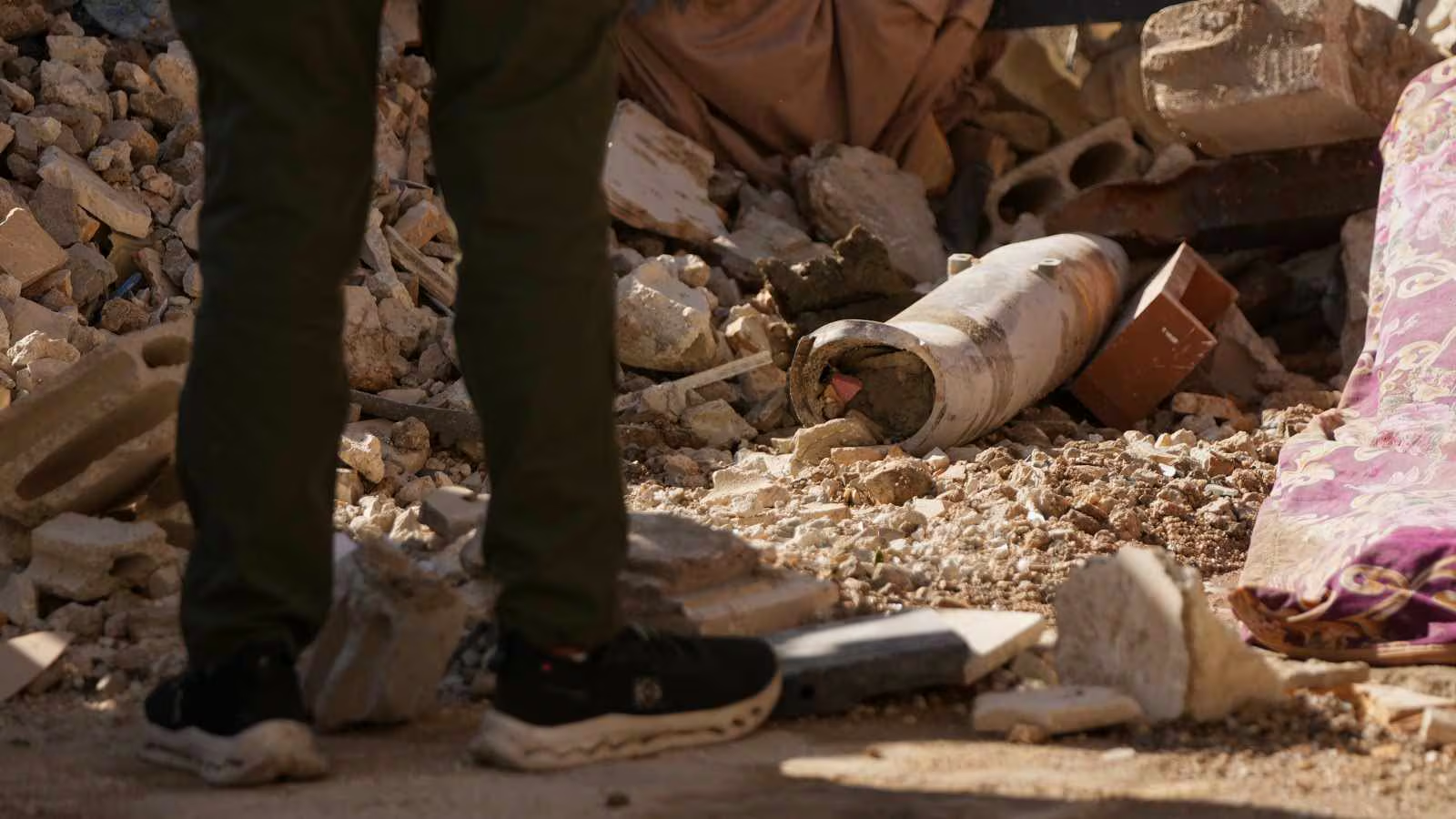
June 7: The tensions between the two sides spiralled upwards with Israel attacking Hezbollah targets in Beirut, setting off a retaliatory barrage of missiles from Iran. These triggered sirens in various locations across the country, the Israeli army said, adding that it “intercepted all missiles from Iran thus far”. Iran’s Revolutionary Guards said their ballistic missiles targeted Israel’s Ramat David airbase, while calling the operation a reply to the “widespread killing” in the Tyre and Nabatieh regions of Lebanon.
June 8: Even as Trump intervened to contain the escalation, the Israel Defense Forces (IDF) launched airstrikes targeting a dozen military targets in western and central Iran. According to Iranian state television, several loud bangs were heard in Isfahan, Karaj, Tabriz, and Tehran.
June 9: Meanwhile, a US Apache helicopter crashed while it was patrolling the Strait of Hormuz. Trump blamed it on Iran and threatened retaliation. Hours later, the US Central Command launched strikes in parts of southern Iran, including Bandar Abbas, Qeshm, and Sirik.
June 10: Iran responded by targeting the US bases in Bahrain, Kuwait, and Jordan. Both Bahrain and Kuwait sounded missile-alert sirens and activated their air defences to fight back. Jordan said it shot down at least five missiles that Iran fired at an air base hosting US forces.
Where does the ceasefire and a future deal stand now?
More than a month after the war broke out in the Middle East, a temporary ceasefire came into effect on April 8. However, this vulnerable ceasefire failed to materialise into a peace deal even as Trump continued his diplomatic back and forth, while predicting an approaching deal with Iran at least 38 times since March. However, no such deal ever materialised.
Story continues below this ad
Even as the latest widening of the conflict continues to erode chances of a truce to end the war, Trump, in his latest statement on Tuesday (June 9), expressed confidence in reaching a deal in the next two to three days. On reaching Washington from the NBA Finals game, Trump said: “We’re in the final throes of what will be a very, very good deal.”
Trump’s pattern of imminent-deal predictions sits against a backdrop of actual negotiations that have included three rounds since April 2025 (in Muscat, Geneva and Rome), followed by Pakistan-mediated Islamabad Talks on April 11-12, 2026.
How global markets are reacting
The war raging in the Middle East for over three months now has already pushed commodity prices higher and stoked inflation fears. Now, the fresh exchange of strikes between the US and Iran has further unsettled the markets
On Wednesday, Asian stocks plummeted while oil prices rose about 1 per cent after touching a seven-week low in the previous session. Brent futures on Wednesday gained 83 cents, or 0.9 per cent, to stand at $92.29 a barrel, while US West Texas Intermediate (WTI) crude increased 68 cents, or 0.8 per cent, to $88.97.
Story continues below this ad
Indian share markets opened flat on Wednesday. The Nifty 50 plummeted 0.04% to 23,233.95, while the BSE Sensex rose 0.09% to 73,988.27, news agency Reuters reported. Meanwhile, the rupee falls 15 paise, or 0.2 per cent, to 95.56 against the US dollar in early trade, as fresh exchange of strikes between the US and Iran led to a spike in crude oil prices and put pressure on the home currency. Meanwhile, the rupee fell 15 paise, or 0.2 per cent, to 95.56 against the US dollar in early trade, as fresh exchange of strikes between the US and Iran led to a spike in crude oil prices and put pressure on the home currency.
Stay updated with the latest – Click here to follow us on Instagram