… CDHR Slams ‘Disconnect’ Between Funds and Development
… Govs Asked To Publish Full Accounts
Daud Olatunji
Despite receiving a combined ₦429.85bn in federal allocations within the first three months of 2026, South-West states are facing mounting criticism over poor infrastructure, weak social services, and what observers describe as a troubling disconnect between public spending and citizens’ welfare.
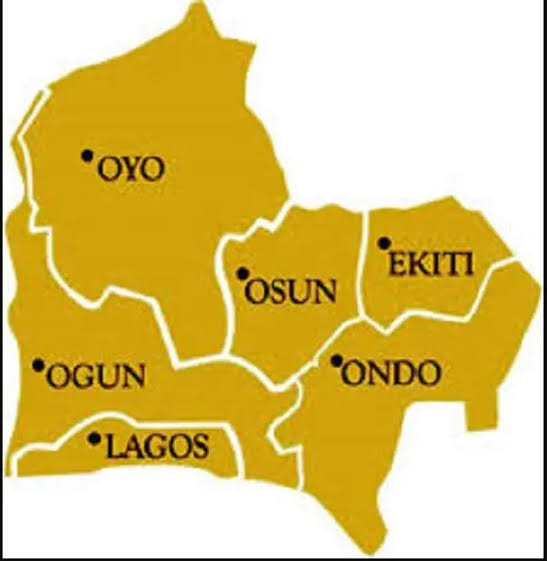
An investigation by civic-tech organisation, BudgIT, obtained by PLATFORM TIMES, showed that six states in the region shared a total of ₦429,850,129,156.84 between January and March 2026.
At the top of the chart is Lagos State, which received ₦200.21bn—nearly half of the entire allocation to the region—while Ekiti State recorded the lowest inflow with ₦30.49bn.
Other states include Oyo State (₦68.98bn), Ondo State (₦53.50bn), Osun State (₦40.54bn), and Ogun State (₦36.13bn).
…Wealth Without Visible Progress?
Ordinarily, such financial inflows are expected to translate into improved infrastructure, quality education, functional healthcare systems, and job creation. However, checks across the region reveal a starkly different reality.
Across major highways and inner roads in states like Ogun, Oyo, and Osun, commuters still battle with pothole-ridden roads described by residents as “death traps.”
Public schools, particularly in rural communities, continue to suffer from inadequate learning materials, overcrowded classrooms, and poor teacher welfare.
Healthcare facilities are not spared. Primary healthcare centres in several communities lack basic equipment, while residents increasingly rely on private hospitals amid rising costs.
Economic indicators further paint a grim picture. Data from the National Bureau of Statistics shows that unemployment and underemployment remain significant challenges in many South-West states, especially among youths, despite rising revenues.
…. Rising Revenue, Rising Debt
Beyond federal allocations, most South-West states have significantly increased their internally generated revenue (IGR) in recent years. Lagos, for instance, consistently ranks as Nigeria’s top IGR-generating state, pulling in hundreds of billions annually.
Yet, questions persist: why do states that receive huge allocations and generate substantial IGR continue to borrow heavily?
Debt profiles released by the Debt Management Office indicate that several states in the region are grappling with rising domestic and external debts, raising concerns about fiscal sustainability and prudent management of public funds.
Analysts say this pattern suggests structural inefficiencies, leakages, and, in some cases, outright mismanagement.
... CDHR Raises The Alarm
Reacting to the findings, the Committee for the Defence of Human Rights (CDHR) described the situation as alarming and unacceptable.