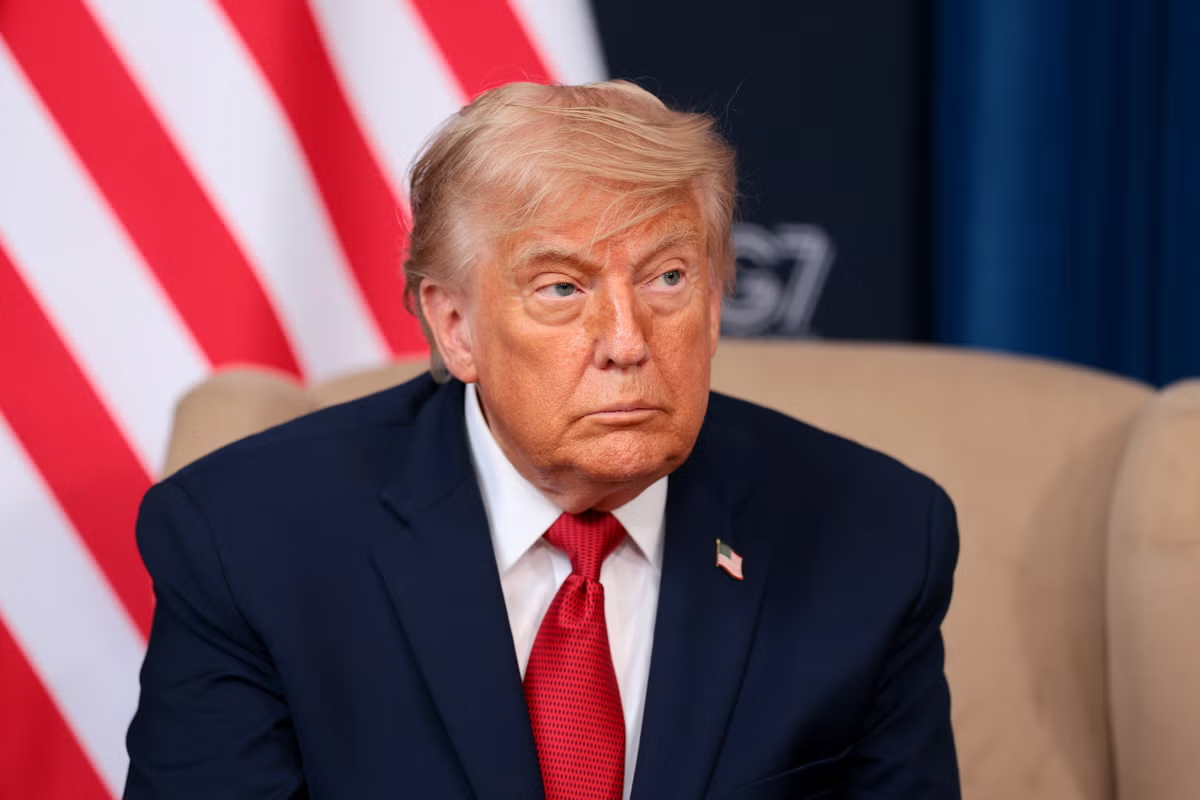
Several days after the elimination of Iran’s supreme leader, Ali Khamenei, and other senior officials in the opening strikes of the war against Iran, U.S. President Donald Trump publicly mused about “bringing someone from within” to take over Iran.
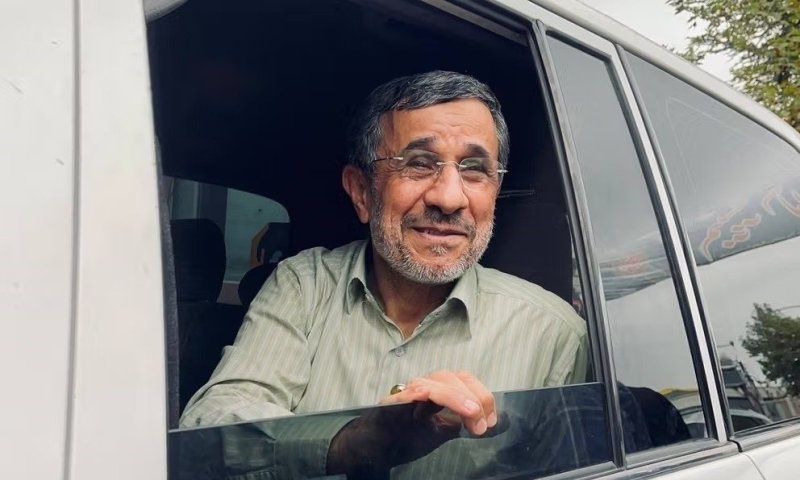
According to a New York Times report, Trump had someone specific in mind: Mahmoud Ahmadinejad, the Holocaust-denying former Iranian president known for his hardline anti-Israel and anti-American views.
The secret plan to trigger regime change after the assassinations of Iran’s top leaders was developed by Israel and joined by US intelligence officials, and discussed with Ahmadinejad himself. But the bold plan quickly went awry, according to US officials briefed on the plan who spoke to the Times.
Ahmadinejad was wounded on the first day of the war in an Israeli Air Force strike on his heavily guarded home in Tehran that was intended to kill his Islamic Revolutionary Guard Corps guards and free him from house arrest, US officials said.
The strike successfully eliminated his guards but almost killed Ahmadinejad himself. He survived the strike, but the near-miss left him disillusioned with the regime-change plan. He has not been seen publicly since the strike, and his condition and whereabouts are unknown.
During his presidency from 2005 to 2013, Ahmadinejad was known for his calls to “wipe Israel off the map,” and his denial of the Holocaust. He was a strong supporter of Iran’s nuclear program, a fierce critic of the United States, and associated with violent crackdowns inside Iran.
However, in more recent years, Ahmadinejad clashed with Khameini and other regime leaders, accusing them of corruption, while they in turn questioned his loyalty. Three times — in 2017, 2021, and 2024 — Ahmadinejad attempted to run again for president, but each time Iran’s Guardian Council, a body of hardline jurists, blocked his candidacy. His aides were arrested, and he was confined to his home after publicly accusing senior regime officials of systemic corruption. Although he was never an open regime opponent, the regime increasingly viewed him as a destabilizing figure.
In a 2019 interview with The New York Times, Ahmadinejad praised Trump and even urged renewed rapprochement between Iran and the United States. “Trump is a man of action,” he said. “He is a businessman and therefore capable of calculating cost-benefit and making a decision. We tell him: Let’s calculate the long-term cost-benefit of our two countries and not be shortsighted.”
According to the report, bringing Ahmadinejad to power was intended as one step in Israel’s broader multi‑phase war strategy, with the initial phase consisting of the U.S. and Israeli aerial assault targeting the top Iranian leadership alongside a planned Kurdish offensive that ultimately never materialized.
US officials spoke at the start of the war about plans developed with Israel to identify a pragmatist capable of taking control of the country. Officials insisted that intelligence indicated that figures within the regime would be willing to work with the US, even if those individuals could not be described as “moderates.”
Iranian authorities have long accused Ahmadinejad’s inner circle of maintaining overly close ties with the West, and even alleged that some associates were spying for Israel. Speculation intensified in recent years due to Ahmadinejad’s visits to countries seen as close to Israel. In 2018, his former chief of staff, Esfandiar Rahim Mashaei, stood trial and was questioned over alleged ties to Israeli and British intelligence agencies.
Ahmadinejad returned from a trip to Hungary just days before the outbreak of the war with Iran. He had been invited by a university affiliated with then-Prime Minister Viktor Orbán, a close ally of Prime Minister Binyamin Netanyahu and President Trump.
Following the strike on Ahmadinejad’s home, an article published in The Atlantic in March cited anonymous associates of Ahmadinejad as saying that the former president had effectively been freed from house arrest and described the strike as a “rescue operation.”
Later, a source close to Ahmadinejad confirmed to the Times that Ahmadinejad viewed the strike as an attempt to free him. The source said that the US saw Ahmadinejad as someone capable of leading Iran, and he may “play a very important role” in Iran in the near future.
(YWN Israel Desk—Jerusalem)