In Qatar, a desert peninsula protruding into the Persian Gulf, natural gas turned the country from a pearl-diving backwater into one of the world’s wealthiest nations.
Qatar spent three decades building supply lines, shipping tens of billions of dollars of liquefied natural gas each year through the Strait of Hormuz to ports across Asia and Europe.

The state, which derives more than 60% of its revenue from gas and gas-related exports, used that money to transform the peninsula into a gleaming metropolis.
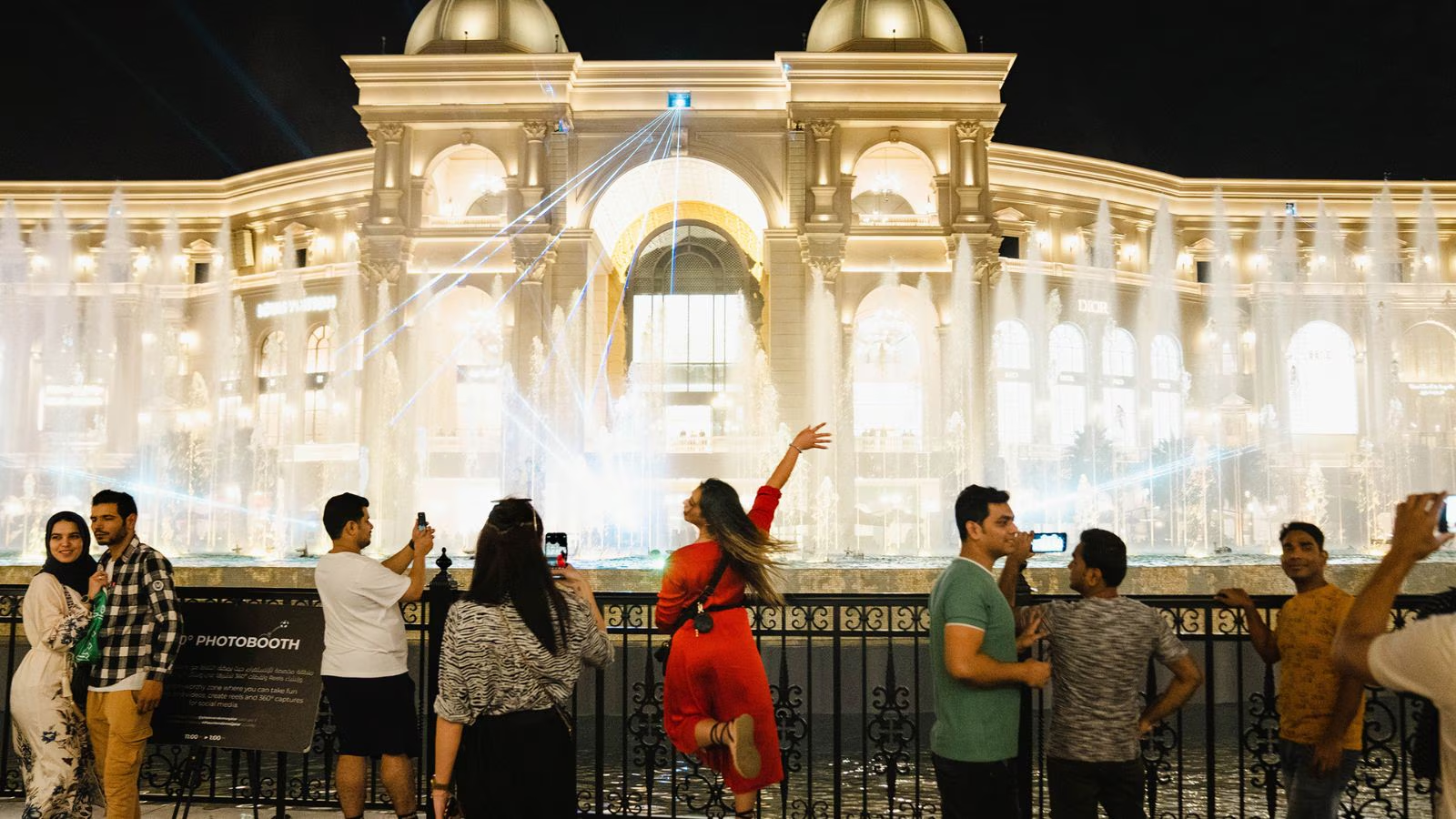
Gas wealth funded a metro system linking the capital, Doha, to Lusail, a northern city that is home to a Parisian-style mall and a theme park with artificial snow. The riches were also funneled into the world’s most expensive World Cup, and a $600 billion sovereign wealth fund.
Then, in February, Qatar’s door to the world slammed shut.
Story continues below this ad
The nation is also cut off from the sea routes through which it imports everything from vehicles to produce. Fears of regional instability have hurt tourism and eroded business sentiment.
Ras Laffan, Qatar’s industrial center for gas production, is shuttered, and roads are blocked. In this vast port north of Doha, loading cranes stand paralyzed. Hotels and boutiques sit in noticeable silence. Qatar’s growth forecasts have been slashed amid the cessation of LNG trade.
For Qatar, gas shipments “are nothing short of foundational,” Ahmed Helal, a managing director at the Asia Group, a strategic advisory firm, said in an interview in Doha recently. “Nothing you see here would have been possible without the wealth of energy,” he added. “That is why Qatar is quickly falling into a very challenging fiscal situation.”
Unlike its neighbors, Saudi Arabia and the United Arab Emirates, which have pipelines that can bypass the Strait of Hormuz, Qatar is geographically trapped behind the waterway.
Story continues below this ad
Within 24 hours of the Iranian blockade, QatarEnergy, the state-owned energy giant, announced it couldn’t fulfill its contracts. Two weeks later, Iranian missiles and drones struck Qatar’s Ras Laffan plant, damaging critical equipment and causing a 17% reduction in Qatar’s production capacity.
The damage means that even if the strait were to open tomorrow, it would take years to return to prewar output.
The International Monetary Fund expects Qatar’s economy to shrink 8.6% this year before rebounding in 2027.