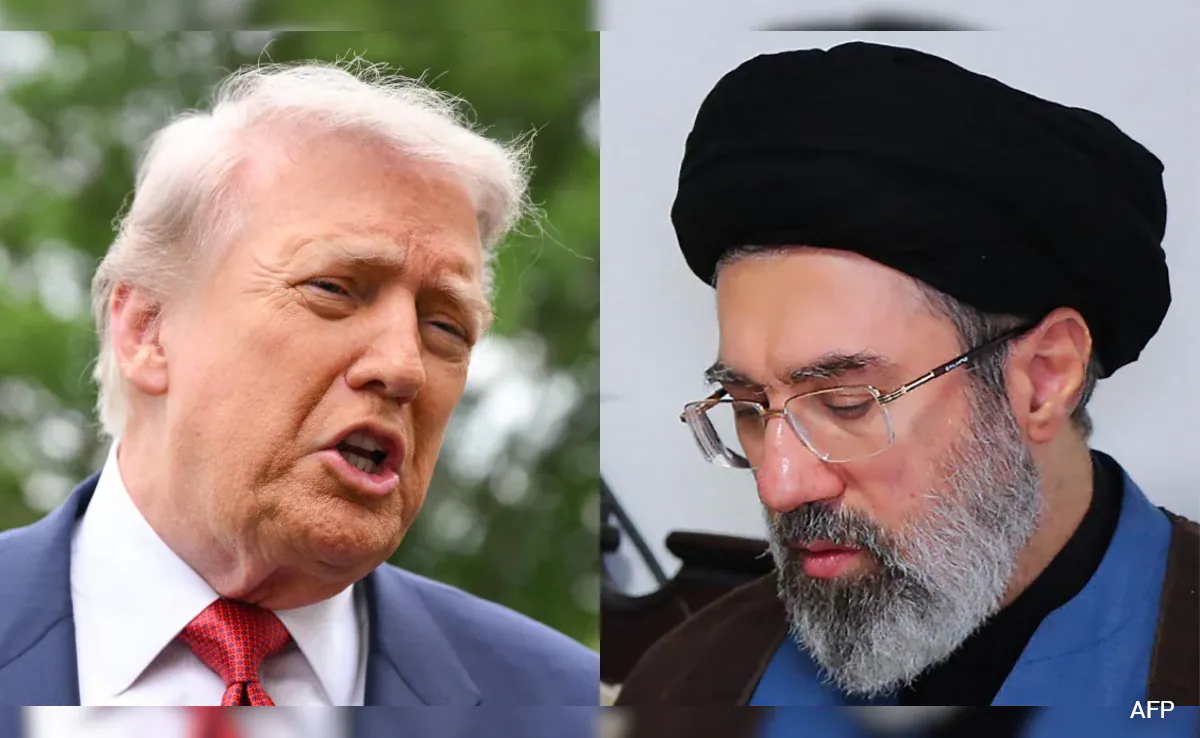
Tensions between Iran and the United States saw a sharp escalation yet again on Wednesday after Tehran warned that any renewed American attack would trigger a war extending “beyond the region”. The warning comes even as US President Donald Trump said he had come close to restarting military action against Iran this week.
Six weeks after Trump paused ‘Operation Epic Fury’ under a ceasefire arrangement, diplomatic efforts to end the conflict appear largely stalled. Iran this week submitted a fresh proposal to Washington, though its publicly stated demands mirror conditions earlier rejected by the US administration. These include Iranian control over the Strait of Hormuz, compensation for war-related damage, removal of sanctions, release of frozen Iranian assets and withdrawal of US troops from the region.
Speaking at the White House on Tuesday, Trump said, “I was an hour away from making the decision to go today,” indicating that a renewed bombing campaign had been considered before being delayed, allowing diplomacy more time. He repeated similar remarks on Monday, underscoring the uncertainty surrounding Washington’s next move.
Iran has repeatedly warned that it would retaliate against countries hosting American military bases in West Asia if attacked again. On Wednesday, however, the threat appeared broader in scope. “If aggression against Iran is repeated, the promised regional war will extend beyond the region this time,” the Revolutionary Guards said in a statement carried by Iranian state media.
Shipping through Hormuz slowly resumes
The Strait of Hormuz, a crucial global energy corridor, has remained heavily disrupted since the US-Israeli campaign began in February. Iran has largely restricted passage to its own vessels, triggering what analysts describe as the biggest disruption to global energy supplies in modern history. In response, the United States imposed its own blockade on Iranian ports last month.
There were signs of limited easing on Wednesday, however, as two Chinese oil tankers carrying nearly four million barrels of crude exited the strait. Tehran had earlier announced an arrangement to relax restrictions for Chinese vessels during Trump’s recent visit to Beijing. South Korea’s foreign minister also confirmed that a Korean tanker was transiting the waterway in coordination with Iran.
According to shipping monitor Lloyd’s List, at least 54 ships passed through the strait last week, nearly double the figure from the previous week, though still far below the roughly 140 daily crossings recorded before the war.
Story continues below this ad
Oil prices fluctuate as ceasefire largely holds
The continuing uncertainty has kept global oil markets volatile. Brent crude futures fell around 1.5 per cent on Wednesday morning to just under $110 a barrel, though prices remain significantly higher than early May levels.
“Investors are keen to gauge whether Washington and Tehran can actually find common ground and reach a peace agreement, with the U.S. stance shifting daily,” said Toshitaka Tazawa, an analyst at Fujitomi Securities.
Trump, facing mounting political pressure ahead of congressional elections in November, has repeatedly alternated between threatening renewed military action and expressing optimism about a peace agreement. On Tuesday he said the war would end “very quickly”, while Vice President JD Vance told reporters, “We’re in a pretty good spot here.”
The ceasefire between Iran and the US-Israeli alliance has largely held since early April, despite periodic flare-ups. This week, Saudi Arabia and the UAE reported fresh drone attacks allegedly launched from Iraq by militias aligned with Tehran.
Story continues below this ad
Israeli Prime Minister Benjamin Netanyahu and Trump have maintained that the war’s objectives include dismantling Iran’s nuclear and missile programmes and weakening Tehran-backed regional militias. Yet despite months of fighting, Iran retains significant missile capabilities and stockpiles of enriched uranium, while its clerical leadership has remained firmly in power despite domestic unrest earlier this year.
(With inputs from Reuters)