1 / 8
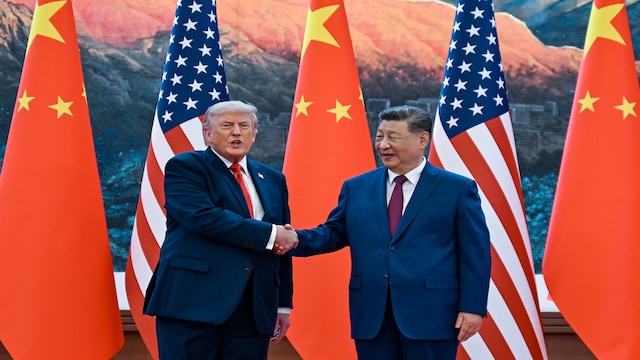
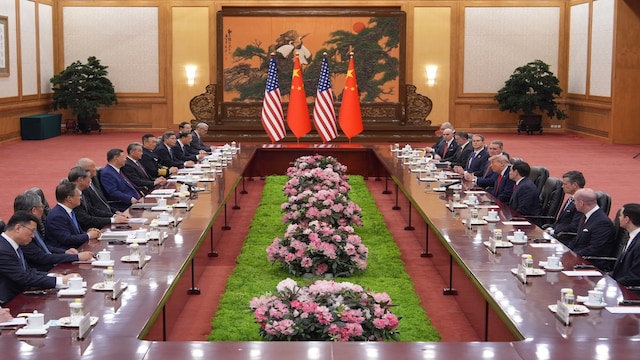
1 / 8Key Meeting: US President Donald Trump and Chinese President Xi Jinping began high-level talks in Beijing on Thursday, setting the tone for a closely watched summit focused on trade, Iran, Taiwan and technology. The meeting marks the first visit by a sitting US president to China in nearly a decade. Speaking at the Great Hall of the People near Tiananmen Square, Xi said China and the US should be “partners, not rivals,” while Trump said ties between the two countries could become “better than ever before.”
 2 / 8
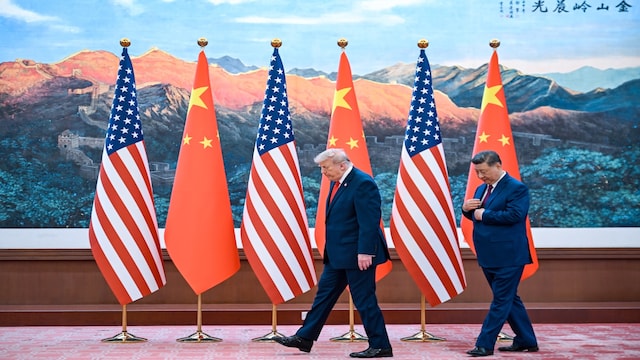
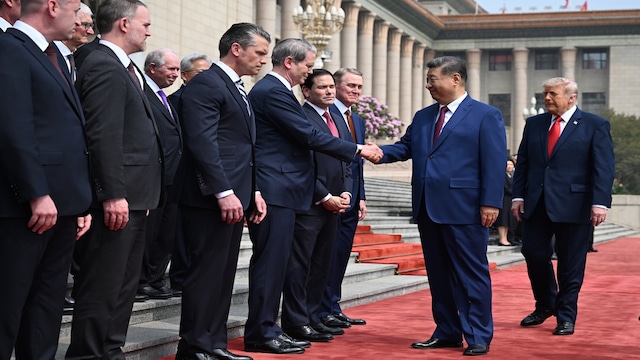
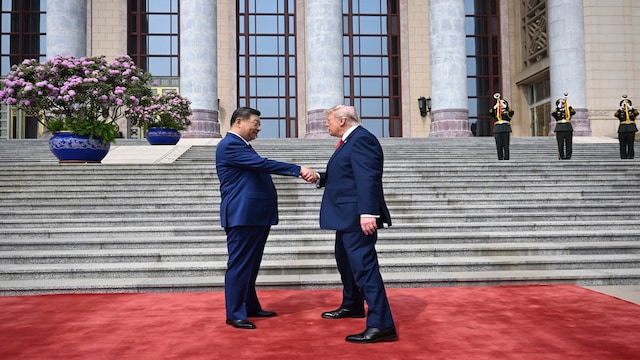
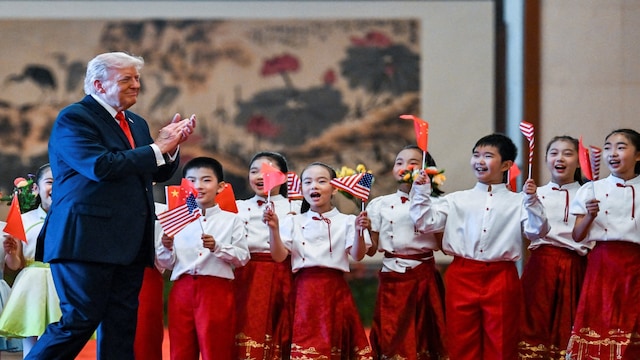
2 / 8Formal Reception: Xi welcomed Trump with a ceremony featuring military honours, national anthems and a guard inspection outside the Great Hall of the People. The two leaders walked together through Tiananmen Square as schoolchildren waved Chinese and American flags. Trump praised Xi during the opening remarks and thanked China for the reception. The summit opened with strong public messaging from both sides, even as tensions continue over trade policies, Taiwan, export controls and broader geopolitical competition between Washington and Beijing.
 3 / 8
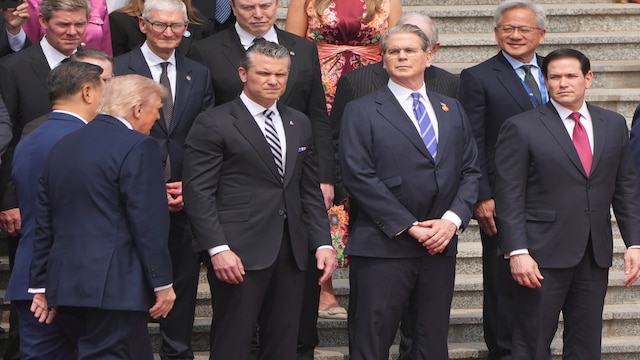
3 / 8Business Focus: Trump arrived in Beijing on Wednesday aboard Air Force One with senior US officials and business leaders including Nvidia CEO Jensen Huang and Tesla CEO Elon Musk. Trump said the delegation was focused on expanding business opportunities and reducing barriers for American companies operating in China. Agriculture, aircraft sales and trade access are expected to be key areas of discussion. Trump also said he would urge Xi to further open China’s market to US firms during the summit.
 4 / 8
4 / 8Iran Discussions: The war involving Iran is expected to be a major issue during the talks. US Secretary of State Marco Rubio said Washington wants Beijing to play a larger role in encouraging Iran to reduce tensions in the Persian Gulf and return to negotiations. Rubio said the conflict risks harming global economic growth and energy markets, particularly in Asia. Trump, however, suggested Iran would not be a central issue in his direct talks with Xi, saying the United States already had the situation under control.
 5 / 8
5 / 8Trade Agenda: Trade remains one of the most important topics at the summit after both countries imposed steep tariffs on each other last year. Trump and Xi are expected to discuss extending a tariff truce reached during their previous meeting in Busan, South Korea, in October. Reuters reported that both governments are considering a framework that could reduce tariffs on around $30 billion worth of goods without affecting national security interests. The White House has not officially commented on the report.
 6 / 8
6 / 8Taiwan Concerns: Taiwan is also expected to feature prominently in the discussions. China has objected to US arms sales to Taiwan, a self-governed island Beijing claims as its territory. Trump recently said he plans to discuss the issue directly with Xi. The US approved an $11 billion weapons package for Taiwan in December, though deliveries have not yet begun. Other issues expected to come up include China’s controls on rare earth exports, US restrictions on advanced chip technology and competition in artificial intelligence.
 7 / 8
7 / 8Strategic Rivalry: Both governments have acknowledged that tensions remain despite efforts to stabilise relations since the Busan meeting last year. Rubio described China as both America’s “top political challenge” and its most important relationship to manage. Xi said the world is facing uncertainty and urged both countries to work together to avoid conflict. Referring to the “Thucydides Trap,” Xi warned against rivalry between a rising power and an established power escalating into broader confrontation with global economic and security consequences.
 8 / 8
8 / 8Summit Schedule: Trump and Xi are scheduled to continue meetings through Friday before the US president departs Beijing. Thursday’s programme includes bilateral talks, a visit to the Temple of Heaven and a state banquet hosted by Xi. On Friday, the two leaders are expected to hold another meeting followed by a tea gathering, lunch and a photo session. Trump is also expected to seek progress on arranging a reciprocal visit by Xi to the United States sometime later in 2026.