4 min readUpdated: May 22, 2026 01:21 PM IST
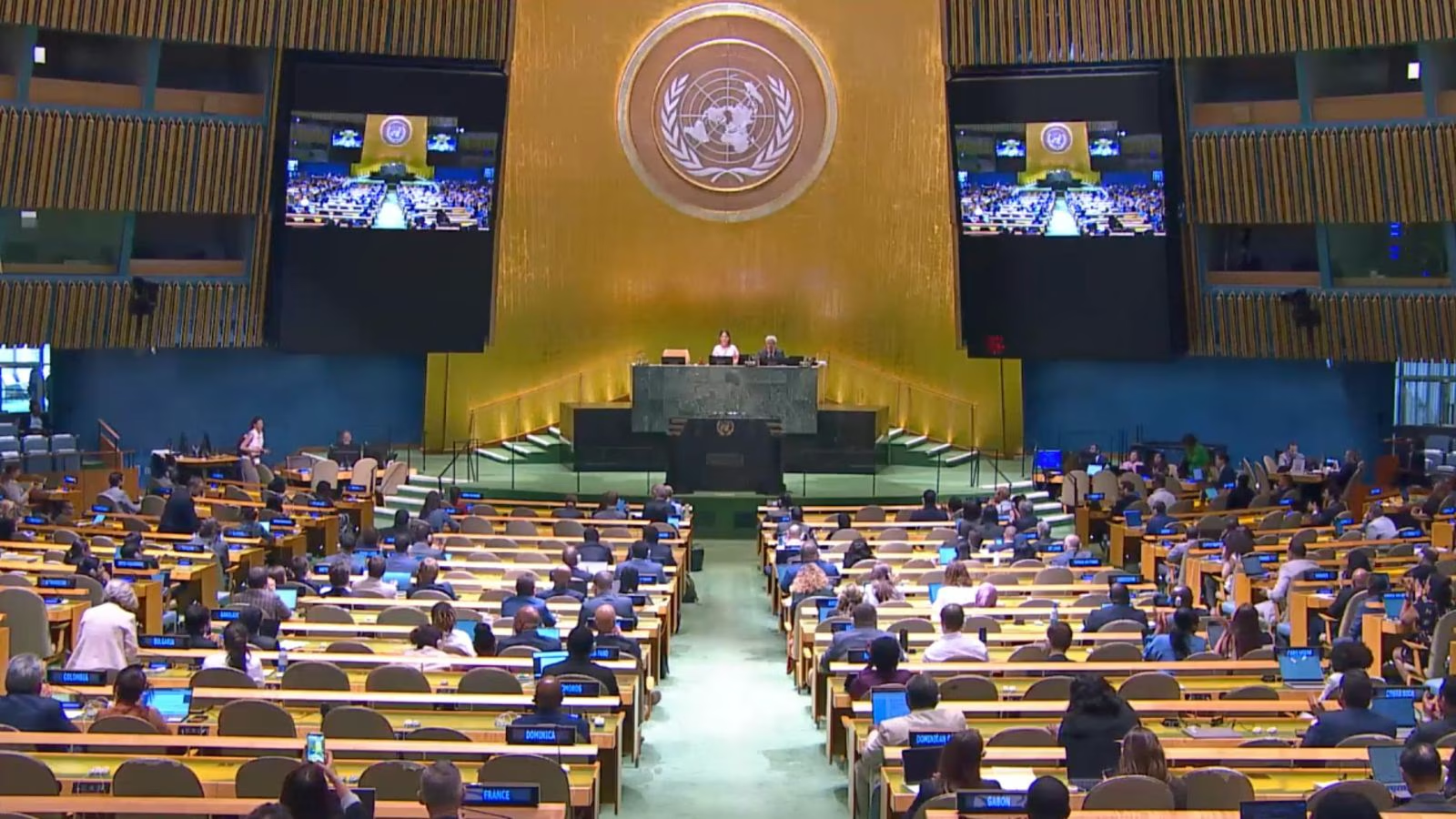
The United Nations General Assembly has voted 141-8 to adopt a resolution backing an International Court of Justice (ICJ) opinion that countries have a legal obligation to address climate change. The United States, the world’s biggest historical emitter, was among the small group of countries that opposed the resolution.
The resolution, drafted by Vanuatu, a Pacific island nation on the frontline of the climate crisis, along with several other countries, was adopted after intense discussions and multiple proposed amendments. It received 141 votes in favour, eight against and 28 abstentions.
Countries that voted against the resolution were Belarus, Iran, Israel, Liberia, Russia, Saudi Arabia, the United States and Yemen. India, Turkey, Qatar and Nigeria were among the countries that abstained, while Australia, Germany, France and the United Kingdom voted in favour.
The vote followed up on the ICJ’s landmark advisory opinion issued in July 2025, in which the UN’s principal judicial body ruled that states have an obligation to protect the environment from greenhouse gas emissions. Although the opinion is not legally binding, it has already begun influencing climate litigation around the world, with judges referencing it in climate-related rulings.
#BREAKING
UN General Assembly ADOPTS resolution welcoming the advisory opinion of the International Court of Justice on the obligations of States in respect of climate changeRESULT
In favor: 141
Against: 8
Abstain: 28 pic.twitter.com/cYAJ94weQT— UN News (@UN_News_Centre) May 20, 2026
The adoption by the General Assembly sent a strong message that tackling climate change is a legal responsibility under international law and not merely a political choice. UN Secretary-General António Guterres welcomed the move, saying: “The world’s highest court has spoken. Today, the General Assembly has answered.”
In a post on X, Guterres said the vote underscored that governments are responsible for protecting citizens from the “escalating climate crisis”. He described the resolution as “a powerful affirmation of international law, climate justice, science and the responsibility of states to protect people from the escalating climate crisis.”
I welcome the adoption of the General Assembly resolution on the @CIJ_ICJ‘s advisory opinion on climate change – a powerful affirmation of international law, climate justice, science & the responsibility of states to protect people from the escalating climate crisis.
Those least…
— António Guterres (@antonioguterres) May 20, 2026
However, despite the symbolic significance of the ICJ opinion, it has proved more difficult to use as a diplomatic tool. It reportedly failed to make a significant impact during last year’s UNFCCC climate talks in Belem, where Saudi Arabia opposed its inclusion in final texts, calling it a “red, red line”.
The Trump administration has withdrawn the US from the Paris climate agreement and other major environmental accords, while pursuing policies aimed at boosting fossil fuel production. The Trump administration had also urged other countries earlier this year to pressure Vanuatu into withdrawing the resolution, The Associated Press reported.
The Paris climate agreement, adopted in 2015, aimed to limit global warming to 1.5 degrees Celsius above pre-industrial levels, a target that gave rise to the slogan “1.5 to stay alive”. However, scientists now say that even the best-case scenarios are likely to exceed that temperature threshold.
Story continues below this ad
What does the resolution say?
The resolution calls on all UN member states to take all possible steps to avoid causing significant damage to the climate and environment, including limiting emissions produced within their borders. It also urges countries to fulfil their existing climate commitments under the Paris Agreement.
Governments are asked to cooperate in good faith, continuously coordinate efforts to tackle climate change globally, and ensure that climate policies protect the rights to life, health and an adequate standard of living.
Stay updated with the latest – Click here to follow us on Instagram
© IE Online Media Services Pvt Ltd