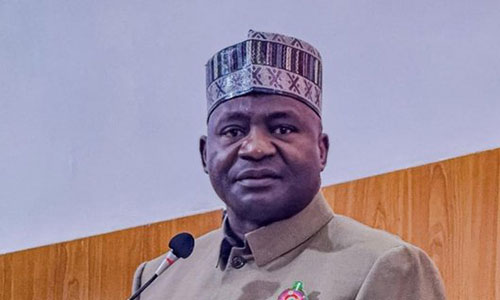
Governor Seyi Makinde of Oyo State has confirmed that a total of 25 students and seven teachers were abducted during attacks on two schools in Ahoro Esinele Community in Oriire Local Government Area, disclosing that one victim has been killed, and indicating that the government is ready to listen to the demands of the abductors in order to secure the safe release of those still in captivity.
The governor made the disclosures on Monday while addressing journalists at his private residence in Kolapo Ishola Estate, Ibadan, providing the most detailed official account yet of the kidnapping incident that has plunged the state into crisis and drawn national attention.
Governor Makinde provided a breakdown of the victims across the two schools targeted by the kidnappers. At the Community Secondary School in the affected community, seven students were abducted. At the First Baptist Primary and Nursery School, 18 children were taken alongside seven teachers bringing the total number of abducted persons to 32, comprising 25 students and pupils and seven teachers.
The governor also confirmed the death of one of the victims, a fact he said he had reported the previous day. He did not provide further details about the identity of the deceased or the circumstances of the killing.
In what represents a significant policy signal, Governor Makinde indicated that the state government was prepared to engage with the abductors and hear their demands in order to bring the crisis to a peaceful resolution.
“We will do everything possible to ensure that our children and their teachers return safely. These are not foreigners; they are our people. Whatever their demands may be, we are ready to listen and address the ones we can as a state government. The children and their teachers must be released without delay,” Makinde stated.
The governor’s language “whatever their demands may be, we are ready to listen and address the ones we can” stopped short of explicitly offering to pay ransom but clearly signalled a willingness to negotiate, a position that reflects the acute human dimension of the crisis involving young children and their teachers.
At the same time, Makinde struck a firm tone on the broader security question, insisting that the state would never surrender to terrorism.
“We have now conclusively confirmed the numbers. Unfortunately, one of them was killed. We will never surrender to terrorism, and all efforts are being intensified to ensure the victims return home unharmed,” the governor said.
Makinde disclosed that military and security operations to rescue the abducted victims were still actively ongoing in the area, describing the situation on the ground as volatile and complex.
“The operation is still ongoing. It remains a very fluid and difficult situation for our troops on the ground,” the governor stated.
He appealed to the media to exercise restraint in their coverage, noting that the lives of the hostages could be endangered by sensational reporting. “I will therefore appeal for responsible reporting because this is not about sensationalism; it involves human lives,” Makinde said.
To coordinate the rescue efforts and manage the flow of information to the public, the governor disclosed that the state government had established an operational situation room at the Oyo State Police Command headquarters.
“We have set up an operational centre at the police headquarters here. The Commissioner of Police will coordinate the situation room and provide the required information,” Makinde added.
The establishment of a centralised command centre at the police headquarters suggests that the rescue operation involves multiple security agencies including the police, military, and possibly other intelligence services whose activities need to be coordinated from a single point to avoid operational confusion and ensure that verified information reaches the public through a single authorised channel.
In a development that provides context for the state government’s security preparedness, Makinde disclosed that surveillance aircraft procured by the Oyo State Government had arrived in Nigeria and were currently being assembled at the Nigerian Air Force hangar in Lagos.
“The manufacturers from China arrived about three days ago and will require roughly two weeks to complete the process. I can say conclusively that the surveillance aircraft will become operational on or before the end of June,” the governor stated.
Makinde explained that the aircraft were procured proactively to monitor border communities between Oyo and neighbouring states, as well as the international border with the Republic of Benin. However, he acknowledged that the procurement, while forward-looking, had not anticipated the specific attack that occurred in Oriire Local Government Area.
“We were proactive because we wanted to cover the borderline between Oyo and Kwara states, as well as the international border between our state and the Republic of Benin, although we did not anticipate this particular incident,” the governor said.
The disclosure that the surveillance assets are still weeks away from becoming operational underscores the gap between the state’s security ambitions and its current capacity a gap that the kidnappers appear to have exploited by targeting schools in a rural community where security presence is minimal and response times are long.
The mass abduction of schoolchildren and teachers in Oyo State represents a deeply alarming expansion of the kidnapping crisis that has plagued Nigeria’s North-West and North-Central regions into the South-West a zone previously considered relatively safer. Oyo State, while not immune to security challenges, has not historically experienced mass school abductions of the scale seen in states like Kaduna, Zamfara, Niger, and Katsina.
The targeting of two schools simultaneously in a single community suggests a degree of planning and coordination by the abductors, and raises urgent questions about intelligence gathering, school security, and the capacity of security agencies to protect educational institutions in rural areas.
Governor Makinde’s willingness to publicly signal openness to negotiation while simultaneously maintaining that the state will not surrender to terrorism reflects the delicate balancing act that Nigerian governors face when mass kidnappings occur. The imperative to save lives in the immediate term often conflicts with the longer-term concern that negotiating with kidnappers, particularly if ransoms are paid, incentivises further attacks.
The governor’s appeal to the abductors “these are not foreigners; they are our people” appeared aimed at humanising the victims and establishing a basis for dialogue, framing the crisis as a domestic matter that can be resolved through engagement rather than solely through military force.
The situation remains fluid, with rescue operations ongoing and the fate of the 31 remaining hostages 25 students and six teachers, following the confirmed death of one victim uncertain. The operational situation room at the Oyo State Police Command headquarters is expected to provide updates as the crisis develops.
Neither the identity of the kidnapping group nor their specific demands have been publicly disclosed as at the time of this report. The state government’s invitation to the abductors to make their demands known suggests that formal communication channels between the government and the kidnappers may not yet have been fully established.
The post “We Will Never Surrender To Terrorism” — Makinde Hints At Negotiation As 25 Students, Seven Teachers Are Abducted In Oyo School Attacks appeared first on TheNigeriaLawyer.