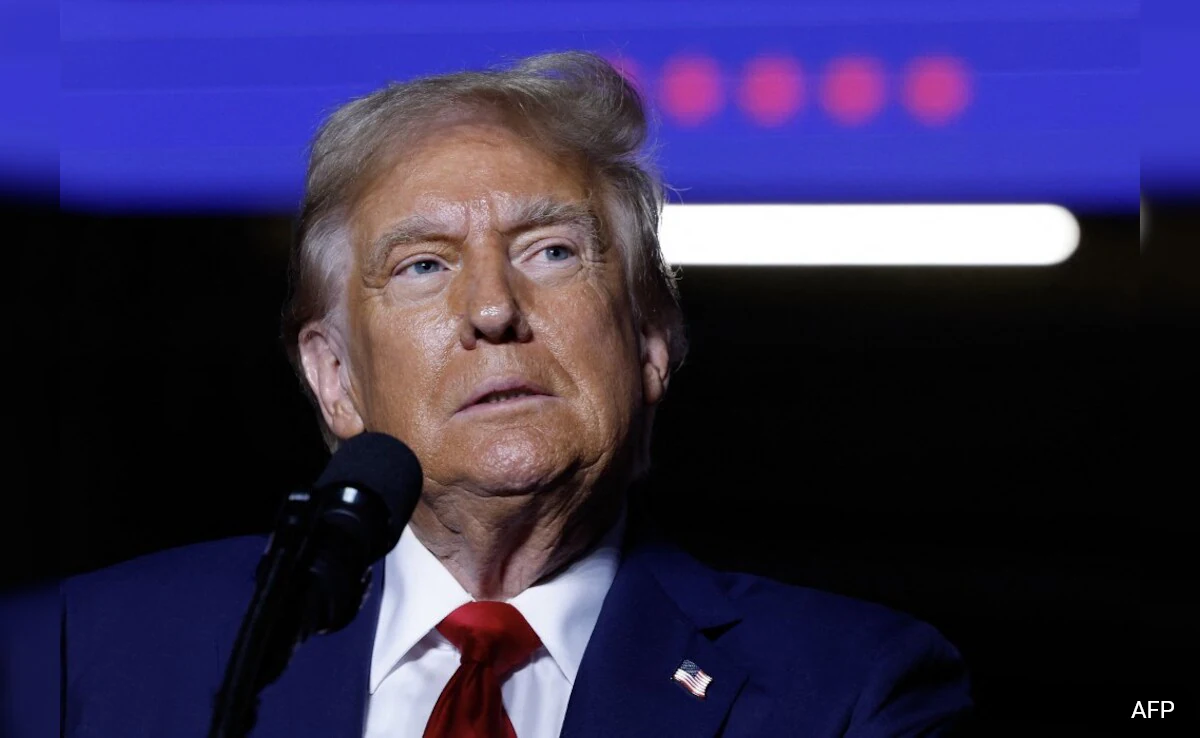
In the latest back-and-forth surrounding the negotiations between the US and Iran, the US President included a new clause for the Gulf nations involved in the war in his array of Truth Social posts last week and over the weekend.
Trump Calls For Iran To Join Abraham Accords
While demanding nations in West Asia and the Arab League at large, from Egypt to Turkey, to sign the accord, Trump also added Iran’s name to the list when he said, “In speaking to numerous of the Great Leaders mentioned above, they would be honored, as soon as our Document is signed, to have the Islamic Republic of Iran as part of the Abraham Accords. Wow, now that would be something special! This will be the most important Deal that any of these Great but always in Conflict Countries will ever sign.”
???? “An Agreement has been largely negotiated, subject to finalization between the United States of America, the Islamic Republic of Iran, and the various other Countries, as listed…” – President Donald J. Trump pic.twitter.com/Z49bOkkUoh
— The White House (@WhiteHouse) May 23, 2026
This, according to Trump, will bring peace to the region for the first time, “in 5,000 years”.
What are the Abraham Accords?
Much like the ambitious Oslo accords (also brokered by the US), this treaty was conceived during Donald Trump’s first term in office. The historic document for the normalisation of ties between Israel and the United Arab Emirates (UAE), along with Bahrain, was signed on September 15, 2020, at the White House.
Named after the patriarch Abraham—a figure central to Judaism, Islam, and Christianity—the Accords are designed to symbolise a shared heritage and a commitment to regional coexistence.
The Abraham Accords were originally aimed at isolating Iran. While the diplomatic narrative focused on regional peace, economic prosperity, and religious tolerance, the underlying strategic objective was to formalise a US-backed alliance between Israel and Sunni Arab nations to counter Tehran’s regional influence.
FILE PHOTO: Bahrain’s Foreign Minister Abdullatif Al Zayani, Israel’s Prime Minister Benjamin Netanyahu, U.S. President Donald Trump and United Arab Emirates (UAE) Foreign Minister Abdullah bin Zayed participate in the signing of the Abraham Accords, normalizing relations between Israel and some of its Middle East neighbors in a strategic realignment of Middle Eastern countries against Iran, on the South Lawn of the White House in Washington, U.S., September 15, 2020. REUTERS/Tom Brenner/File Photo
The Abraham Accords, as mentioned before, are rooted in the idea of normalisation of ties between nations that have historically had strained relationships, especially in West Asia and on the Arabian Peninsula.
The Muslim-majority nations, especially the Arab League and GCC nations, have historically had tough ties with Israel over many issues, with the question of Palestine being the biggest bottleneck.
The deal came to pass at a relatively calm time, and as a result of this, after Bahrain and the UAE, the Arab League nations (in Northern Africa) of Morocco and Sudan joined the accords in 2020 and 2021, respectively.
Despite the progress, some big names like Qatar, Oman and, most importantly, Saudi Arabia were missing. At the time, the inclusion of Saudi Arabia and other nations did not appear far-fetched. However, that train of diplomacy derailed with the Hamas-led October 7, 2023, attack on Israel. This attack, and Israel’s subsequent brutal response to Gaza and escalation of violence in the West Bank, saw the deal being shelved. In addition to that, Trump was also no longer in the White House.
Trump’s Legacy Project
After nearly half a decade, the Accord has come back to life again. And it is Donald Trump, who seems to be keen on resurrecting it.
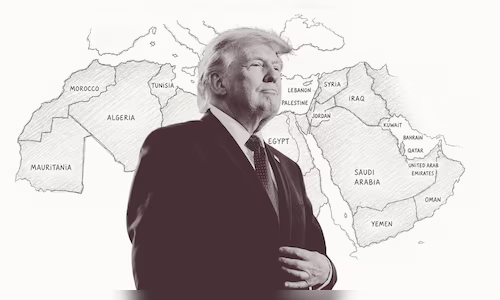
This desire of expansion was visible in the same post, wherein he named nations that, according to him, should be signatories of the deal. In his Truth Social post, he enlisted the nations and said, “Mohammed bin Salman Al Saud, of Saudi Arabia, Mohammed bin Zayed Al Nahyan, of The United Arab Emirates, Emir Tamim bin Hamad bin Khalifa Al Thani, Prime Minister Mohammed bin Abdulrahman bin Jassim bin Jaber Al Thani, and Minister Ali al-Thawadi, of Qatar, Field Marshal Syed Asim Munir Ahmed Shah, of Pakistan, President Recep Tayyip Erdoğan, of Türkiye, President Abdel Fattah El-Sisi, of Egypt, King Abdullah II, of Jordan, and King Hamad bin Isa Al Khalifa, of Bahrain, I stated that, after all the work done by the United States to try and pull this very complex puzzle together, it should be mandatory that all of these Countries, at a minimum, simultaneously, sign onto the Abraham Accords.”
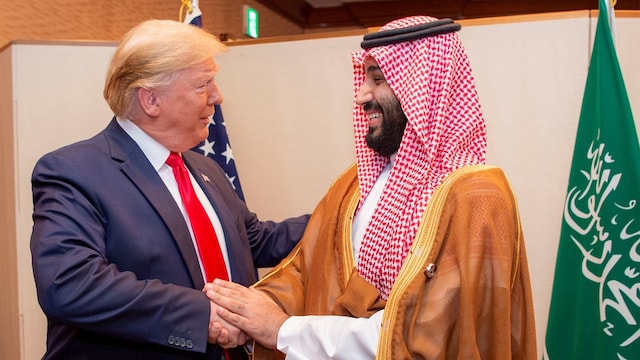
Beyond Trump’s legacy, it is also about another key player, Saudi Arabia. The largest nation and arguably the most powerful nation on the peninsula would have the power dynamics change if Iran were pressured into joining the Accords.
Saudi Arabia’s Conundrum
Trump’s insistence on Saudi Arabia’s inclusion was underscored by his reiteration of the country’s onboarding, twice in the same post. In his post, he said, ” Its level of Importance and Prestige will be unparalleled! It should start with the immediate signing by Saudi Arabia and Qatar, and everybody else should follow suit. If they don’t, they should not be part of this Deal in that it shows bad intention. “
This would put added pressure on the Saudi’s to join in as they face increased pressure and uncertainty of alienation in the region, which is already seeing friction, due to Qatar and the UAE, which have rebelled against Crown Prince Mohammed Bin Salman in the recent decade. Joining or being pressured to join the accords would play into the UAE’s interest, which arguably has the closest and warmest ties with the Benjamin Netanyahu-led states, more than anyone else in the region.
Meanwhile, the nation that definitely stands to gain from the expansion of the accord is Israel, as it would have a bigger and richer market opened up for its advanced tech and services, including the defence and intelligence industry.