US president Donald Trump threatened to “blow up” Oman on Wednesday if it did not comply with his demands over the Strait of Hormuz.
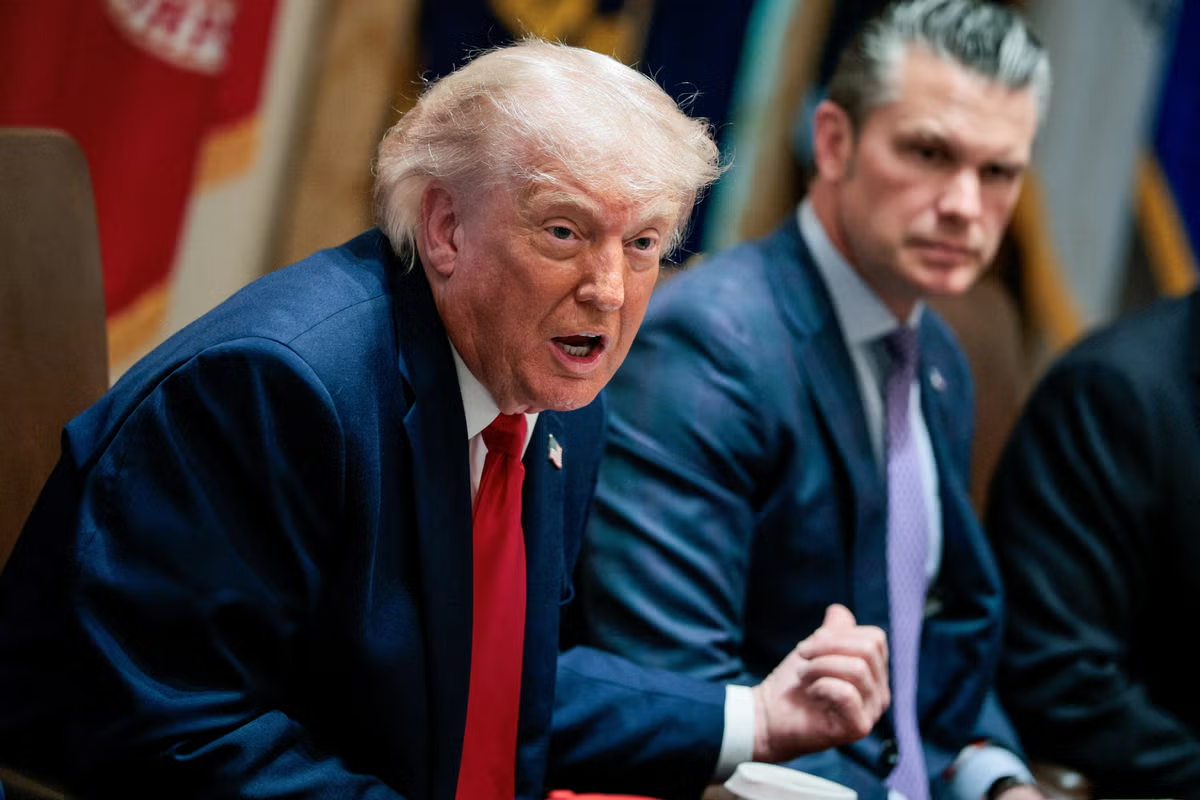
“Oman will behave just like everyone else, or we’ll have to blow them up,” the president warned in an off-the-cuff remark about a key US ally during a Cabinet meeting at the White House on Thursday.
Trump reiterated his insistence that Oman and other nations sign on to the Abraham Accords, a US-led treaty brokered during his first term encouraging the normalization of diplomatic ties between Arab nations and Israel.
The US president’s remark was afterwards tweeted out by the State Department’s official account on X, confirming he had not mixed up the country with Iran – the type of mix-up he has made previously when referring to Greenland as “Iceland”.
But why has Trump launched these bombastic threats on Oman, and what role has it played in the war?
The US president’s comments came after reports emerged in Iranian state media that Tehran and Oman had discussed a possible situation in which the two countries would manage shipping through the Strait of Hormuz after the war.
Iranian officials have discussed systems in which ships crossing the strait would pay a maritime service fee, which they say would be distinct from the idea of direct tolls for ships to transit through Hormuz.
But the White House has rejected suggestions that Iran or Oman could oversee the critical waterway.
“It’s international waters. Nobody’s going to control it. We’re going to watch over it,” he told the cabinet meeting.
The US president has also made clear his disappointment that several Middle Eastern nations are yet to sign the Abraham Accords.
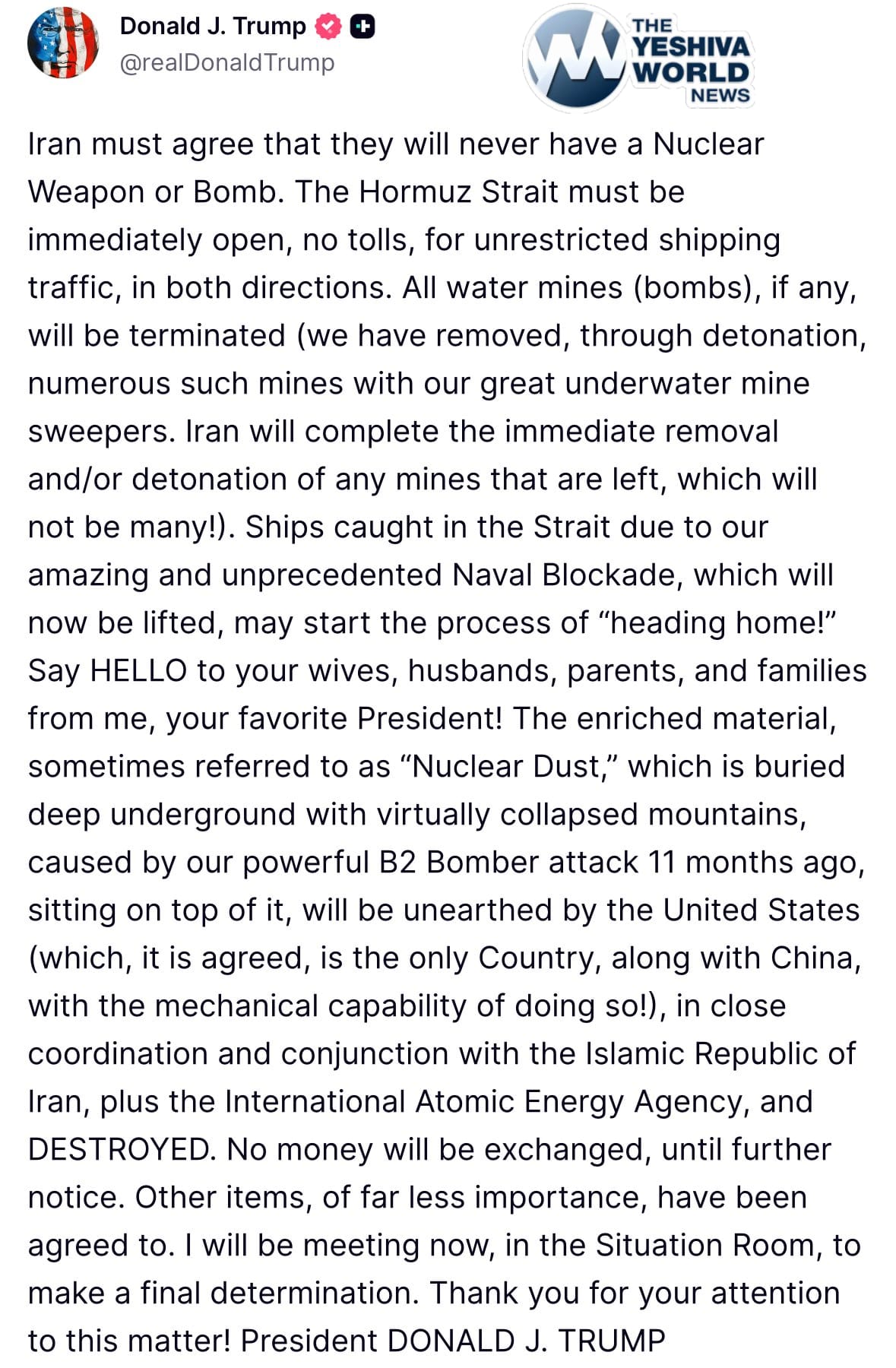
“I am mandatorily requesting that all Countries immediately sign the Abraham Accords, and that, if Iran signs its Agreement with me, as President of the United States of America, it would be an Honor to have them also be part of this unparalleled World Coalition,” Trump wrote in a post on Truth Social.
He told the Cabinet meeting that he may decide against signing a peace deal with Iran unless those countries complied. “They owe it to us,” he said. “I’m not sure we should make the deal if they don’t sign.”
Oman has come under attack by Iran during the war, in its retaliatory strikes after the US and Israel began its bombardment of the country on 28 February.
On 1 March, drones were launched at key energy and shipping infrastructure in Tehran, including the ports of Duqm and Salalah.
These attacks caused blazes and damaged fuel storage facilities, while disrupting nearby oil tanker operations.
The country was attacked given its status as one of Washington’s closest partners in the Arab Gulf. The countries have maintained defence cooperation agreements for decades, which allow US forces access to Omani ports and air bases that are vital for operations in the region.
Since long before the current war, Oman has served as a mediator for talks between the US and Iran. It also hosted indirect talks before the US and Israel launched its war, but the nuclear negotiations were ultimately unsuccessful.
After the war was launched, Oman’s foreign minister and lead mediator Badr bin Hamad Al Busaidi said the US had “lost control of its own foreign policy” and accused Israel of persuading the Trump administration to launch the war on Iran – which he described as a “grave miscalculation”.
Oman and Iran are the two countries sitting across each other on the Strait of Hormuz, the vital chokepoint through which one fifth of the world’s oil supply passed during peace time.
The Gulf of Oman is the principal approach point to the Strait of Hormuz from the Arabian Sea, with the Muscat government therefore a crucial power in terms of regional shipping security.
Oman’s historical role as a mediator between Western countries and Tehran during times of tension has been critical in maintaining the free and safe passage of shipping through the strait.
More details here...