…Says 1.3 million new cases recorded in 2024 as global response falls off track
…Calls For Urgent Political Commitment Ahead Of June 2026 HIV summit
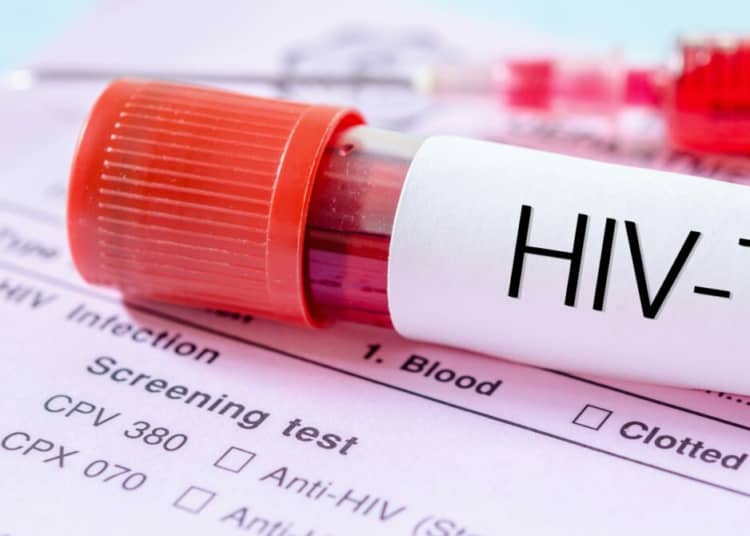
The United Nations (UN) has warned that declining external financing for health programmes is reversing hard-won gains in the global fight against HIV, with Africa and other regions increasingly exposed to rising new infections and treatment gaps.
In a report issued ahead of the UN General Assembly High-Level Meeting on HIV/AIDS scheduled for June 22–23, 2026, the UN Secretary-General, António Guterres, said the global HIV response is at “a critical juncture,” stressing that progress achieved over the past decade is now under serious threat.
Guterres noted that while 31.6 million of the 40.8 million people living with HIV were receiving treatment in 2024—the highest level ever recorded—and AIDS-related deaths have dropped by 54 per cent since 2010, these gains are increasingly fragile due to shrinking donor funding, rising debt burdens, humanitarian crises and worsening inequality.
He warned that global external health financing could decline by as much as 40 per cent, a development that would disproportionately affect HIV prevention, treatment access and community-led interventions in low- and middle-income countries.
The report showed that the world is significantly off track to meet the 2025 HIV targets, with 1.3 million new infections recorded in 2024—about 3.5 times higher than the target of 370,000. It also noted that about 630,000 people died of AIDS-related illnesses in the same year, more than double the 2025 target.
According to the UN, 9.2 million people are still not on treatment globally, while prevention gaps remain wide, particularly among vulnerable populations.
The situation is particularly severe in sub-Saharan Africa, where adolescent girls and young women are three to four times more likely to acquire HIV than their male counterparts. The report also revealed that in western and central Africa, up to 90 per cent of HIV treatment funding depends on external donors, while prevention programmes rely on about 80 per cent foreign assistance.
In Eastern and Southern Africa, where the majority of people living with HIV are concentrated, seven countries have met the global 95-95-95 testing and treatment targets. However, the UN warned that these gains could be reversed without sustained financing and policy reforms.
Executive Director of the UNAIDS, Winnie Byanyima, described the progress made so far as “a shining testament” to what coordinated global action can achieve, but cautioned that financial shocks and weakening political will could derail decades of progress.
“Without urgent action to close the funding gap, millions of lives are at stake,” Byanyima said, warning that cuts to external assistance would hit community-based organisations hardest, undermining testing, treatment adherence and prevention services.
The report also highlighted emerging opportunities, including long-acting HIV prevention medicines, which could significantly reduce new infections if widely deployed. However, it noted that rollout remains slow despite the availability of more affordable generic options.
Guterres called on member states to use the upcoming High-Level Meeting to recommit to ending AIDS as a public health threat by 2030, urging increased domestic financing, removal of discriminatory laws, and stronger protection for community-led health systems.
“The pathway to end AIDS by 2030 exists and remains open,” the UN chief said, “but only if we act together.”
UNAIDS further urged governments to adopt new global HIV targets and ensure equitable access to innovations in prevention and treatment, warning that failure to act decisively could trigger a resurgence of infections worldwide.
FOLLOW US
FOR MORE HERE