A major policy shift is underway in Northern Nigeria as the United Nations, European Union, state governments and development partners declared that the country’s worsening displacement crisis can no longer be managed through emergency relief alone, warning that millions of internally displaced persons (IDPs) risk being trapped in a cycle of dependency unless authorities embrace long-term development and integration strategies.
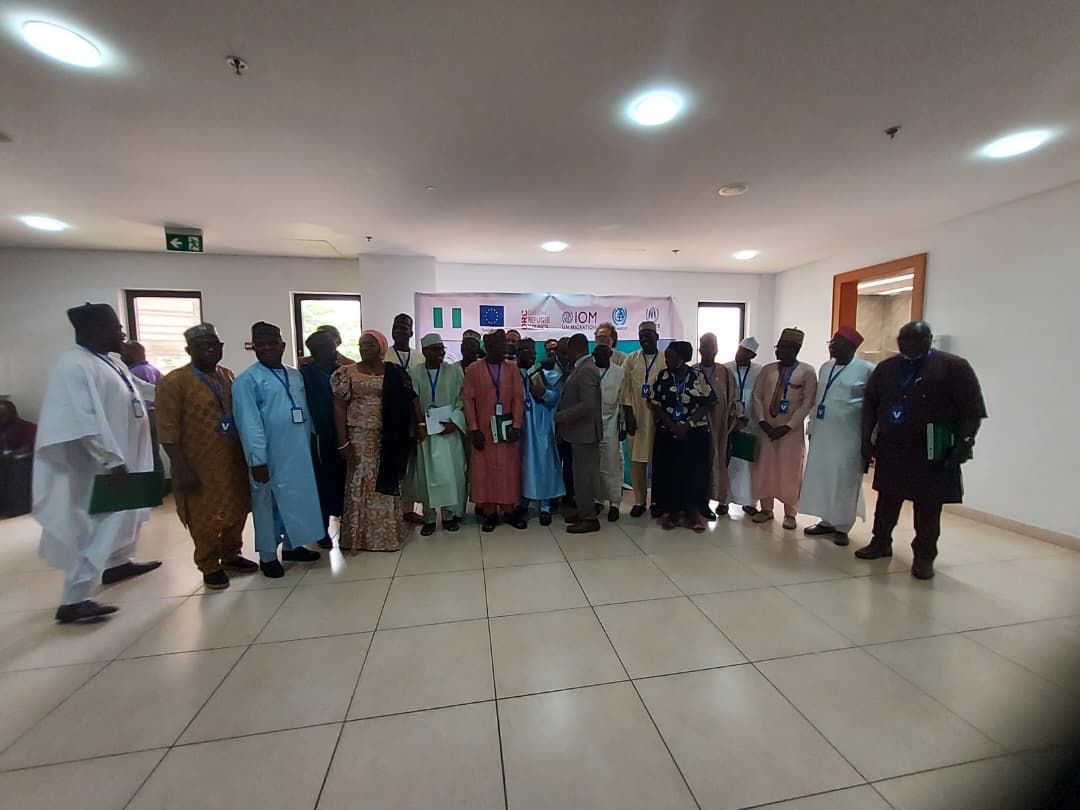
The warning came in Abuja on Tuesday, 16 June, 2026, during the inaugural Project Steering Committee meeting of two major intervention programmes aimed at supporting displaced populations and host communities across Adamawa, Yobe, Kano and Sokoto states.
With an estimated 3.5 million people displaced across the region, stakeholders acknowledged that years of humanitarian assistance have helped save lives but have failed to address the deeper structural problems that continue to fuel poverty, vulnerability and prolonged displacement.
Speaking at the high-level gathering, the United Nations Resident and Humanitarian Coordinator in Nigeria, Mohammed Fall, said displacement in Northern Nigeria should no longer be viewed as a temporary humanitarian emergency but as a development, peacebuilding and human rights challenge requiring coordinated and lasting solutions.
He disclosed that through the UN Common Programme in 2025, nearly 200,000 children received educational support and skills training, about 150,000 people benefited from livelihood opportunities, while another 40,000 individuals regained access to vital legal documentation.
Despite these gains, Fall stressed that sustainable progress would only be achieved when humanitarian interventions are integrated with long-term development planning.
According to him, durable solutions are not simply about ending displacement but about creating pathways for affected populations to rebuild their lives with dignity, security and economic opportunities.
His remarks underscore growing concerns among development experts that millions of displaced Nigerians remain caught between shrinking humanitarian resources and the absence of comprehensive government-led reintegration frameworks.
In a striking intervention, Ambassador Gautier Mignot, Head of the European Union Delegation to Nigeria and ECOWAS, challenged governments and development actors to rethink the way donor funds are deployed.
He argued that while billions of naira worth of humanitarian and development assistance have contributed to stabilising conflict-affected communities, future investments must move beyond traditional livelihood projects toward scalable economic transformation initiatives capable of delivering lasting impact.
Mignot urged stakeholders to subject existing interventions to rigorous review and align future investments with broader development objectives that can unlock private-sector participation, stimulate economic growth and support durable solutions for displaced populations.
He maintained that the future of displacement response lies in ambitious development planning rather than repetitive cycles of humanitarian assistance.
Representing the Federal Ministry of Humanitarian Affairs and Poverty Reduction, Permanent Secretary Olubunmi Olusanya said Nigeria’s displacement crisis is being driven by a complex mix of insecurity, climate-related shocks and socio-economic pressures that continue to undermine community resilience.
He said the newly inaugurated steering committee would play a critical role in addressing bottlenecks hindering implementation, including land access challenges and the integration of global best practices into local development plans.
Olusanya noted that while humanitarian interventions remain essential, lasting solutions can only emerge through stronger collaboration among government institutions, development agencies, humanitarian organisations and affected communities.
The meeting ended with renewed commitments from participating state governments and international partners to strengthen governance structures, improve accountability mechanisms and accelerate efforts aimed at helping displaced persons transition from dependency to self-reliance.
For millions of Nigerians uprooted by conflict, insecurity and climate shocks, the declaration may signal the beginning of a long-awaited shift from managing displacement to solving it.
The challenge, however, will be turning commitments made in conference rooms into tangible improvements in communities where displacement has become a way of life.