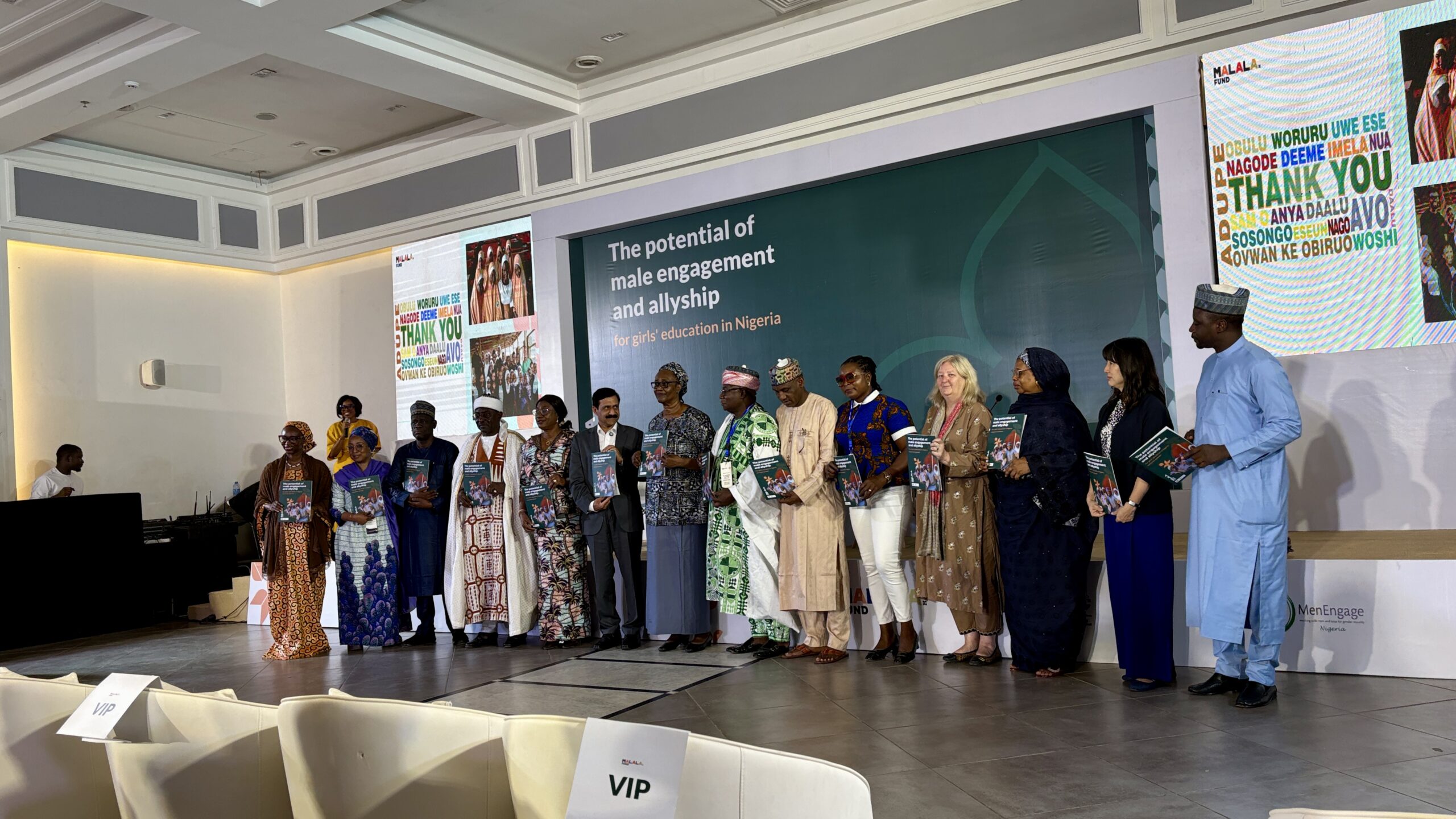
The report explores how men and boys can help challenge restrictive social norms, support education policies and create environments that enable girls to enrol in school, stay in school and complete their education.
The Malala Fund has called for stronger and more intentional engagement of men and boys in advancing girls’ education in Nigeria, saying efforts to improve learning outcomes for girls will remain limited unless harmful gender norms are confronted.
The organisation made the call on Wednesday in Abuja during the launch of a report titled “The Potential of Male Engagement and Allyship for Girls’ Education in Nigeria.”
The report explores how men and boys can help challenge restrictive social norms, support education policies and create environments that enable girls to enrol in school, stay in school and complete their education.
Speaking at the event, the Chief Executive Officer of Malala Fund, Nabila Aguele, said the organisation remains committed to ensuring that every girl has access to 12 years of free, safe and quality education.
Ms Aguele said the organisation’s work in Nigeria focuses on removing barriers that prevent girls from accessing education through advocacy, policy reforms and improved financing for the sector.
“We are advocating for girls who have been pushed out of school by pregnancy or early marriage to have clear and protective pathways back into education,” she said.
She noted that the organisation is supporting the implementation of Nigeria’s national re-entry guidelines and advocating education policies that help prevent child marriage.
She stressed that education financing must reflect the scale of the challenge facing millions of out-of-school girls across the country.
“We want to see funds and budgets that are gender-responsive and accountability mechanisms that turn commitments into action,” she said.
According to Ms Aguele, engaging men in girls’ education should go beyond public endorsements and ceremonial participation.
“Male engagement cannot be an afterthought. It cannot be symbolic endorsement or simply a matter of having more men in the room. It must be intentional, strategic and measured by the difference it makes to girls’ lives,” she said.
She added that while girls remain at the centre of conversations about education, many decisions affecting their futures are often made by men, including fathers, community leaders and policymakers.
“The question is whether they will reinforce these barriers or work to dismantle them,” she said.
Ms Aguele said the newly launched report was commissioned by the Malala Fund and developed by the development Research and Projects Centre (dRPC), with technical support from MenEngage and contributions from various stakeholders.
She urged policymakers, development partners and civil society organisations to use the report as a tool for driving accountability and improving outcomes for girls.
Also speaking at the event, Malala Fund co-founder, Ziauddin Yousafzai, said deeply rooted gender norms continue to deny millions of girls access to education, particularly in northern Nigeria.
He noted that decisions about girls’ education are frequently controlled by fathers, husbands and male relatives.
“Men have the power to decide whether a girl should go to school, whether she can stay in school and complete her education, and whether she can return to school after marriage,” he said.
Mr Yousafzai described girls’ education as both a rights issue and a development imperative.
He also warned against performative allyship, saying genuine support for girls’ education must translate into measurable improvements in girls’ access to education.
“We need to move from symbolic support to strategic action, accountability and measurable results,” he said.
According to him, the ultimate goal is to ensure that all Nigerian girls, especially those in the North-east and North-west, can access and complete safe, quality education.
A girls’ education advocate with Education as a Vaccine, Deborah Samuel, shared her personal experience of how education transformed her life.
She described education as a tool that gave her confidence, knowledge and opportunities she otherwise might not have had.
Ms Samuel recounted the story of a childhood friend who dropped out of school because her family did not prioritise girls’ education.
She said education enabled her to understand her rights, develop her abilities and believe in her future.
“Education has changed my life. Without education, I would not have discovered my abilities or had the courage to stand before distinguished people and speak today,” she said.
Ms Samuel also highlighted the important role her father played in supporting her education, describing him as one of her biggest supporters and an example of how men can positively influence girls’ futures.
She urged governments, development partners and communities to continue investing in girls’ education and to encourage more men and boys to become allies.
“Education is truly a vaccine. It protects us from poverty, ignorance and hopelessness,” she said.