Three leading civil society organisations have raised concerns over what they describe as the worsening neglect of the Nigerian boy child, urging the Federal Government to commission new research, strengthen child protection policies, and significantly increase education funding to address mounting social challenges.
In a joint statement issued to mark the 2026 International Day of the Boy Child, Boys Champions Foundation, ActionAid Nigeria and Oxfam in Nigeria said the country risks deepening inequality and insecurity if deliberate investments are not made in the welfare and development of boys.
The organisations noted that Nigeria has not conducted a nationally representative assessment of violence, abuse and neglect affecting children since the 2014 Violence Against Children Survey (VACS), leaving policymakers without up-to-date information on the realities facing millions of boys across the country.
According to the groups, the absence of current data has contributed to the continued exclusion of vulnerable boys from critical social protection, education and welfare programmes.
Speaking on the issue, Founder of Boys Champions Foundation, Noel Alumona, argued that Nigerian boys are burdened with enormous expectations from an early age but are rarely provided with the support systems needed to succeed.
“The Nigerian boy child is not failing; he is being failed,” Alumona said, stressing that meaningful change would require deliberate investments, effective institutions and collective commitment from government and society.
The organisations warned that the consequences of neglecting boys are increasingly visible in rising social instability, school dropouts, poverty and insecurity.
Country Director of ActionAid Nigeria, Dr. Andrew Mamedu, said investing in boys should be viewed as a long-term strategy for building stronger families and communities.
“If we fail to invest intentionally in the boy child today, society will pay tomorrow,” he said, adding that boys raised without adequate care, guidance and opportunities often carry those deficits into adulthood.
Similarly, Oxfam in Nigeria Country Director, Tijani Hamza, described the lack of updated national data on boys as a major development challenge.
“For over a decade, the Nigerian boy child has been virtually invisible in our national data. This is not just a statistical oversight; it is a profound crisis of inequality,” he said.
The coalition outlined three major demands to the Federal Government. First, it called for the immediate commissioning of a new Violence Against Children and Youth Survey to provide updated evidence on the experiences and vulnerabilities of boys across the country.
Second, it urged authorities to explicitly include boys in child protection, social welfare and education policies, particularly those affected by challenges such as the Almajiri system, street migration and school abandonment.
Third, the groups demanded a substantial increase in education funding, arguing that the current allocation of 7.3 per cent of the national budget falls short of international recommendations and is inadequate for tackling Nigeria’s out-of-school children crisis.
The organisations called on policymakers to raise education spending toward the UNESCO benchmark of 15 to 20 per cent of national budgets, insisting that stronger investment in education remains one of the most effective tools for protecting vulnerable children and securing the country’s future.
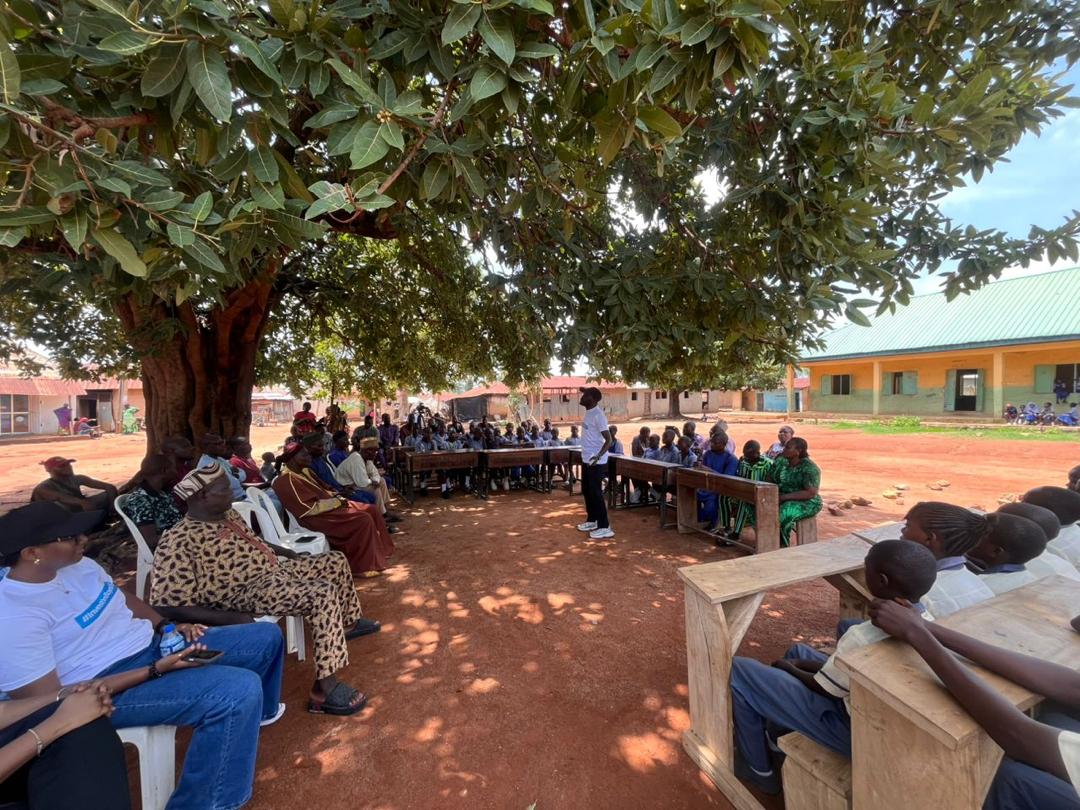
The appeal comes as stakeholders across Nigeria commemorate the International Day of the Boy Child under the theme, “Breaking the Silence: Boys and Mental Health: Investing in Boys for Stronger Families.”