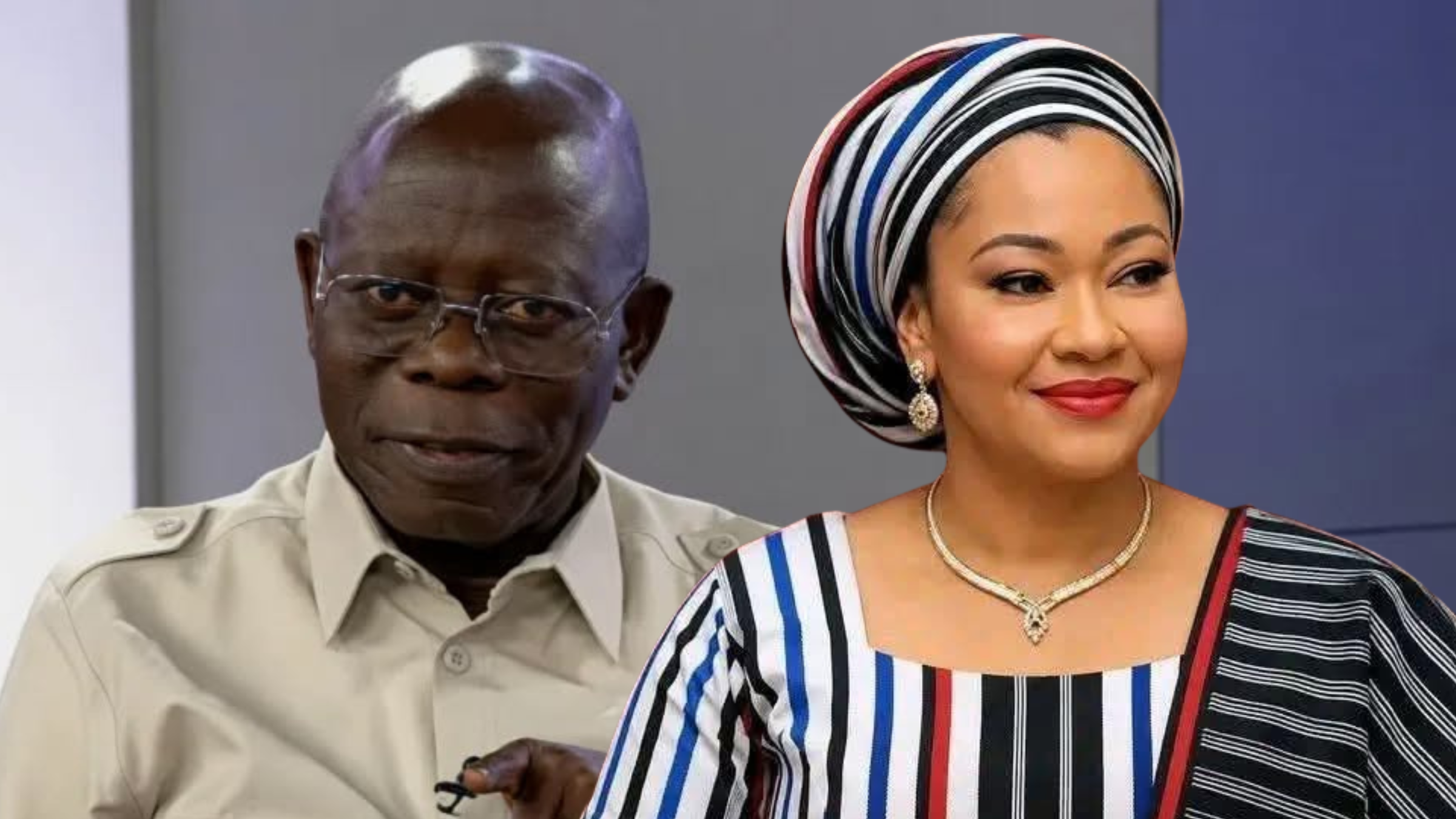
Mr Oshiomhole issued a statement, denying that he said that senators’ signatures were forged in Akpoti-Uduaghan’s suspension and accused the media of misinterpreting his comments.
Nigerian politicians often accuse the media of misrepresenting or misinterpreting their statements whenever there is backlash arising from their public comments.
A recent example was a statement made by the Edo North Senator, Adams Oshiomhole, during an interview on AIT’s Politics Today on Monday, in which he claimed that some senators whose names and signatures appeared on the recommendation for the suspension of the Kogi Central Senator, Natasha Akpoti-Uduaghan, last year, neither signed nor endorsed the suspension.
Since a video clip of the interview began circulating on social media, it has drawn attention to the former governor and fuelled speculations that the recommendation for Mrs Akpoti-Uduaghan’s suspension might have been compromised to favour the Senate President, Godswill Akpabio.
Several newspapers reported the interview from the angle that Mr Oshiomhole said some senators’ signatures were forged to push the suspension through, and several blogs feasted on it.
Less than 24 hours later, Mr Oshiomhole issued a statement denying that he had alleged forgery and accused the media of misinterpreting his comments.
The interviewer initially asked Mr Oshiomhole to respond to the Senate Leader, Opeyemi Bamidele’s recent remark that the suspension of Mrs Akpoti-Uduaghan represented one of the Senate’s lowest moments in recent years.
Responding, Mr Oshiomhole, a member of the All Progressives Congress (APC) and chairman of the Senate Committee on Interior, said some senators had complained that their names appeared on the suspension recommendation despite not endorsing it.
He specifically mentioned the senator representing the Federal Capital Territory, Ireti Kingibe, as one of those who raised concerns.
“There are people who wonder, who claim that their signatures were forged on that document. Someone like Senator Kingibe…she told me, ‘but I didn’t sign that report, and I didn’t agree with the content,’ but her name was published,” he said.
Mr Oshiomhole explained that members typically endorse committee reports by signing them, and that senators who disagree with a report may decline to sign it.
“You see, the way the Senate works is with committees, particularly through its oversight functions. They’ll hold a hearing and hear from everyone who has something to say. Then the committee will decide and agree on its findings and specific recommendations, and members of the committee are expected to sign the report to reflect the committee’s collective decision. So, where many don’t accept, they could abstain from signing it because, to sign is to endorse,” he said.
Mr Oshiomhole said that about three senators did not sign the recommendation, yet their names and signatures were still on it.
“So, there are one or two or three senators who said they didn’t sign, ‘but our names were there, how?’ Some said they may have attached an attendance register, which is inappropriate. But that is not my problem. If Opeyemi said so, I think you should take it seriously,” he said.
The interpretation of the interview clearly shows that Mr Oshiomhole did say that some senators’ signatures were forged in relation to the suspension of Mrs Akpoti-Uduaghan. Therefore, reports stating that he raised allegations of forged signatures are supported by his comments during the interview.
If a person did not sign a document but later finds their signature on it, it generally implies that the signature may have been forged or otherwise improperly affixed.
PREMIUM TIMES understood that Mr Oshiomhole may have come under pressure from colleagues, which could have influenced his subsequent denial of the statement.
However, the interview also indicates that Mr Oshiomhole presented the allegation as a complaint from other senators rather than as a claim he had independently verified.
The newspaper had earlier reported exclusively that the signatures attached to the report were allegedly taken from the attendance register.
Mr Oshiomhole’s argument that he did not say senators’ signatures were forged is contradicted by his actual remarks. He could have taken responsibility for his statement and apologised to his colleagues, rather than blaming the media for misinterpretation.
More details here...