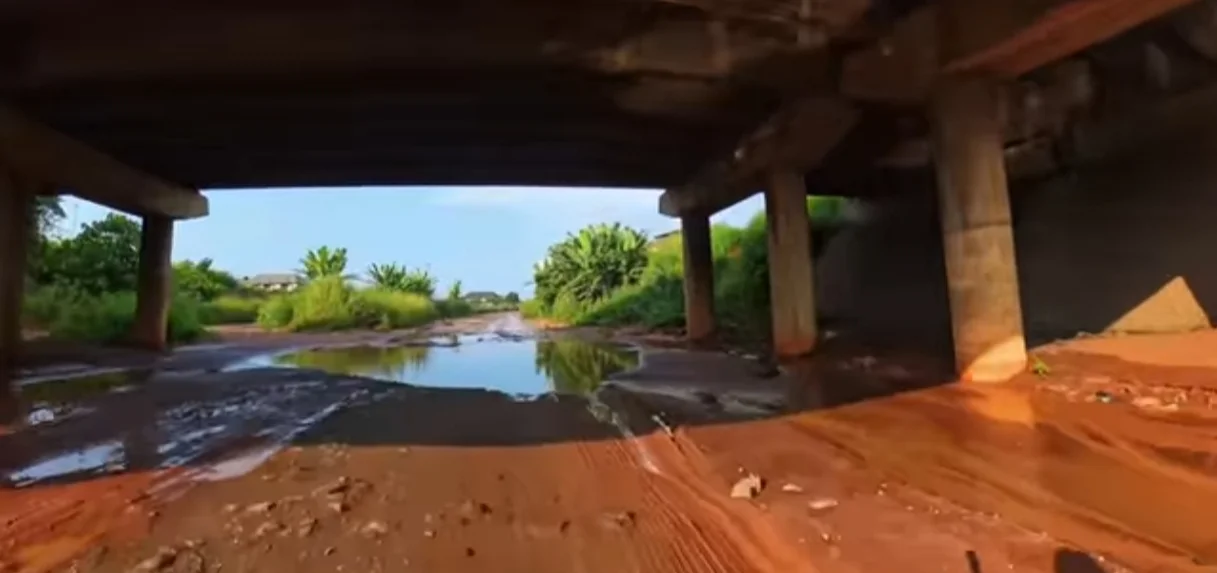
“Anytime vehicles are forced to crawl, passengers naturally become worried about security.”
Edo State residents have called for urgent reconstruction of major federal roads in the state, saying their poor condition is contributing to insecurity and exposing travellers to kidnapping and armed robbery attacks.
The residents told the News Agency of Nigeria (NAN) that deteriorated sections of the roads often forced motorists to slow down, creating prolonged traffic congestion for travellers into and through Edo.
This, they explained, often left commuters vulnerable to criminals operating along isolated stretches of the roads.
The concerns came amid surge in kidnapping and banditry in the country.
The federal and Edo governments are rehabilitating several federal roads traversing the state.
Monday Igbinovia, a commercial bus driver on the Benin-Auchi route, said that although the road had become slightly better compared to previous years, several failed portions still compelled drivers to reduce speed significantly.
According to him, such locations can become criminal flashpoints, particularly during periods of low traffic or at night.
“The road is better than before but there are still portions where vehicles had to slow down because of potholes and failed sections.
“Anytime vehicles are forced to crawl, passengers naturally become worried about security,” he said.
For Musa Abdullahi, a trailer driver, who transports goods between northern and southern Nigeria, the Benin-Auchi Highway remained one of the country’s most strategic economic corridors.
He noted that the high volume of trucks using the route often worsened road deterioration, creating bottlenecks that could expose motorists to criminal activities.
“The longer the articulated vehicles stayed on the road because of bad sections, the greater the security concerns for drivers and passengers,” he said.
Security concerns have heightened regarding sections of the Benin-Auchi-Okene, Benin-Ore corridors, and Benin-Agbor corridors, where road users had repeatedly raised alarm over criminal activities.
A motorist, Odiion Sufianu recalled previous protests by youths in Auchi over insecurity and gully erosion around the Jattu axis.
“When roads become difficult to navigate, travellers are forced into vulnerable situations. Poor roads can reinforce insecurity,” he said.
Several transport operators, including Victor Yusuf and Joe Adaba, called for comprehensive reconstruction of the Benin-Ekpoma-Auchi Highway rather than recurring palliative interventions.
According to them, a fully reconstructed highway would not only improve mobility but also reduce security vulnerabilities associated with long traffic queues and slow-moving vehicles.
Passengers also expressed similar concerns.
Grace Okojie, a frequent commuter, said delays caused by damaged sections often extended travel time and left passengers anxious, especially when journeys stretched into late evening.
Road transport stakeholders argued that the condition of highways had become both an economic and security issue.
Apart from increasing vehicle maintenance costs and transport fares, they said prolonged travel times created opportunities for criminals to exploit stranded or slow-moving motorists.
While concerns persisted along parts of the Benin-Auchi corridor, road users acknowledged significant improvements on the Benin-Sapele-Warri Highway, following ongoing reconstruction works.
A visit by NAN showed that previously impassable sections around Limit Road, Agip, PZ and Adesuwa junctions had been repaired and reopened to traffic.
Motorists said the development had substantially reduced travel time and eased traffic congestion that previously left commuters stranded for hours.
At Ologbo, the boundary community between Edo and Delta states, heavy-duty truck operators reported improved traffic flow after years of gridlock.
A commercial driver, Bashiru Danjuma said the reconstruction had not only revived transport businesses but also reduced the vulnerability associated with long queues.
“The bad road reduced the number of trips we could make daily. Traffic congestion also created security concerns because people can remain trapped on the road for hours. The improvement has brought relief,” he said.
A food vendor, Osariemen Osariodion recalled how a journey that ordinarily should last about an hour, sometimes stretched to five hours due to road failure.
Similarly, a farmer, Ebu Oriosaye said she frequently lost perishable agricultural produce because of the prolonged road journey.
Community leaders, including Erahor Omoruyi and Vincent Iyoha, said completing the road project would further strengthen economic activities while improving safety for commuters.