The number of confirmed cases of Ebola in the Democratic Republic of the Congo (DRC) has reached more than 1,000, with limited access to water complicating prevention efforts.
More than 800,000 internally displaced people are thought to live in Ituri province, the epicentre of the third-largest Ebola outbreak in history. Almost half live in places where access to water, sanitation and hygiene is critically limited, according to the Danish Refugee Council. This need has been exacerbated by aid cuts from countries including the US and UK across the last 18 months.
Overcrowded conditions in camps and population mobility are increasing transmission risks, while cuts to funding have made it “impossible to massively scale up efforts to contain Ebola,” Dr Manenji Mangundu, Oxfam’s DRC country director, told The Independent. “It might have actually accelerated the transmission of Ebola in the [displacement] settlements”.
“We are very concerned that the flow of resources is low and slow and there is not enough allocation for [hygiene] infrastructure,” Dr Mangundu added.
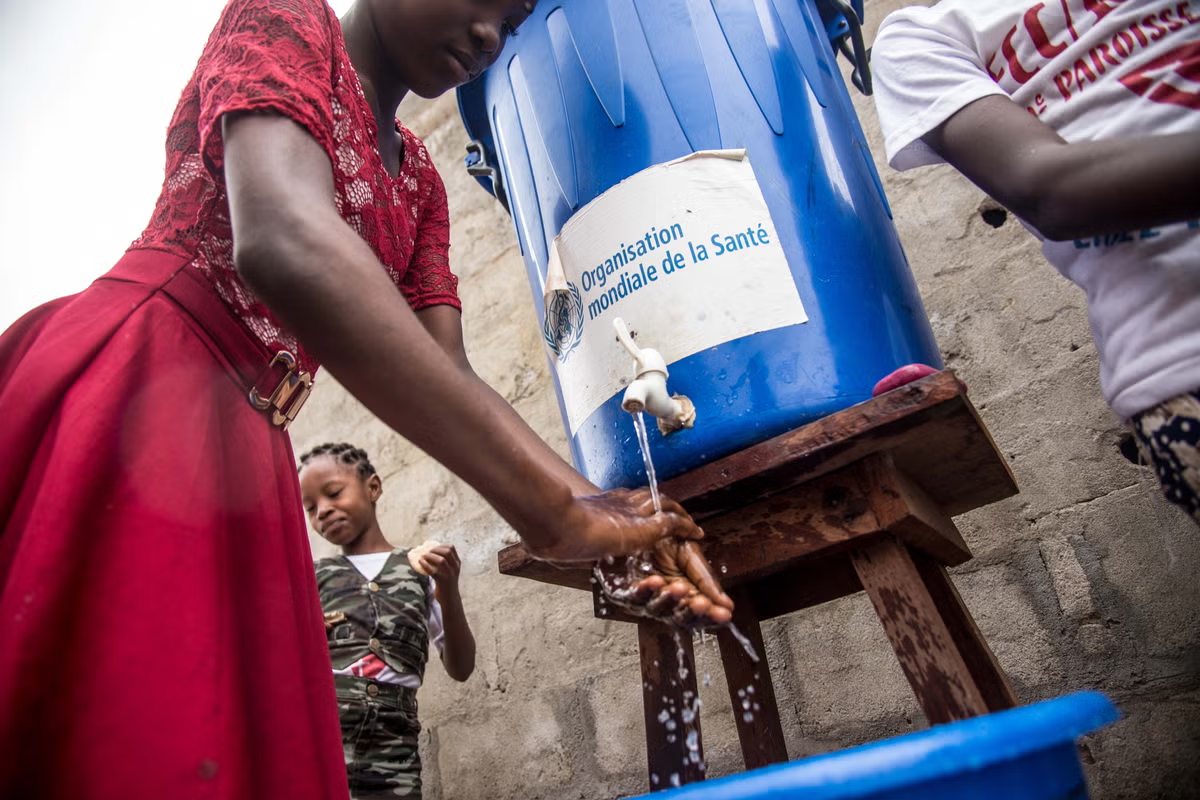
Handwashing is a frontline defence and vital for disease prevention because it is spread through direct contact with the body fluids of an infected person and can live on contaminated surfaces, skin and hands.
Response efforts during previous outbreaks included mobilising teams to upscale water, sanitation, and hygiene interventions – known as WASH – in outbreak areas, yet funding gaps following recent aid cuts have impacted both the infrastructure and its maintenance.
Funding for toilets and handwashing stations in Congo more than halved between 2024 and 2025, according to UN data. The US was previously the top supporter of WASH services in Congo, but this year’s $80 million appeal is only 21 per cent funded, according to Reuters. Last year, Donald Trump slashed aid funding from the US, essentially shuttering the United States Agency for International Development (USAID), taking billions of dollars away from projects around the world.
At least 30 have died since in one camp for displaced civilians in the northeast, with fears of a terrible spread as misinformation is also driving people to refuse testing.
In the Plaine Savo camp in Fataki, which houses up to 80,000 displaced people, only a third of latrines are functioning, Caitlin Brady, the Danish Refugee Council’s DRC country director told The Independent. For each one, there are on average 56 families.
“There is no way that families can take the necessary precautions to protect themselves from Ebola,” Brady said. “These are some of the most vulnerable people on the planet, heavily affected by ongoing violence.”
They hope donors will step up to fund water and sanitation in camps, she added, saying that it is “unacceptable” for the international community not to assist because the cost of containment financially, and in terms of lives, will become “enormous”.
Assistance budgets in the DRC reached a high of almost $1.4 billion in 2024, dropping to just $400 million in early 2026. It has weakened services that were supported by humanitarian organisations, with a fragile health system already tested by conflict.
The overstretched outbreak response has centered in treatment and isolation rather than protection and early intervention, and experts have warned that the spread of the disease is not yet under control and that we are yet to see its peak.
The healthcare system is so weak in some areas under the control of militant groups that “people struggle even to get paracetamol” said Dr Mangundu.
There is little cooperation between warring parties, meaning there is no cohesive national plan, while porous borders and displacement make tracking a surveillance difficult.
“We can’t control population movements because if they are running for safety, they have to run, but even someone who has not yet shown symptoms of Ebola can bring it into a displacement camp,” said Dr Mangundu. “We are advocating for an increase in resources so we are able to put enough water infrastructure to save the population.”
This article has been produced as part of The Independent’s Rethinking Global Aid project