5 min readUpdated: Jun 11, 2026 08:35 PM IST
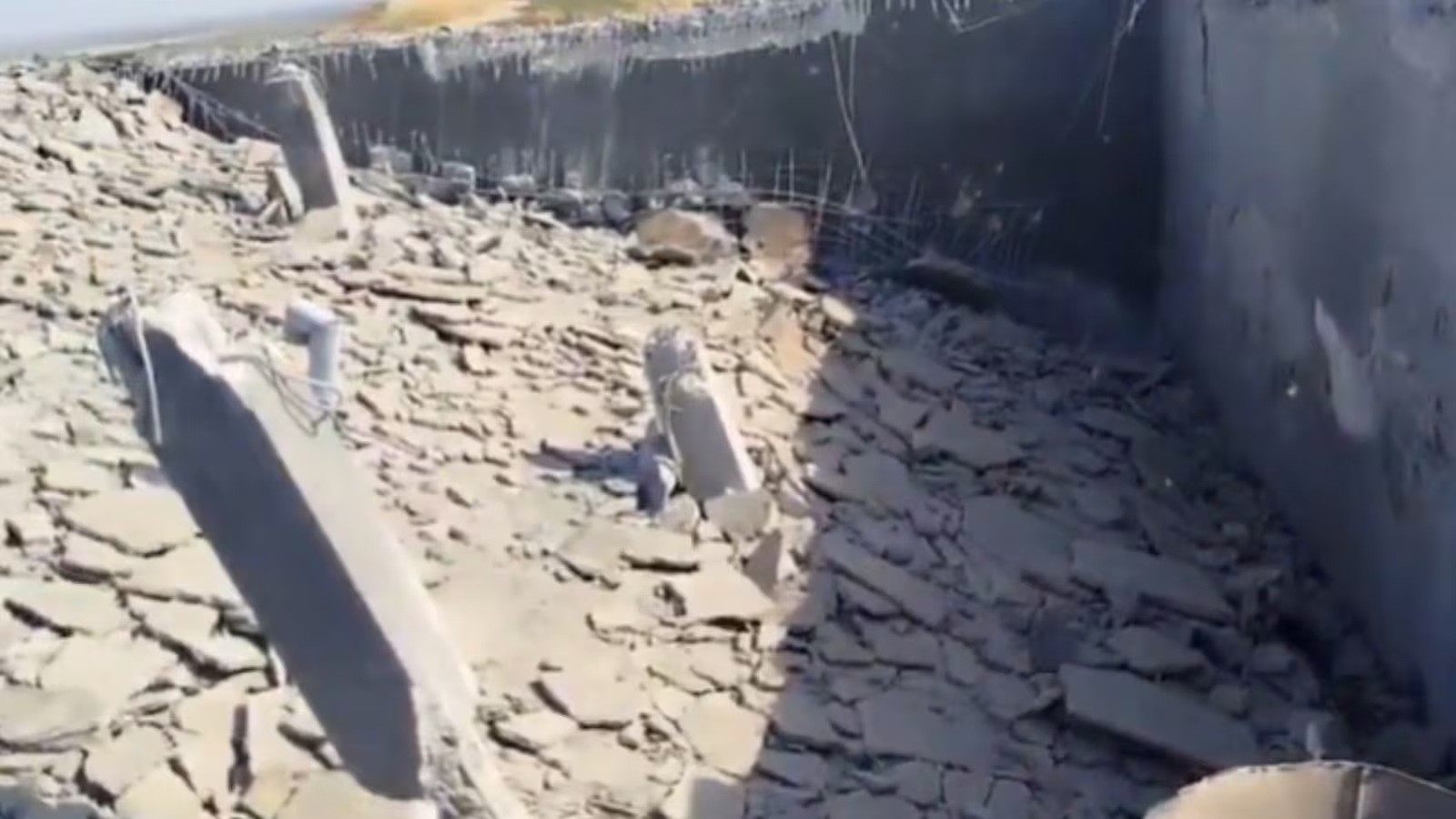
Iran’s semi-official Mehr News Agency on June 10, 2026 published photographs purporting to show that two concrete water-storage reservoirs in southern Iran’s Bamani district, with a combined capacity of 2,500 cubic metres and serving at least 20,000 people, were “completely taken out of service” after a US strike, with weapons experts identifying munition fragments at the site as belonging to the GBU-39 series, a US-made precision-guided bomb.
Abdul Hamid Hamzehpour, chief executive of the Hormozgan Water and Wastewater Company, told Mehr the reservoirs were “struck by missiles.” The strike, if confirmed as a US action, would raise scrutiny under Article 54 of Additional Protocol I to the Geneva Conventions, which protects drinking-water installations as “objects indispensable to the survival of the civilian population,” and comes three months after President Donald Trump in a March 2026 Truth Social post floated targeting Iran’s water desalination plants, a threat that had alarmed America’s Gulf allies, whose populations depend heavily on desalinated water.
🎦 Video of the attack by the US army on drinking water tanks in the Bemani district of Sirik County, Hormozgan https://t.co/ME1oPhKxAc pic.twitter.com/NYBuWZxWEJ
— IRIB (Islamic Republic of Iran Broadcasting) (@iribnews_irib) June 10, 2026
Why this matters
Bamani district lies in Hormozgan Province, the same southern Iranian province that hosts Bandar Abbas, which was hit in the US Tuesday strikes targeting “Iranian military surveillance capabilities, communication systems and air defence sites”. The Bamani reservoir destruction adds civilian water infrastructure to a US strike pattern that has also disabled the Palau-flagged oil tankers MT Marivex (June 8) and MT Settebello (June 10), the latter killing three Indian seafarers. Munitions experts Trevor Ball, a former US Army senior explosive ordnance disposal team member, and NR Jenzen-Jones, director of Armament Research Services, identified the GBU-39 series fragments, though CNN noted it could not independently confirm the munitions depicted in Mehr’s materials were found at the scene.
Israel and several Gulf states also possess the GBU-39, which means the presence at the site does not definitively identify the attacking party. US Central Command spokesperson Captain Timothy Hawkins said the command was aware of reports and was looking into the situation, declining further questions about the water facility.
The satellite image measurements suggest that at least one tank could have held approximately half a million litres of water. Mehr published photographs of only the smaller of the two tanks that got damaged. According to the Iranian Tasnim news associated with the country’s Revolutionary Guard Corps, the reservoirs provided water to at least 20,000 Iranians.
The munition
Israel, along with certain Gulf states, also uses this weapon. This means that its presence at the site does not definitely determine the identity of the attacking party.
“It’s possible there was an error in targeting this building specifically, but a munition error is very unlikely. The munition precisely hit this building, which is in a fairly remote area,” Trevor Ball told CNN.
Story continues below this ad
Broader context
In response to Iran targeting a US helicopter and downing it, the US launched strikes against Iran on Tuesday,9th June. Whether the Bamani reservoir was struck during those attacks could not be confirmed. Capt. Timothy Hawkins, the US Central Command spokesperson, just said that the command was aware of reports and was looking into the situation.
Water facilities are guarded under the Geneva Convention. The strike drew scrutiny as in March, President Donald Trump had suggested targeting Iran’s water desalination plants through a post on Truth Social. This threat had alarmed America’s Gulf allies.
What does it mean for India?
The strike on Iranian civilian water infrastructure adds another layer to India’s foreign policy positioning on the US-Iran conflict. India sources 65-70 per cent of its crude oil through the Strait of Hormuz, which borders Hormozgan Province (where Bamani is located) directly.
The Indian Embassy in Tehran has been monitoring the situation, and India’s Ministry of External Affairs has historically condemned attacks on civilian infrastructure in international conflicts, including in Lebanon and Gaza. India-Iran relations remain strategically significant, anchored by India’s Chabahar port investments and Iran’s role as a long-standing oil supplier. India has maintained a neutral diplomatic position across the conflict, though the recent deaths of three Indian seafarers in the US Settebello strike off Oman have prompted New Delhi to summon the US deputy chief of mission and lodge a “strong protest.”
Story continues below this ad
(This article was curated by Seekriti Saha, who is an intern at The Indian Express)
Stay updated with the latest – Click here to follow us on Instagram