James Emejo in Abuja
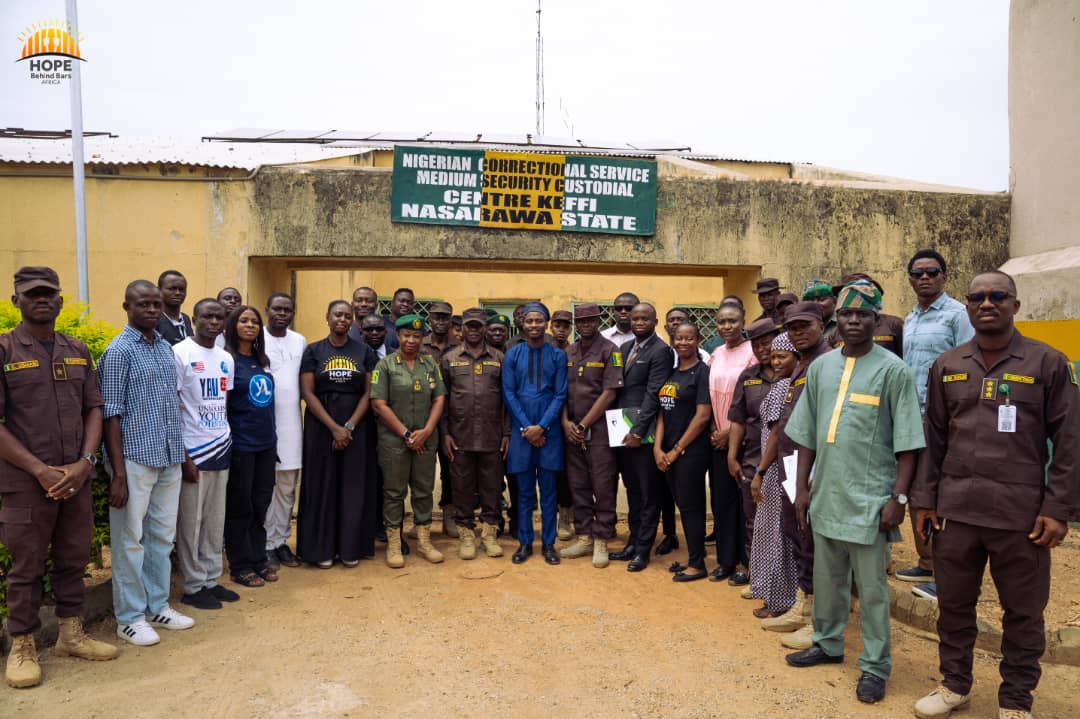
Hope Behind Bars Africa, with support from the Royal Norwegian Embassy and other partners, has refurbished and equipped the National Open University of Nigeria (NOUN) Study Centre and the National Business and Technical Examinations Board (NABTEB) Centre at the Medium Security Custodial Centre, Keffi, in Nasarawa State, in a move aimed at strengthening educational rehabilitation for inmates.
The intervention, executed under the Civic Accord Project, saw the organisation undertake extensive renovation works and provide educational infrastructure and learning materials designed to improve access to formal education within the custodial facility.
Speaking during the commissioning and handover ceremony, Wednesday in Keffi, Programmes Manager of Hope Behind Bars Africa, Mr. Hassan Nurudeen, described the project as part of efforts to transform correctional facilities from mere centers of confinement into centers of opportunity and rehabilitation.
According to him, the initiative aligns with the provisions of the Nigerian Correctional Service Act and seeks to expand educational and reintegration opportunities for persons in custody.
He said the organisation renovated the existing facilities by repairing and repainting ceilings, walls, doors, electrical fittings and sockets, while also installing additional lighting infrastructure.
Nurudeen disclosed that the organisation donated 18 desktop computers to support learning, examination preparation and access to educational resources by inmates.
He added that a 3KVA solar inverter system, a three-in-one printer, whiteboards, educational materials, and 20 tables and chairs were also provided, while an existing printer at the facility was repaired and refurbished.
The organisation further donated 500 exercise books, over 400 textbooks sourced from individuals and organisations, as well as stationery items including pens and pencils to support learning activities.
Nurudeen said, “The centre already existed, but there was virtually nothing inside. We decided to refurbish it extensively and equip it so that inmates can access quality educational opportunities while serving their sentences.”
He explained that Hope Behind Bars Africa, established about eight years ago to provide access to justice for indigent persons, had since expanded its interventions to address gaps within the Nigerian Correctional Service and the broader criminal justice system.
He said the organisation had worked with more than 10,000 inmates through access-to-justice programmes and had also implemented initiatives such as the “Farming for Justice” project, which equips inmates with agricultural skills and post-release support.
According to him, the ultimate objective is to reduce recidivism by ensuring that inmates leave correctional facilities with education, skills and opportunities that can help them become productive members of society.
He told THISDAY, “The idea is simple. People should not enter correctional facilities and come out worse than when they entered. When inmates have access to education and vocational opportunities, they become more useful to themselves and society when they regain their freedom.”
Also supporting the initiative, the Youth Leadership and Innovation Network (YALI) Abuja donated books to strengthen the library component of the educational centres.
Deputy Coordinator of YALI Network Abuja, Ms. Teresa Faruna, said the organisation deliberately sourced books capable of providing meaningful value to inmates during their incarceration.
She noted that the donation was made possible through contributions from young volunteers who provided both new and used books.
Faruna commended Hope Behind Bars Africa for its interventions within correctional centres and urged young Nigerians to become actively involved in community development initiatives.
She said, “The essence of this project from our perspective was to support the library with books. We were very intentional about the books we donated because we wanted inmates to derive real value from what they read while serving their time.”
Speaking after inspecting the renovated facilities, Controller of Corrections, Nasarawa State Command, Mr. Anthony Sanda, commended Hope Behind Bars Africa and its partners for supporting the Nigerian Correctional Service’s rehabilitation mandate.
Sanda said the intervention would have a far-reaching impact on inmates by providing educational opportunities that could aid their reintegration into society.
He said, “It is very important because education remains the bedrock of development, growth and personal transformation. Some inmates came here without certificates. Now they have opportunities to acquire qualifications and skills that can make them useful to themselves, their communities and the nation when they leave here.”
He added that the command would continue to support similar interventions and partnerships aimed at improving inmate welfare and rehabilitation.
The Officer-in-Charge of the Medium Security Custodial Centre, Keffi, Chief Superintendent of Corrections, Samaila Bulus, also highlighted the role of education in addressing the psychosocial challenges often faced by inmates.
According to him, educational programmes provide constructive engagement that helps inmates remain focused while serving their sentences.
Bulus said the Nigerian Correctional Service complements such initiatives with psychological support services, guidance and counselling, as well as dynamic security measures that involve continuous interaction and assessment of inmates’ needs.
He said, “It is not easy for anyone to find himself behind bars. But educational opportunities such as these help to engage inmates positively. We also have psychologists, guidance counsellors and assessment mechanisms that enable us to provide support tailored to the specific needs of inmates.”
The refurbished centres are expected to serve inmates enrolled in academic and vocational programmes, providing improved access to learning resources and examination preparation as part of ongoing efforts to strengthen rehabilitation and reintegration outcomes within correctional system.
The centers open opportunities to about 666 inmates housed at the correctional facility to pursue and earn first and second degrees including doctoral certifications while in custody.