New Delhi:
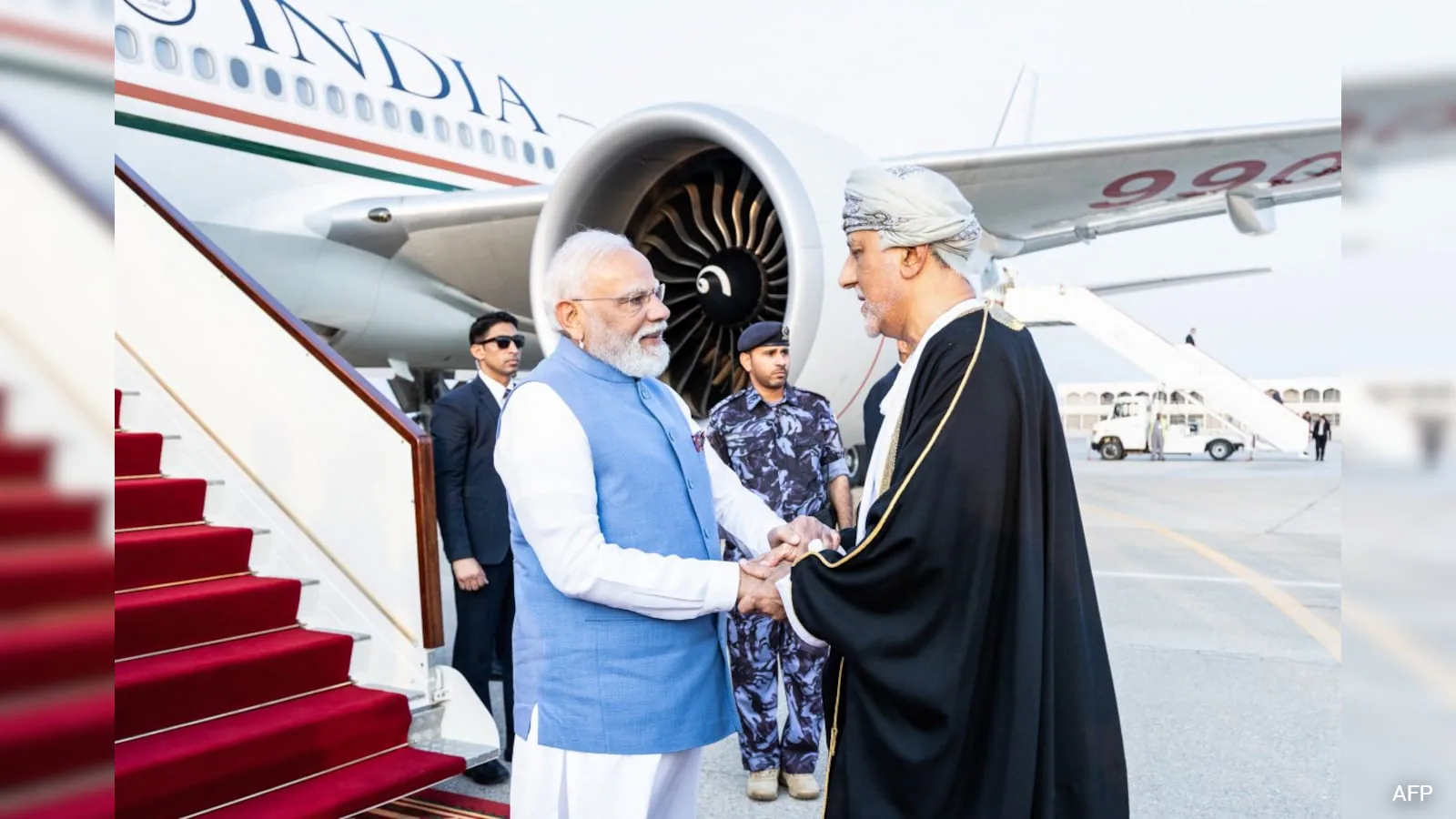
The India-Oman trade pact, offering zero-duty access to a range of Indian labour-intensive exports, is kicking in today. The Comprehensive Economic Partnership Agreement (CEPA) was signed in December last year during Prime Minister Narendra Modi’s visit to Muscat.
Taking to X, Union Commerce and Industry Minister Piyush Goyal announced the commencement of the agreement, saying it will be a defining milestone in New Delhi’s mission to create global pathways to prosperity for students, artisans, women, farmers, fishermen and MSMEs by opening new markets, boosting exports, attracting investments, and accelerating job creation.
Why The Deal Matters
The India-Omani CEPA comes into force amid the ongoing US-Iran war, which has severely disrupted the movement of ships in the international waters crossing the Strait of Hormuz. The strategically important narrow waterway handles about one-fifth (roughly 20 per cent) of global daily oil consumption and 25 per cent of global seaborne oil trade, making it the world’s most critical energy chokepoint.
The importance of the deal lies in Oman’s location. Iran’s chokehold on Hormuz has disrupted the flow of oil and gas to India from Saudi Arabia, Qatar and the United Arab Emirates (UAE), leading to a surge in crude oil prices. But, unlike most Gulf countries, which rely on shipping through the Hormuz, much of Oman’s coastline is located outside the Strait, directly on the Arabian Sea and the Gulf of Oman.
Ajay Srivastav, founder of think tank Global Trade Research Initiative (GTRI), noted that Oman’s strategic location allows major ports such as Salalah and Duqm to remain accessible even when traffic through the Strait is disrupted.
“As a result, Oman can continue serving as a reliable trade and energy gateway during periods of conflict or instability in the Gulf,” Srivastava said in a statement, adding the ongoing Gulf conflict has clearly demonstrated this advantage.
India’s imports from major Gulf economies fell sharply from about USD 15 billion in April 2025 to USD 9.8 billion in April 2026, while India’s exports to the region dropped from USD 4.4 billion to USD 2.7 billion.
Oman was the notable exception. India’s imports from Oman surged by 246.4 per cent, rising from USD 430 million to nearly USD 1.5 billion, driven by higher purchases of crude oil and urea.
Meanwhile, India’s exports to Oman declined by only 10.3 per cent.
“The experience shows that Oman can act as a dependable alternative trade and energy gateway for India when the Strait of Hormuz becomes risky or congested,” he said.
How India Gains From The Deal
Under the CEPA, Muscat is offering zero-duty access on 98.08 per cent of its tariff lines, covering 99.38 per cent of India’s exports to Oman, up from the pre‑CEPA system of zero‑duty access for 15.3 per cent of exports. All major labour-intensive sectors, including gems and jewellery, textiles, leather, footwear, sports goods, plastics, furniture, agricultural products, engineering products, pharmaceuticals, medical devices, and automobiles, receive full tariff elimination.
Indian exports to Oman totalled about $3.64 billion in fiscal 2026, led by refined petroleum products such as petrol (USD 781 million) and naphtha (USD 746 million), followed by calcined alumina (USD 277 million), iron and steel products (USD 230 million), machinery (USD 178 million), and rice (USD 167 million).
Although more than 80 per cent of Indian exports already entered Oman at relatively low average tariffs of around 5 per cent, duties on certain products reached as high as 100 per cent.
“Their elimination is expected to improve the competitiveness of Indian goods in the Omani market, though export growth will inevitably be constrained by the country’s relatively small population and market size,” Srivastava said.
Oman has a population of 55 lakh and a GDP of about USD 110 billion.
How Oman Gains From The Deal
In return, Oman’s gains are concentrated in sectors where it is already a major supplier to India, including energy, fertilisers, and industrial raw materials. Under the agreement, India will eliminate or reduce tariffs on about 78 per cent of its tariff lines.
India imported USD 7.2 billion worth of goods from Oman in fiscal 2026, dominated by crude oil (USD 1.6 billion), liquefied natural gas (USD 1.2 billion), and fertilisers (USD 843 million). Oman is also an important source of industrial feedstocks, supplying methanol worth USD 465 million and ammonia worth USD 424 million.