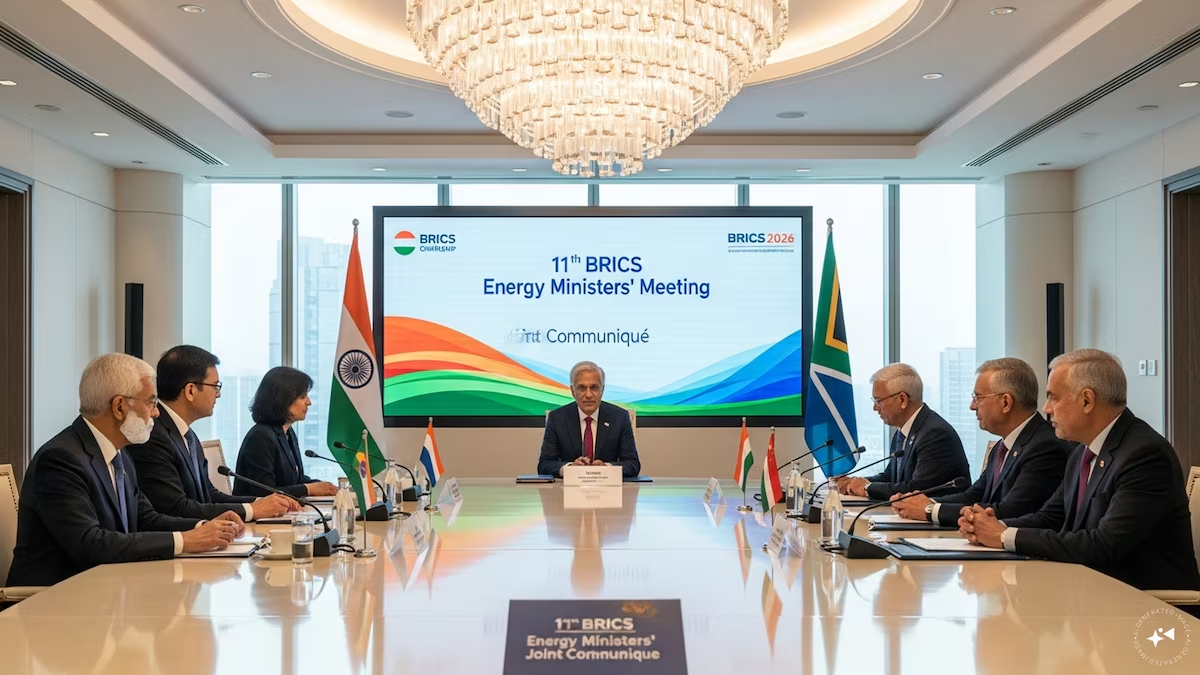
India hosted the 11th BRICS Energy Ministers’ Meeting in Gurugram under its BRICS Chairship 2026, where member countries reaffirmed the importance of respecting national circumstances, development priorities, and individual energy transition pathways.
The meeting concluded with the adoption of the 11th BRICS Energy Ministers’ Joint Communiqué, which India’s Ministry of Power said reflected a shared vision and broad consensus among BRICS nations.
The communiqué reaffirmed that energy security remains central to BRICS cooperation and called for the development of diversified, resilient, and transparent energy systems and supply chains.
It also underlined that access to secure, reliable, affordable, and sustainable energy is critical for economic development, job creation, industrial growth, and improving quality of life. Ministers stressed the need for balanced energy mixes and greater cooperation in areas such as cleaner and more efficient fossil fuel technologies, renewables, biofuels, hydrogen, energy storage, critical minerals, carbon capture, digitalisation, and energy efficiency, supported by affordable financing.
Recognising the role of research and youth engagement in shaping future energy systems, the ministers supported the BRICS Youth Energy Summit during India’s Chairship and reaffirmed their commitment to strengthening collaboration through the BRICS Energy Research Cooperation Platform. They also noted continued cooperation under China’s Chairship in 2027.
Key outcomes under India’s Chairship
India highlighted several outcomes delivered during its tenure, including the launch of the BRICS Digital Centre of Excellence for Smart Grids and Energy Storage under the Energy Research Cooperation Platform (ERCP). The centre will function as a voluntary platform for knowledge sharing, capacity building, exchange of policy and regulatory best practices, and development of pilot projects among member countries. The updated Terms of Reference of the ERCP were also endorsed to strengthen institutional cooperation in research and technical collaboration.
Member countries also adopted the BRICS Guiding Principles on Smart Grids and Energy Storage, aimed at supporting modern, resilient, and digitally enabled power systems that improve reliability, affordability, and renewable energy integration.
India’s Ministry of Power also noted progress on the BRICS Joint Report on Hydrogen Value Chains 2026, which is expected to support cooperation on hydrogen technologies, standards, industrial applications, and emerging value chains.
Discussion themes
The meeting, guided by the theme “Energy for All”, focused on three priority areas:
- Energy security and sustainability: resilient systems, diversified sources, critical minerals, supply chain stability, grid modernisation, and storage
- Energy access and equity: universal access, clean cooking, affordable financing, capacity building, and support for developing economies
- Technology and innovation: smart grids, hydrogen, digitalisation, AI, biofuels, carbon capture, and energy efficiency