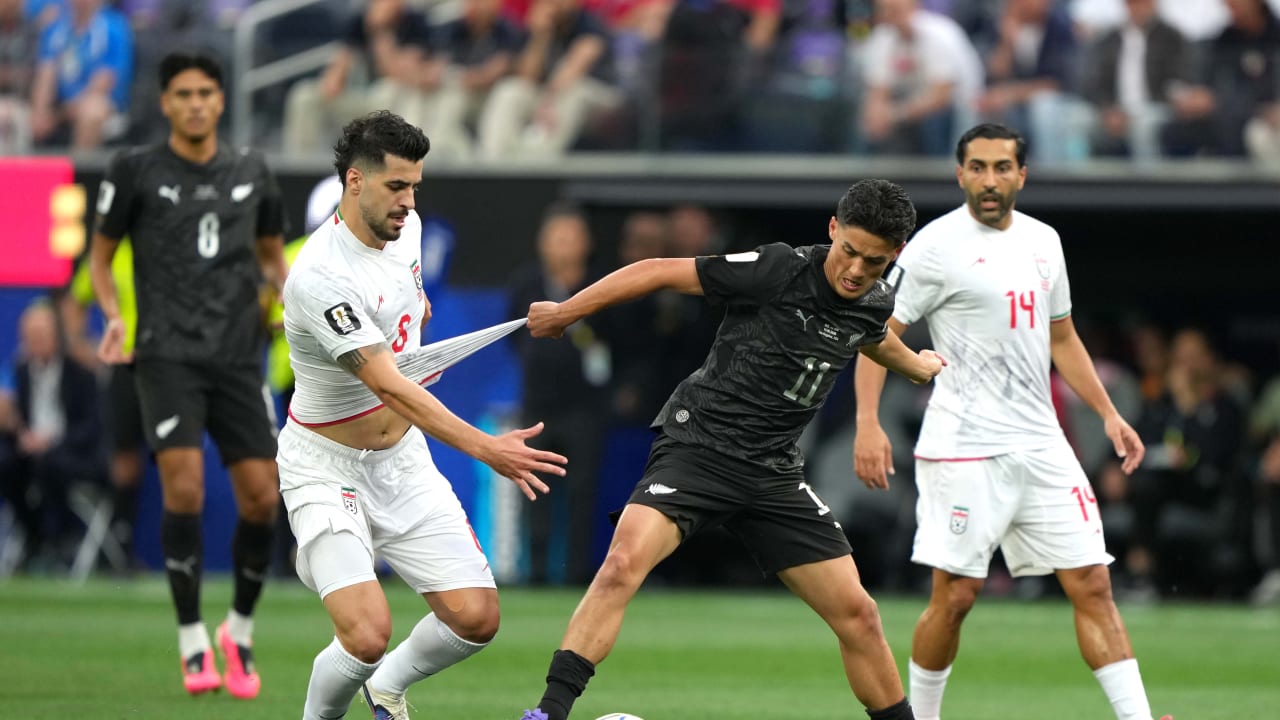
Restrictions around the Iran national team’s World Cup travel are being slightly loosened, with the team now permitted to travel to at US game sites two days before the day of the match, the US Department of Homeland Security announced on Tuesday.
Iran were previously forced to travel to game sites within 24 hours of each of their first two games, both of which were played in Inglewood, Calif. This change will allow Iran to travel to Seattle on Wednesday ahead of Friday’s Group G match against Egypt.
The team still must return to its base camp in Tijuana, Mexico, immediately after a match concludes, leaving that aspect of Iran’s travel restrictions unchanged.
Iran announced over the weekend they would be making a complaint with FIFA about the requirements, with manager Amir Ghalenoei saying Iran are “the most oppressed team in the whole World Cup.”
And yet Iran (0-0-2, 2 points) earned a draw in each of their first two matches and can advance to the knockout stage for the first time in history with a win, and potentially a draw, in their final group-stage match. Egypt top the group standings at 1-0-1 with four points.
As of Tuesday afternoon’s live knockout stage bracket created by BBC, Iran is set to face Australia in a Round of 32 match July 3 at Arlington, Texas.
The team’s presence is outraging many who see the Iranian government as using the competition to sportswash its killing of dissidents since the 1979 Islamic Revolution. Protesters said many thousands have been killed over the years, including during widespread demonstrations in January, and that hundreds of athletes have been among the victims.
“Bringing them here and having them play basically presents a calm face to the world, when in fact back home there is no calmness, there’s only execution and suffering that the regime has brought,” said 21-year-old American-born Ryan Salami, whose parents both fled Iran, in an interview at a protest in front of Los Angeles City Hall.
Another protester said the players were being used like tools to help the Iranian government look good on the world stage and that the players deserved little pity.
“They are all attached to the regime in some way,” said Peymaneh Shafi, who said she became an opponent of the Iranian government after gunmen shot her teacher in front of her. “These are the real athletes,” she said, pointing to photographs of athletes persecuted by the Iranian government.