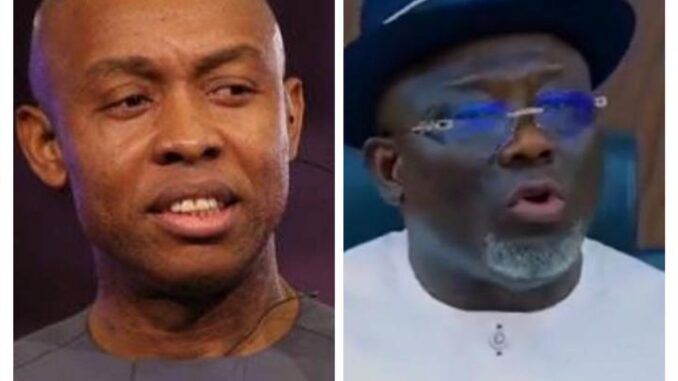
Human rights lawyer and public affairs commentator, Chidi Odinkalu, has criticized comments made by Delta State Governor, Sheriff Oborevwori, during a recent television interview, arguing that politicians should not attribute electoral outcomes to God in a manner that excuses wrongdoing.
Odinkalu’s reaction followed remarks by Oborevwori during an interview in which the governor expressed confidence that the Igbo communities in Delta State would support the All Progressives Congress (APC) in future elections.
The governor stated that voting patterns among the communities had changed since the 2023 elections and claimed they were now aligned with the ruling party.
“The Igbo communities in Delta that did not vote for the APC’s candidate in 2023 did not repeat that voting pattern during my election. We are on the same page. This time I have told them not to vote on an individual basis but to vote for the party. I am confident they will vote for the APC,” Oborevwori said.
Reacting on social media, the former chairman of the National Human Rights Commission argued that politicians often invoke God to justify questionable political actions.
“Delta State Governor, Sheriff Oborevwori, claims here that there is nothing God cannot do. He is wrong,” Odinkalu wrote.
He went further, insisting that God should not be associated with acts of electoral malpractice or the unlawful acquisition of political power.
“These Nigerian politicians want to turn God into a criminal. God is not a criminal. He does not steal, grab it or run away with stolen mandate. God does not rig elections; criminals do,” he stated.
Odinkalu’s comments have sparked debate online, with supporters and critics offering differing views on the role of religion in political discourse and campaign rhetoric.
While some social media users agreed with his position that politicians should be held accountable for their actions rather than attributing political outcomes solely to divine intervention, others defended the governor’s statement as a common expression of faith and optimism.
The exchange comes amid heightened political activity ahead of the 2027 elections, with political leaders across the country increasingly positioning themselves and their parties for upcoming contests.
As reactions continue to trail both Oborevwori’s remarks and Odinkalu’s response, the discussion has once again highlighted the intersection of faith, politics, and accountability in Nigeria’s democratic process….See More