The recent conclusion of the hundred-and-seven-day conflict in West Asia, marked by a tenuous United States-Iran MoU that aims to be converted into a peace pact over the next 60 days, offers a case study in the shifting sands of modern geopolitics. While the global economy breathes a collective sigh of relief as oil flows slowly resume and Brent crude prices tumble from their wartime peaks back toward stability, the strategic ledger of this brief but devastating war reveals a complex tapestry of miscalculations, asymmetric survival, and diplomatic realignment.
In parsing the structural outcomes of the conflict from New Delhi, our principal focus naturally falls on the overt participants – the frustration of Washington’s futile bombardment and unachieved regime-change objectives, the resilience of Tehran’s asymmetric chokehold on the Straits of Hormuz, and Israel’s tactical degradation of regional proxies balanced against its failure to secure absolute Iranian capitulation. Yet, beneath these immediate strategic realities lies a subtler, equally consequential diplomatic theatre, where South Asian powers sought to navigate the crisis, resulting in a dramatic up-ending of traditional roles.
Advertisement – Scroll to continue
India’s West Asia Policy
For decades, New Delhi’s foreign policy in West Asia was defined by an elegant, calculated non-alignment, recently rephrased as multi-alignment. This strategy allowed it to cultivate deep civilisational, economic, and energy ties with Iran while simultaneously building robust, high-tech security partnerships with Israel and maintaining vital relationships with the Gulf monarchies. This strategic balancing act was not merely a passive moral stance; it was a pragmatic necessity dictated by geography and economic imperatives. However, the recent hostilities exposed an apparent vulnerability in this doctrine, as New Delhi seemed to compromise its historic equilibrium by leaning heavily toward the American-Israeli axis, exemplified by Prime Minister Modi’s embrace of his Israeli counterpart in Tel Aviv days before the bombardment of Iran began. By abandoning its traditional position of studied neutrality during the peak of the crisis, the state risked being perceived as a partisan actor rather than an independent global power.
This apparent diplomatic misstep carried immediate structural costs. In geopolitics, the vacuum left by a retreating potential mediator is instantly filled by a rival. By tying its rhetorical and diplomatic positioning so closely to one side of the conflict, New Delhi seemed to have compromised its credibility as an acceptable interlocutor to Tehran. Consequently, it is argued, India ceded the prestigious and influential “high table” of West Asian diplomacy – specifically the peace deliberations in Geneva – to Islamabad. For a nation that has long prided itself on its strategic autonomy and its capacity to speak to all sides of a fractured global order, watching a historical adversary, whom we have long derided as a client of the US and a vassal of China, assume the mantle of regional peacemaker represents to many a significant diplomatic setback. It underscores the peril of short-term alignment over long-term geopolitical constancy, especially in a neighbourhood where the immutable realities of geography require enduring relations with near neighbours, regardless of the ideological or religious complexion of their governments.
Mediator Or Messenger?
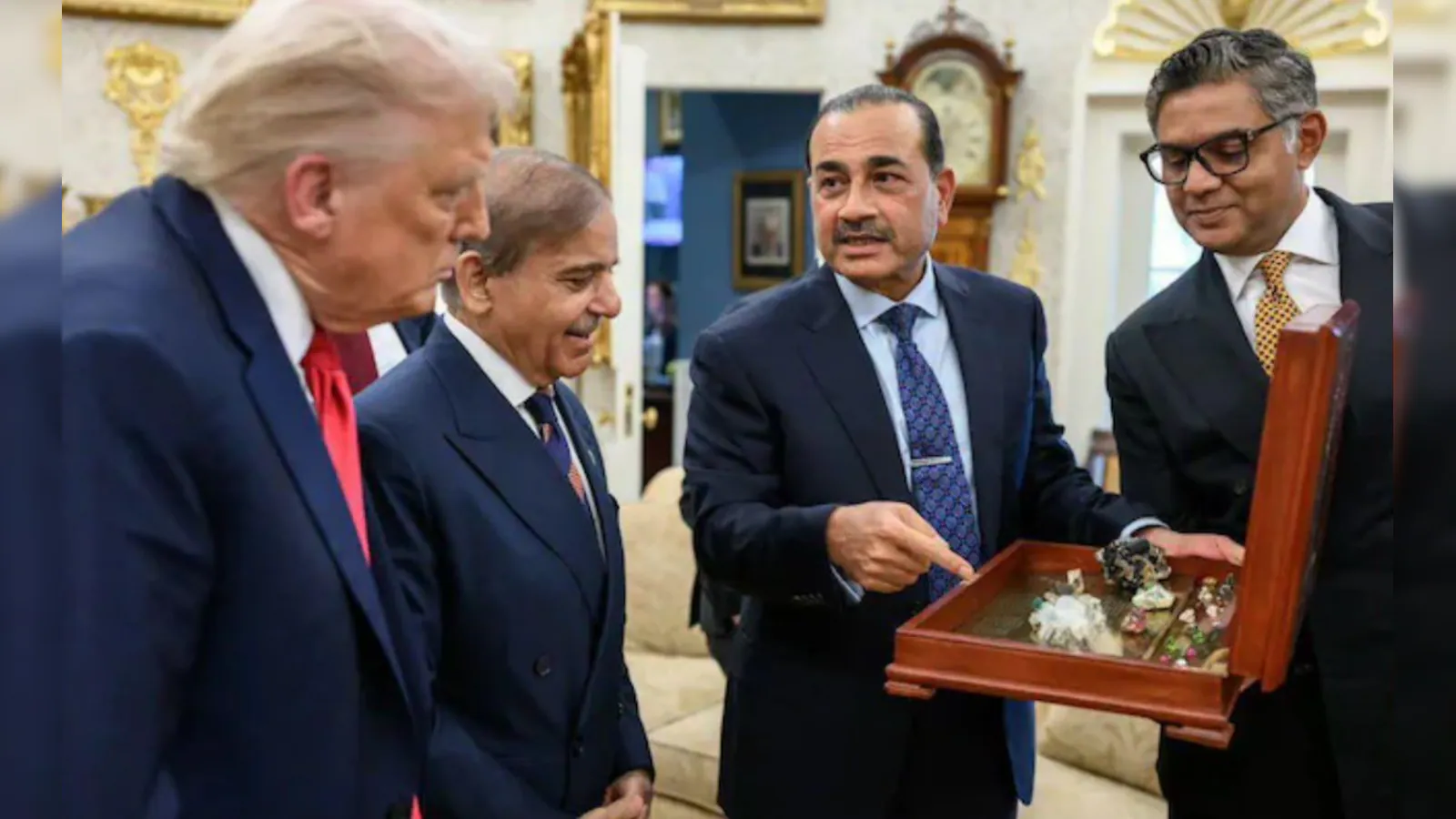
Yet, the narrative of Islamabad’s sudden ascension as an independent regional mediator requires a deeply sceptical re-examination. While the state eagerly claimed credit for facilitating the breakthrough and announcing the cessation of hostilities, its diplomatic conduct throughout the crisis tells a more complicated story. The hyper-visibility of its leadership, characterised by an almost unctuous flattery directed toward the American presidency, and the embarrassing episode of Pakistan releasing a statement evidently drafted in Washington (with the inadvertently-released headline ‘Draft for Pakistan’s PM‘ giving the game away) raises profound questions about the authenticity of its “neutrality”. True mediation requires a degree of detachment and an equal distance from the core disputants. Islamabad’s performative obsequiousness toward Washington strongly suggests that it was far from a disinterested, objective arbiter. Instead, its behaviour aligns perfectly with the classic definition of an agent of convenience – an actor with pre-existing loyalties, deeply invested in currying favour with its superpower benefactor to alleviate its own domestic economic and political fragilities.
Therefore, under closer scrutiny, the assertion that Islamabad acted as a genuine, independent mediator holds little water. A real mediator possesses the independent leverage to alter the behaviour of both parties and shape the terms of the discourse. In this theatre, however, the state functioned less as an autonomous peacemaker and more as a convenient diplomatic surrogate – a conduit for conveying messages between two adversaries who lacked formal channels but needed a face-saving mechanism to de-escalate. Washington, trapped in an unpopular, economically destabilising, and legally dubious conflict initiated without domestic legislative consent, desperately required a back-channel to signal its willingness to blink. Tehran, having demonstrated its capacity to disrupt global commerce through the weaponisation of the maritime chokepoint of Hormuz, but suffering immense internal strain from targeted assassinations and economic isolation, similarly needed a porch upon which to land.
Why Pak Was Chosen
In this context, Islamabad was selected not for its strategic weight or its moral authority, but for its utility as a reliable message-transmission belt. It was an instrument through which the United States could pass terms and receive responses without the domestic political fallout of direct, high-level engagement with a state it had spent months demonising. This arrangement allowed the Americans to manage an exit strategy while permitting its South Asian proxy to drape itself in the optics of global statesmanship. The performative praise lavished on the American executive was the transactional currency paid by a surrogate eager to validate its relevance to its patron, ensuring that its diplomatic service would be rewarded with much-needed economic or political capital down the road.
Ultimately, the broader analysis of the West Asian crisis reveals that while the guns have fallen silent and a fragile sixty-day framework for nuclear negotiation has been established, the diplomatic landscape has been remapped. New Delhi’s departure from its foundational neutrality served as a stark reminder that in the arena of great-power politics, perceived partisanship instantly erodes the leverage required to act as a global bridge. It sacrificed a long-standing reputational asset for an alignment that yielded little tangible strategic dividend. Conversely, Islamabad’s moment in the diplomatic spotlight, while styled as a triumph of mediation, was fundamentally an exercise in proxy diplomacy. It demonstrated that a state can occupy a seat at the high table without possessing true strategic independence, serving instead as a sophisticated “front” for a superpower in retreat. It may be rewarded with enhanced military or financial aid by Washington, but not enough to be a game-changer in Pakistan’s fortunes.
As the international community transitions to the arduous task of hammering out the final details in Geneva, the true lesson of this conflict is that both the premature abandonment of neutrality and the eager adoption of a surrogate role carry profound long-term implications for strategic autonomy in South Asia. For India, the evident lesson is to return to genuine multi-alignment. For Pakistan, it will be to shed its illusions about its gains in global stature. There will certainly be some applause, when the final deal is clinched, for Pakistan, Qatar, Oman and other regional peace-makers. But to imagine a Nobel Peace for the terrorist-sponsoring Field Marshal Asim Munir may be a fantasy too far. The world sees clearly the difference between an autonomous actor and a message-carrying stool-pigeon.
(Shashi Tharoor has been a Member of Parliament from Thiruvananthapuram, Kerala, since 2009. He is an esteemed author and a former diplomat.)
Disclaimer: These are the personal opinions of the author