Adedayo Akinwale in Abuja
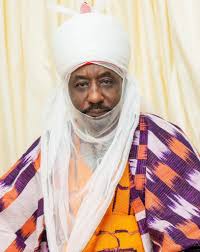
Emir of Kano, Khalifa Muhammadu Sanusi, has said that traditional rulers and religious leaders must actively discourage all forms of division, extremism, hate speech and discrimination, while encouraging dialogue, understanding and cooperation across ethnic, religious and regional lines.
Sanusi disclosed this on Thursday in Abuja at the 2026 National Social Cohesion Dialogue and unveiling of the 2026 Nigeria Social Cohesion Survey report with the theme, ‘Strengthening the role of religious and traditional institutions as key agents of social cohesion.’
The Kano Emir, who was represented by the Falakin Kano, Muktar Bello, noted that the theme was both timely and highly relevant at a point when the nation continues to face complex social, economic and security challenges.
Sanusi stressed that there was an urgent need to strengthen the bonds, build public trust and promote peaceful co-existence among all settlements of the society.
The royal further noted that traditional institutions have served as custodians of culture, moral values and community stability, likewise, religious institutions have continued to provide spiritual guidance with ethical leadership and platforms for fostering understanding among diverse
His words: “Together, these institutions possess unique capacity to bridge divides. We need concrete strength and cultural aspects and respect collective action towards national development.
“As leaders entrusted with the confidence of our people, we must continue to champion the values of tolerance, inclusiveness, compassion, justice and respect for human dignity.
“We must actively discourage all forms of division, extremism, hate speech and discrimination, while encouraging dialogue, understanding and cooperation across ethnic, religious and regional lines.
“Nigeria’s diversity remains one of its greatest strengths. Our various cultures, traditions, languages and faiths should be a source of enrichment rather than omission.”
Sanusi emphasised that building a nation requires deliberate efforts and partnership among government institutions, traditional rulers, religious leaders, civil society organizations and the private sector.
He added that it is a collective responsibility that demands sincerity, commitment and sustained action.
In his submission, the Chairman of Ekiti State Council of Traditional Rulers and the Ogaga of Ikete-Ekiti, Oba Samuel Adejimi, decried the emasculation of traditional rulers in the society.
He lamented that the traditional institutions are subordinate to even local authorities.
Adejimi commended the Emir of Kano for speaking truth to power, while decrying that if any traditional ruler tried that in the South, he could be deposed.
He maintained that it was high time the traditional institutions were strengthened.
On his part, the Archbishop of the Catholic Archdiocese of Abuja, Dr. Ignatius Kaigama, advocated the integration of traditional and religious institutions into governance, while suggesting statutory representation in assemblies and a dedicated ministry or parastatal.
Kaigama, who was represented by Rev. Fr. Emmanuel Onamba, emphasised the importance of involving these institutions in policy-making and governance at the local level.
He criticised the government for only engaging these institutions in times of crisis and then neglecting them.
Kaigama stated: “The government should find a way of incorporating the traditional and religious institutions into governance, such as statutory representation in state and National Assemblies.
“They can also create a ministry or parastatal for traditional and religious institutions. This will also be of assistance in enhancing the making of policies.
“The local government areas can be tinkered with to reflect more of our traditional institution, instead of these local government areas that seem not to be working. Why not? We go back to the traditional institutions and let them manage the local level of governance.
“Similarly, the government should not only appeal to religious and traditional institutions in times of crisis and abandon them hereafter. They have a perpetual relevance.”
Earlier, the Executive Director, African Polling Institute (API), Prof. Bell Ihua, said the 2026 Nigeria Social Cohesion Survey is a National Citizens Survey that builds upon four previous editions (2019, 2021, 2022, 2025).
He noted that this marked the fifth round of conducting this survey, and it has been expanded in scope to cover 14 key indicators, namely: Identity, Trust, Social Justice & Equity, Civic Participation, Tolerance, Gender Equity/Disability & Inclusion, Impunity, Corruption, Natural Resource Governance, Polarisation, Security and Peacebuilding, Coping Strategies, Migration, and Self-worth & Future Expectations.
The executive-director said the report was supported by Ford Foundation.
Ihua noted that the 2026 Nigeria Social Cohesion Index (NSCI) has been computed at 48.8 per cent, two percentage points higher than last year’s index and the highest level recorded since the study commenced.
He stressed that the index remained marginally below the average 50 per cent benchmark.
According to him, “This upward trend suggests that Nigerians continue to demonstrate resilience and a commitment to coexistence despite prevailing hardships. Particularly significant is the finding that, for the first time since the survey’s inception, the majority of respondents identified primarily as Nigerians rather than by ethnic, religious, or regional affiliations.”