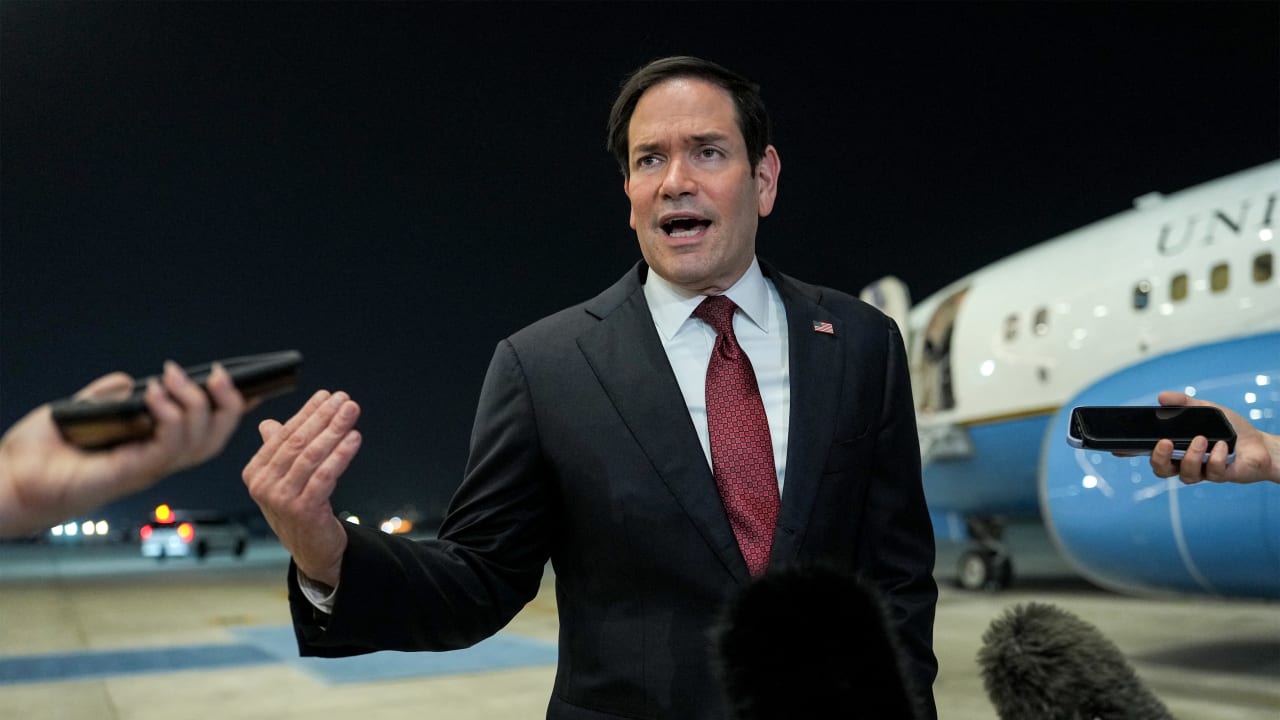
Secretary of State Marco Rubio began his Gulf tour in the United Arab Emirates on Tuesday, marking the next stage of the 60-day negotiating period between the United States and Iran.
Speaking to the press pool after a day of meetings, Secretary Rubio focused his remarks on ending the terror proxy regime as part of what it will take to end hostilities in the region, freedom of navigation through the Strait of Hormuz, and the future of Iran.
“You can’t have the end of hostilities and conflicts in the region as long as Iranian proxies are launching missiles and drones from Iraq, and are participating in terrorism like Hamas did and Hezbollah did,” Rubio said.
“No country is allowed to charge tolls or fees on an international waterway. That’s existing international law,” Rubio said in reference to the state of the Strait of Hormuz.
Rubio alluded to a future where Iran is a full participant in global relations, so long as they abandon their terror proxy regime.
“If [Iran’s] leadership makes a decision that they want to be a country instead of a revolutionary movement that exports terror, they’re going to have an opportunity to do incredible things,” he said. “That is something that is going to have to depend on progress made on a host of other security issues that have to be confronted in the days to come.”
Rubio addressed the concurrent talks between Israel and Lebanon, clarifying that Lebanon is a sovereign country and those talks are separate from the US’s talks with Iran. The US will “negotiate and deal directly with the Lebanese government,” the secretary said.
While there is overlap, referring to Iran’s proxy Hezbollah, “the future of Lebanon belongs to the Lebanese people through their sovereign, elected government,” Rubio said.