West Asia saw one of its sharpest escalations in weeks on Wednesday after Iranian missiles and drones struck Kuwait, damaging the country’s main airport terminal and killing an Indian national, while the United States allegedly launched retaliatory strikes on Iran’s Qeshm Island in the Strait of Hormuz. The back-and-forth came as ceasefire talks showed signs of strain, with Iranian negotiators going quiet and fighting continuing in Lebanon.
The US military said Iran fired two missiles at Kuwait that fell apart en route, and it “downed multiple drones” targeting American forces in the country. The military also said US and Bahraini forces intercepted missiles aimed at the Gulf kingdom, which is home to the US Navy’s 5th fleet.
Bahrain’s Defence Ministry said its military intercepted and destroyed three missiles and several drones fired by Iran.
How did Iran respond?
Iran’s paramilitary Revolutionary Guard acknowledged that it targeted the headquarters of the 5th Fleet and US military facilities in another country, but did not name Kuwait. Both the US and Iran said they were retaliating for earlier attacks or attempted attacks. The US military also said it launched strikes on an Iranian military ground control station on Qeshm Island in the Strait of Hormuz.
Iran’s Foreign Ministry condemned the US strikes on Qeshm Island, where it said a telecommunications tower was struck, and other previous strikes. It called them “acts of aggression” that it said violated the ceasefire. A senior Emirati diplomat called for “a firm, unified, and cohesive Gulf position” against Iran following the attacks.
Iran’s Islamic Revolutionary Guard Corps (IRGC) said it launched ballistic missiles and drones targeting US-linked sites across the Gulf in retaliation for American strikes on Qeshm Island.
What happened in Kuwait and Bahrain?
The United States and Bahrain said their air defence systems intercepted several Iranian missiles and drones before they could hit their intended targets.
Story continues below this ad
US Central Command (CENTCOM) said three missiles aimed at Bahrain were intercepted by US and Bahraini forces, while two missiles launched toward Kuwait either fell short or broke apart mid-flight.
Kuwait airport hit, one killed
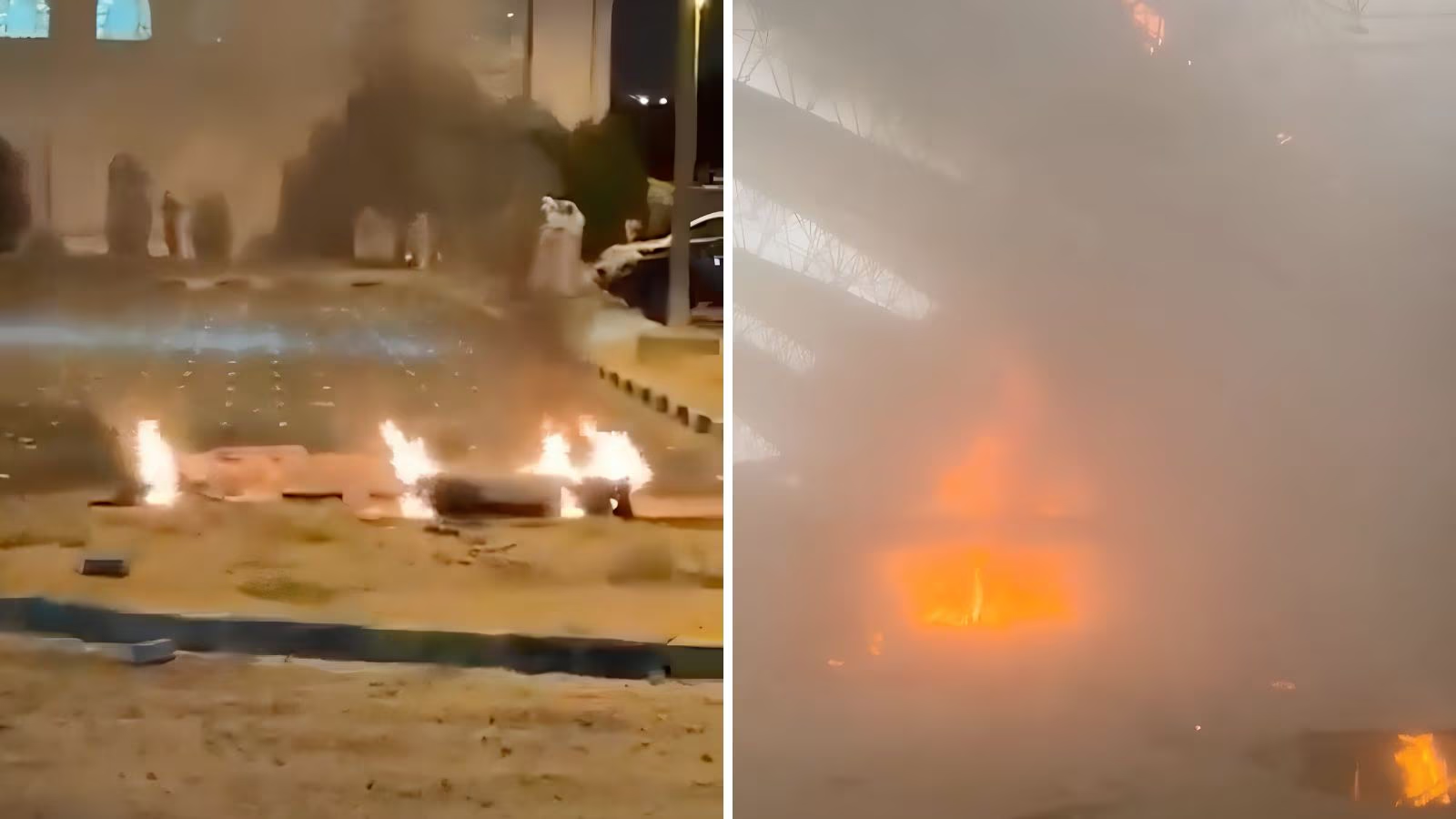
Iran launched a salvo of missiles and drones targeting Kuwait in the early hours of Wednesday, killing one person and severely damaging Terminal 1 of Kuwait International Airport, Kuwait’s Foreign Ministry confirmed. Several others were injured in the attack, which also struck diplomatic missions in the country, though the ministry did not specify which missions were hit.
Kuwait’s General Civil Aviation Authority said the attack caused “severe damage” to the passenger terminal building. Kuwait Airways initially suspended all operations before resuming flights from Terminal 4 after authorities assessed the damage and put safety measures in place. The airport had only reopened on Monday, having shut earlier in the war.
Kuwait’s Defence Ministry spokesperson, Brigadier General Saud Abdulaziz Al-Otaibi, confirmed that “a number of hostile drones” had targeted the airport’s passenger building, injuring “a number of individuals.”
Story continues below this ad
What the US military said
In response to the attacks on Kuwait and Bahrain, US forces carried out strikes on an Iranian military ground control station on Qeshm Island in the Strait of Hormuz.
Ceasefire talks stall
The exchange of strikes comes at a critical moment in fragile ceasefire negotiations. Iran’s semiofficial news agencies, Fars and Tasnim – both believed to be close to the Revolutionary Guard – reported that Iranian negotiators had stopped communicating with mediators.
A regional official involved in the mediation, speaking anonymously to the Associated Press, said Tehran had gone silent on Tuesday after signalling that a ceasefire in Lebanon needed to be enforced before talks could resume.
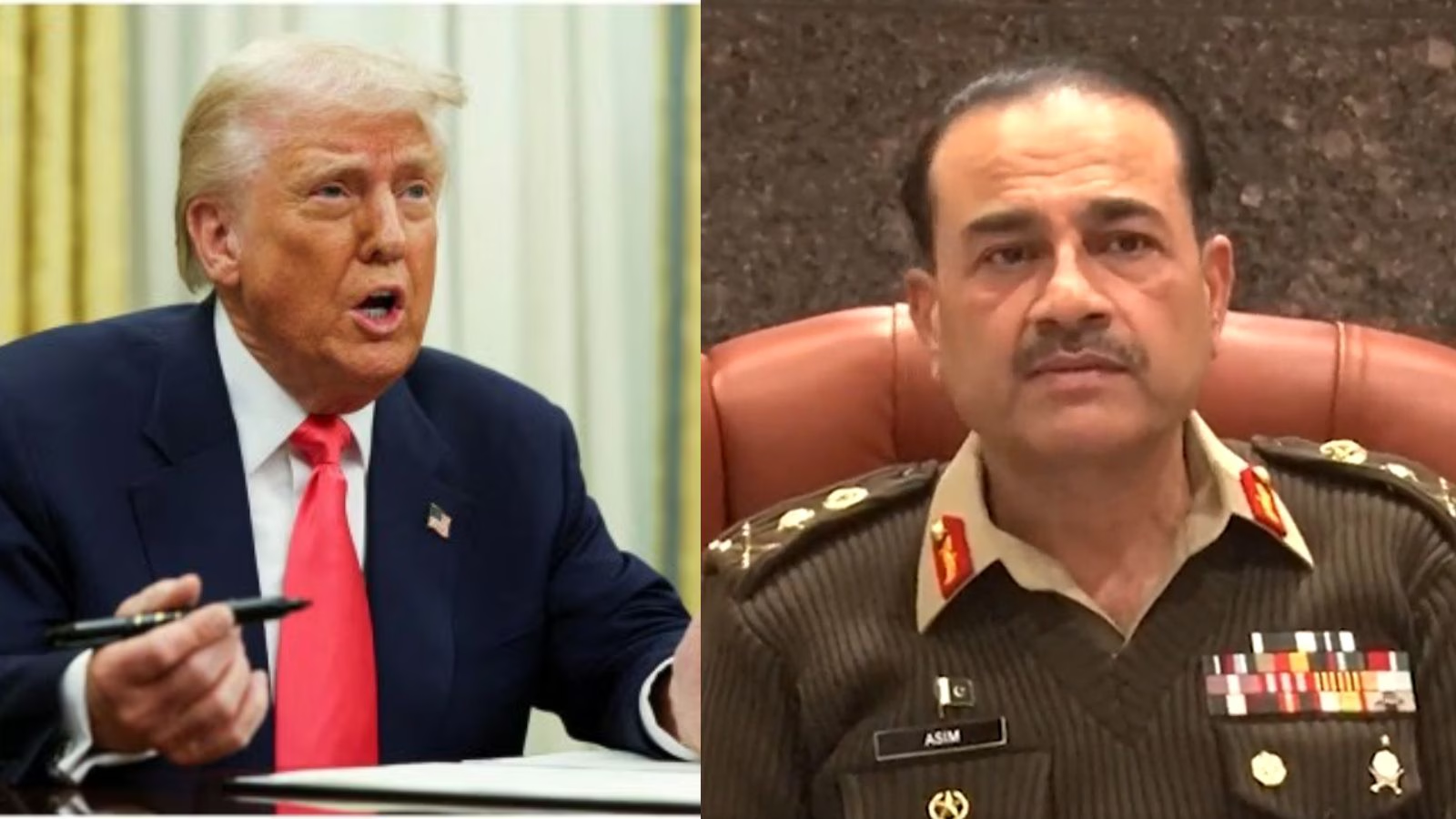
US President Donald Trump pushed back on those reports. “The conversations between us have been going on continuously, including four days ago, three days ago, two days ago, one day ago, and today,” Trump wrote on social media, calling the reports of a pause “false and erroneous.” He added: “Where they lead, one never knows, but as I told Iran, ‘It’s time, one way or another, for you to make a Deal.’”
Story continues below this ad
The Lebanon complication
The Iran-US conflict has become increasingly entangled with Israel’s separate but related war against Iran-backed Hezbollah in Lebanon. Israeli forces have pushed deeper into Lebanon than at any time in over 25 years, even as a nominal ceasefire remains nominally in place.
Tehran has made clear it will not return to talks unless the fighting in Lebanon is addressed as part of any broader truce. Israeli Prime Minister Benjamin Netanyahu, however, has insisted on keeping the two tracks separate — a position that has caused friction with Washington. The US has been pushing for restraint while Israel, with new elections approaching, has been escalating military pressure on Hezbollah.
A person familiar with the situation told AP that Netanyahu and Trump had a “tense” phone call earlier this week. The person declined to elaborate, speaking on condition of anonymity as they were not authorised to speak to the media.
Gulf states call for unified response
The attacks have alarmed other Gulf nations. Senior Emirati diplomat Anwar Gargash wrote on X, calling for “a firm, unified, and cohesive Gulf position” against Iran. “This aggression does not target a specific state, but rather all of us,” he said.
Story continues below this ad
Meanwhile, Iran has continued to maintain its stranglehold on the Strait of Hormuz – a crucial shipping lane for global oil and gas – as the US has maintained its blockade of Iranian ports. The standoff has kept global fuel prices elevated and extended the conflict’s economic impact well beyond the immediate region.
(With inputs from agencies)
(Written by Utkarshini Gupta, who is an intern at The Indian Express)