The Abia State Government has been admitted into the Sustainable Urban and Rural Water Supply, Sanitation and Hygiene (SURWASH) described its admission into the Programme as a significant achievement that will boost ongoing efforts to expand access to clean water, sanitation, and hygiene services across the state.
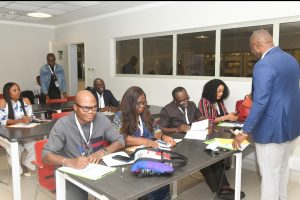
The Commissioner for Power and Public Utilities, Hon. Ikechukwu Monday, stated this on Thursday during a stakeholders’ engagement meeting on the implementation of the World Bank-supported SURWASH Programme in Abia.
He explained that the visit of officials from the Federal Ministry of Water Resources and Sanitation officially marked the commencement of Abia’s participation in the programme after the state successfully met all admission requirements.
According to the commissioner, Abia emerged as one of seven states admitted into the second phase of the initiative after undergoing an extensive assessment process that spanned nearly three years.
“Today, we received the team from the Federal Ministry of Water Resources and Sanitation on a visit relating to the Sustainable Urban and Rural Water Supply, Sanitation and Hygiene Programme, SURWASH, for which Abia State was selected as one of the seven states admitted in the second phase of the programme,” he said.
Hon. Monday noted that the engagement served as an official onboarding exercise, during which the federal team outlined the obligations, expectations and benchmarks required for successful participation.
“The outcome of today’s engagement is essentially the official onboarding of Abia State into the programme, including a detailed explanation of the requirements we must meet to fully participate and benefit from it,” he stated.
Addressing concerns over the programme’s requirements, the commissioner emphasized that the conditions were designed not merely for infrastructure development but to ensure sustainability and effective service delivery.
“The programme is not just about building infrastructure. It is primarily focused on service delivery and sustainability. It seeks to ensure that proper operational frameworks are put in place so that water and sanitation facilities continue to function effectively and provide lasting benefits to the people,” he said.
He observed that the objectives of SURWASH align closely with Governor Alex Otti’s vision of providing residents with dependable access to safe drinking water, improved sanitation facilities and better public health outcomes.
Describing the onboarding exercise as a landmark achievement, Hon. Monday said the state’s admission was the culmination of years of preparation, reforms and rigorous evaluations.
“This is a great development and something remarkable for Abia State. We have been involved in the process for almost three years, undergoing rigorous evaluations and assessments to qualify. Today’s event is a confirmation that the effort has paid off,” he added.
The commissioner expressed confidence that participation in the programme would further strengthen the state’s ongoing efforts to transform its water and sanitation sector.
He disclosed that Abia has already developed ambitious plans under SURWASH, including expanding access to potable water, strengthening sector institutions and eliminating open defecation in communities across the state.
According to him, the government is pursuing water projects across the three senatorial districts, with at least one major water scheme designated for each zone.
He revealed that work on the CKC Water Scheme in Aba is nearing completion on the production component and is expected to be ready by the end of next month.
He added that pipeline reticulation works would soon begin, with an initial 15 kilometres already provided for in the budget as part of a broader 40-kilometre distribution network planned for Aba.
Hon. Monday stressed that infrastructure alone would not guarantee sustainable service delivery without strong institutions to manage and maintain the facilities.
“We believe that even if infrastructure is provided, sustainability will remain a challenge without strong institutions to manage and maintain the facilities,” he said.
To address this, he disclosed that the government plans to fully operationalise the Abia State Water and Sewage Corporation within six months through the appointment of a governing board and the establishment of the necessary administrative structures before ongoing projects are completed.
The commissioner further revealed that capacity development has been incorporated into most water projects awarded by the state, while some civil servants have already undergone specialised training in Denmark to strengthen their technical expertise.
He also highlighted reforms aimed at improving efficiency in the water sector, including the creation of a Water Division within the ministry and a coordinated structure linking the Abia State Water and Sewage Corporation, RUWASSA and a dedicated department for water services in small towns and rural communities.
On energy sustainability, Hon. Monday said the state is prioritising solar-powered systems for water facilities, with electricity from the national grid serving only as a backup source.
“Our goal is to eliminate diesel-powered operations in water facilities. Solar energy provides a more sustainable and cost-effective solution for long-term service delivery,” he said.
The commissioner reiterated the government’s commitment to ending open defecation in the state, disclosing plans to ensure that at least two local government areas achieve Open Defecation Free (ODF) status before December 2026, while implementation commences simultaneously in two additional councils.
He added that recent interventions in the health and education sectors would support the achievement of water, sanitation and hygiene targets.
According to him, about 200 Primary Health Centres have been renovated and equipped with solar-powered water and sanitation facilities, with 176 already fully operational. Similar improvements, he said, are underway in schools across the state.
Despite expressing optimism about the state’s prospects, Hon. Monday acknowledged funding limitations as a major challenge. He noted that while Governor Alex Otti remains committed to financing critical infrastructure, budgetary allocations do not always meet the full funding requirements of ongoing projects.
He also cited global economic pressures, rising construction costs and fluctuations in the prices of materials such as high-density polyethylene (HDPE) pipes as factors capable of affecting project delivery.