Speaking at the World Peace Forum in Beijing, Ambassador Abdolreza Rahmani Fazli said Iran was coordinating with Oman on a new framework to manage maritime traffic through the strategically important waterway. The proposal comes despite the United States opposing any move by Iran to levy charges on ships using the strait.
Also Read: Iran’s envoy to China says beijing to get Hormuz concessions
Under a temporary understanding reached after the recent conflict between Tehran and Washington, commercial vessels were allowed to transit the Strait of Hormuz without paying any fees for 60 days. It remains unclear what mechanism will replace that arrangement once the temporary period expires.
“As a country where the Hormuz is part of its territorial waters, we will definitely charge service fees,” Fazli said, adding that the proposed payments should not be viewed as a toll.
Also Read: US-Iran War Live Updates: Iran’s Khamenei buried amid war-tinged funeral, as ships avoid disputed Hormuz route
According to the ambassador, the charges would cover services such as ensuring the safe movement of ships, monitoring maritime traffic and mitigating the environmental impact of heavy shipping activity in the region.
Fazli also indicated that Iran could extend favourable terms to nations it considers supportive during the recent hostilities.
“We will definitely consider special treatment for the countries that were friendly to us and stood by us during the hard times,” he said.
Also Read: Brent crude prices remain around $71 as Saudi ramps up Hormuz traffic
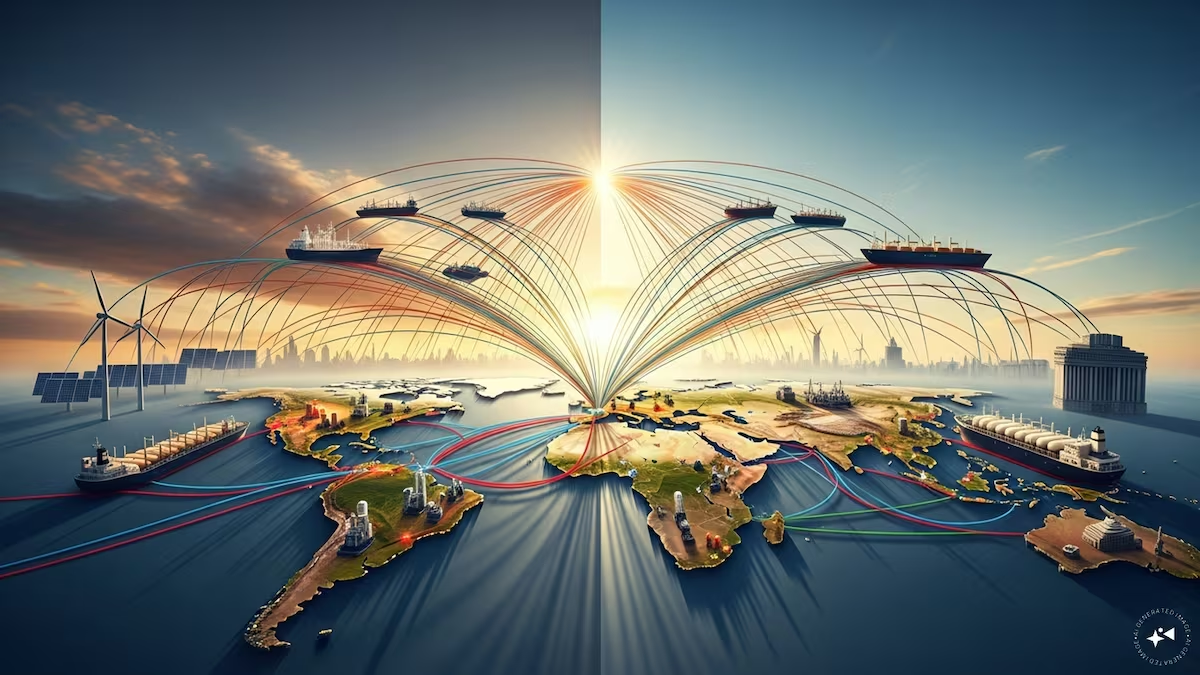
The Strait of Hormuz is one of the world’s most important energy chokepoints, carrying nearly 20% of global crude oil and liquefied natural gas (LNG) exports. Disruptions to shipping through the narrow passage during the recent conflict sent global energy prices higher amid concerns over supply.
Iran later reopened the waterway after reaching an initial ceasefire understanding with the United States. However, negotiations aimed at reaching a longer-term settlement between the two countries are still underway.