Taco Bell may be entangled in a widening outbreak of a parasitic gastrointestinal illness linked to contaminated produce, according to a new report.
State and federal investigators are probing the fast-food chain’s possible connection to cyclosporiasis, an illness known to cause “explosive diarrhea,” sources told The Washington Post.
Signs posted at several Taco Bell locations in Michigan last week warned customers that the restaurants were “currently unable to sell Lettuce, Cilantro Onion, Pico de Gallo, and Guacamole due to a nationwide recall.”
“The health and safety of our guests is our top priority,” a spokesperson for Taco Bell Corp told The Independent. “Public health officials have not confirmed a link to Taco Bell or any specific ingredient, supplier, restaurant or retailer. While authorities continue their broader review, Taco Bell has voluntarily and temporarily removed limited ingredients at select restaurants as a precautionary measure. We will continue to closely monitor the situation and follow the guidance of public health authorities.”
As of Tuesday, Michigan officials have reported 3,309 cases of the illness. The state typically identifies only about 50 cases a year.
Exposure to the Cyclospora parasite leads to cyclosporiasis, an infection with symptoms including “watery diarrhea” and “explosive bowel movements,” as well as fatigue, stomach cramps, bloating, nausea, vomiting and a low-grade fever. It is rarely life-threatening. Cases have spiked over the past week in several states including Michigan, Illinois, Virginia, Ohio, and New York.
The company’s decision to pull certain fresh ingredients was a prudent safeguard, according to the Post. “It’s good the chain has already voluntarily stopped serving a number of items,” the source said.
While some infected individuals reported eating at Taco Bell, others had not, an indication that the outbreak is not confined to the chain. There has not been a specific produce supplier or specific produce type identified as the source of the nationwide outbreak.
The latest data from the Centers for Disease Control and Prevention has confirmed 843 cases of cyclosporiasis in 31 states since May, leading to 86 hospitalizations and no reported deaths.
The CDC cautions, however, that the true number of infections is likely far higher, and noted there are over 1,500 cases that require “further analysis.”
Cyclospora is transmitted when people consume food or water contaminated with fecal matter, according to the CDC. While cyclosporiasis cases are reported year-round, they are most common from May 1 through August 31. Past outbreaks have been linked to raspberries, basil, cilantro and salad mixes.
“Most people with healthy immune systems will eventually recover from cyclosporiasis without treatment,” the CDC website states. “However, if not treated, you may be sick for anywhere from a few days to a month or longer.”
Symptoms may take two weeks or longer to appear, and some people remain asymptomatic — factors that can make the source of an outbreak difficult to pinpoint.
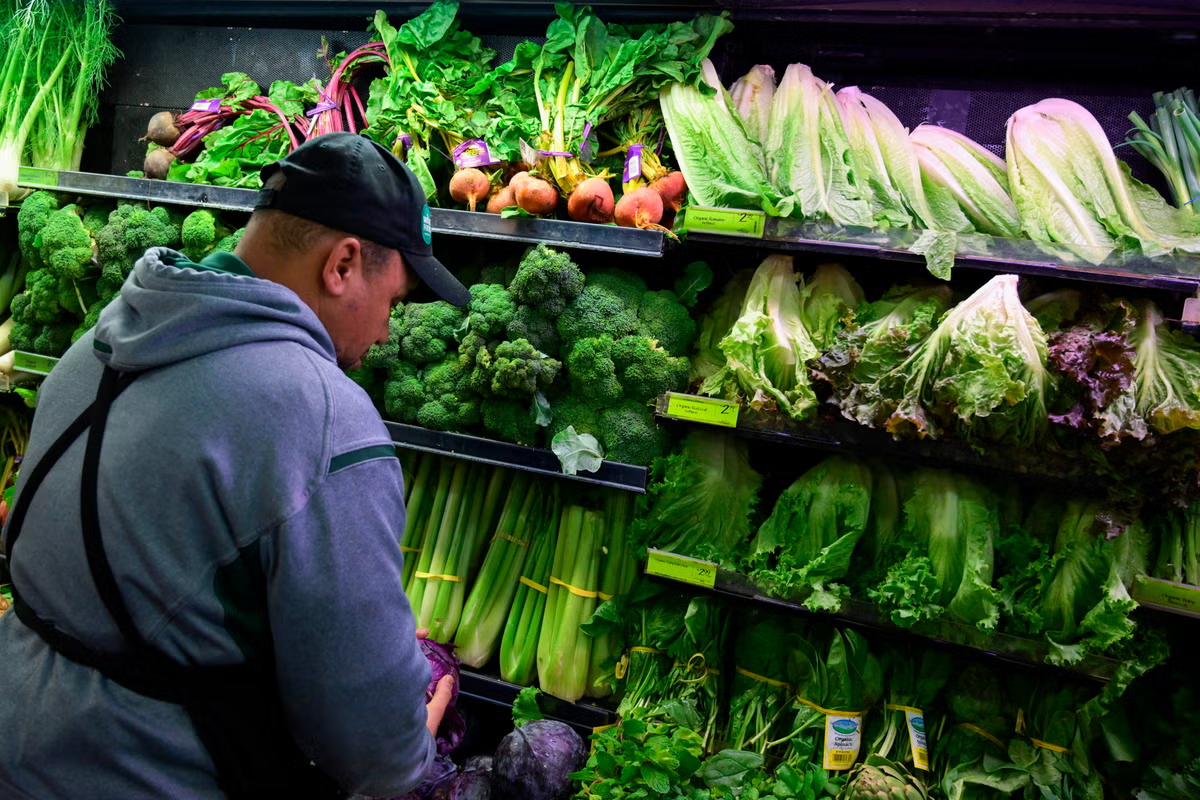
This week, the Michigan Department of Health and Human Services said the latest outbreak may be tied to lettuce or salad greens.
“Although we do not have a definite product identified as the source of the outbreak, we want to let Michiganders know what we have learned so far so they can take steps to protect their families,” MDHHS Chief Medical Executive Dr. Natasha Bagdasarian said in a Monday statement.
“Early information has shown lettuce as a common product that regularly comes up during the investigation. We will continue to provide updates as we learn more.”
Rather than buying pre-washed lettuce, officials have recommended purchasing whole heads of lettuce, discarding the outer layers and washing the inner section thoroughly.