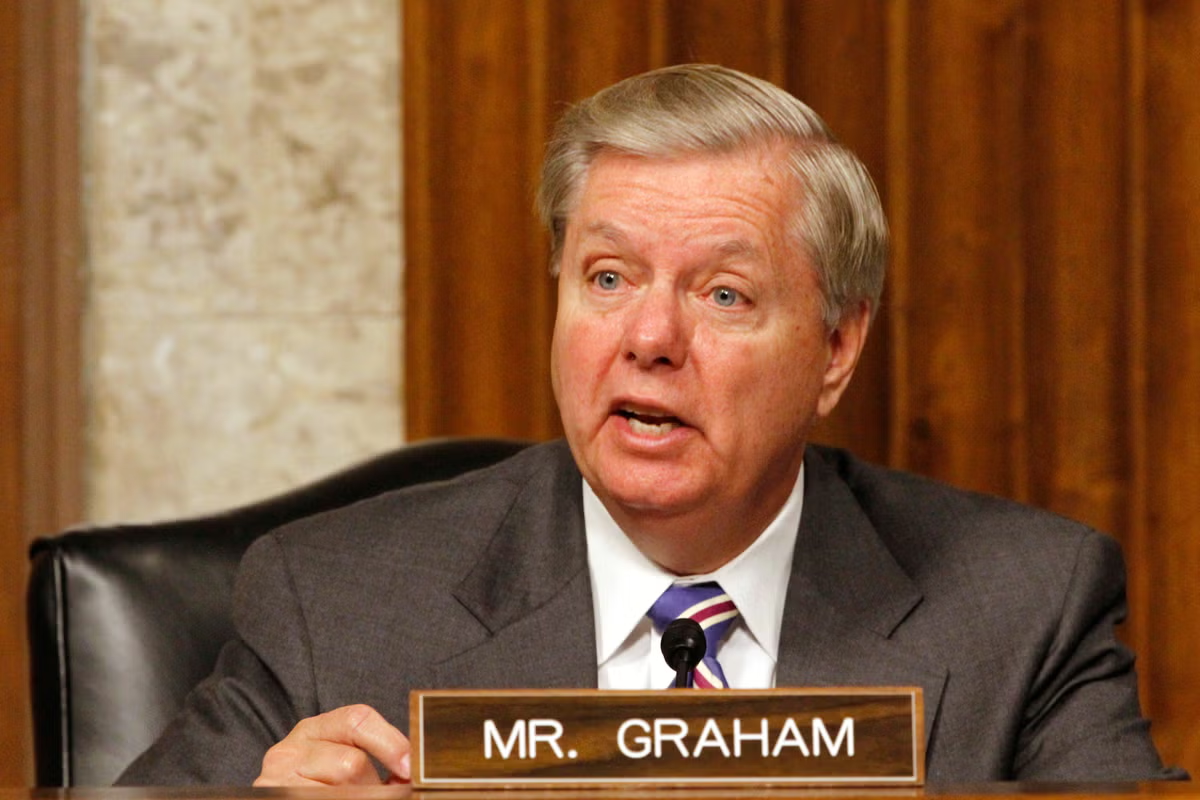
The sudden death of Sen. Lindsey Graham on Saturday night unleashed a wave of conspiracy theories across social media, with users falsely claiming the South Carolina Republican was assassinated by foreign governments or died under suspicious circumstances.
Within hours of the announcement, baseless posts accused Russia, Iran, Ukraine and Israel of orchestrating Graham’s death. Others claimed his travel schedule made it impossible for him to have died in Washington, while some pointed to the FBI’s presence at his home as supposed evidence of foul play.
But preliminary findings from the medical examiner point to a natural medical emergency, not a criminal act.
According to Graham’s office, the 71-year-old died after suffering an aortic dissection — a tear in the inner wall of the body’s main artery that was linked to hardening of his arteries. An official cause of death will be released after toxicology and microscopic testing are completed. His office initially described his death as following a “brief and sudden illness.”
Despite that, speculation spread rapidly online.
One widely shared X post claimed Graham’s visit to a drone factory in Ukraine days before his death meant Russia was likely responsible after the facility was later struck.
“I’d say there is a decent chance that Russia blew up Lindsey Graham,” the post read without offering evidence.
Another viral post alleged Israel’s Mossad intelligence agency killed Graham to pressure President Donald Trump into escalating military action against Iran, again providing no evidence to support the claim.
The theories gained traction because Graham was one of Washington’s most outspoken foreign policy hawks. He was a key adviser to Trump on Russia, Ukraine and Iran, had just announced a bipartisan sanctions agreement during a visit to Ukraine and had long pushed for a tougher military response toward Tehran. He was also one of Israel’s strongest allies in Congress, making him a frequent target of criticism over the war in Gaza.
Other posts questioned whether Graham could have traveled from Ukraine back to Washington before his death, while others seized on FBI assistance at his residence as proof authorities were hiding something.
FBI Director Kash Patel addressed that speculation Sunday, saying the bureau was simply assisting local authorities and had made all necessary resources available. Asked Monday whether there was any additional information, an FBI spokesperson said the agency had “nothing to add.”
Experts say high-profile deaths routinely trigger waves of misinformation, particularly when they involve politically divisive public figures.
“The sudden death of a high-profile, polarizing figure like Lindsey Graham is especially fertile ground for conspiracy theories,” said Callie Kalny, an assistant professor of communication at the University of Kentucky.
She said emotionally charged events often lead people to embrace dramatic explanations over medical ones.
“Under these circumstances, a dramatic explanation about Graham’s death — for instance, that a foreign adversary was involved — might simply feel more compelling or more emotionally satisfying than the reality of an aortic dissection,” Kalny said.