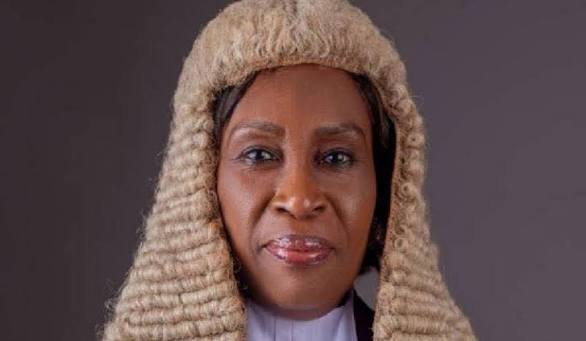
A retired Court of Appeal judge, Justice Oludotun Adefope-Okojie, has called for reforms in Nigeria’s electoral justice system, arguing that courts should not award electoral seats to candidates when the lawful votes do not establish that they won.
Adefope-Okojie made the call while delivering the keynote address at the Gavel International Annual Lecture 2026, held on Tuesday, November 17, at the OPTS Hall of the Lagos Chamber of Commerce and Industry (LCCI), Ikeja, Lagos.
The lecture, organised as part of Gavel International’s Annual Conference and Awards 2026, was themed “Electoral Process in Nigeria: Managing the Boundaries of Judicial Intervention.”
Speaking on the relationship between electoral disputes and judicial intervention, the retired judge argued that although courts have an essential responsibility to resolve election disputes and uphold the law, their decisions must not undermine the democratic choices of voters.
She maintained that the ultimate purpose of electoral justice should be to protect the electorate’s right to choose its representatives, rather than allow judicial decisions to produce political outcomes that do not reflect the lawful votes cast.
According to her, where an election is invalidated but the rightful winner cannot be reliably established from the evidence before the court, a fresh election should be considered to return the decision to voters.
Adefope-Okojie highlighted the volume of election-related litigation arising from Nigeria’s electoral process, citing figures which she said demonstrated the scale of disputes brought before the courts.
She referred to 1,209 petitions filed following the 2023 general elections against 1,280 contested offices, describing the figure as evidence of the country’s heavy reliance on judicial processes to resolve electoral disagreements.
She also cited the success rate of the petitions, stating that only 103 of the 1,209 petitions succeeded.
The figures are consistent with research published by the Kimpact Development Initiative, which found that 103 of the 1,209 petitions filed after the 2023 elections were upheld at the election petition tribunal level.
The retired judge compared Nigeria’s figures with those of other countries, including Kenya, Ghana, the United Kingdom and South Africa, to illustrate what she described as the country’s unusually high level of electoral litigation.
She argued that the volume of petitions reflects deeper problems within the political system, particularly the failure of political parties to conduct their internal affairs in accordance with their constitutions and established procedures.
A significant part of Adefope-Okojie’s argument concerned disputes arising from political party primaries and the selection of candidates.
She criticised situations in which individuals who emerge from party primaries are allegedly replaced by other candidates, arguing that such practices generate avoidable litigation and place additional pressure on the courts.
The retired judge maintained that political parties should be held accountable when they fail to follow their constitutions, guidelines and legally prescribed procedures for selecting candidates.
She also questioned the broad application of the principle that courts should not interfere in the internal affairs of political parties, arguing that it should not prevent judicial intervention where there are allegations of violations of party rules or the law.
Citing a recent Supreme Court decision involving the Peoples Democratic Party and Alhaji Sule Lamido, she supported the position that courts should intervene where political parties violate their own constitutions and disregard provisions of the Electoral Act.
Her argument was that protecting internal party autonomy should not become a justification for allowing unlawful practices to go unchallenged.
Adefope-Okojie also raised concerns about the evidential and procedural requirements placed on petitioners in election disputes.
She questioned whether some interpretations of the Evidence Act and election petition procedures make it unnecessarily difficult for parties to establish allegations of electoral irregularities.
Among the issues she highlighted were requirements surrounding the tendering of certified electoral documents and the use of witnesses summoned through subpoenas.
She particularly questioned the expectation that a witness summoned from the Independent National Electoral Commission (INEC) should provide an advance deposition favourable to the party calling that witness.
The retired judge argued that such requirements could create practical difficulties for petitioners who need electoral officials to provide or authenticate evidence but cannot reasonably expect those officials to prepare statements supporting their cases.
She proposed an amendment to the relevant provisions of the Electoral Act 2026 to create exceptions for witnesses summoned through subpoenas, particularly officials from INEC and other public institutions.
Adefope-Okojie also criticised what she considered an excessively demanding approach to proving electoral irregularities polling unit by polling unit, arguing that the evidential burden can become practically difficult to meet within the limited period available for election petitions.
She warned that procedural requirements should not become obstacles that prevent genuine electoral grievances from being examined on their merits.
In proposing reforms, Adefope-Okojie argued that the judiciary should give greater consideration to the expressed will of voters when deciding election disputes.
She maintained that courts should distinguish between irregularities that genuinely affect the validity of an election and technical shortcomings that should not automatically invalidate the choices made by the electorate.
Where a court determines that an election cannot stand, but the evidence does not establish who legitimately won, she proposed that a fresh election should provide an opportunity for voters to make the decision again.
She also urged judges to give transparent and well-reasoned decisions, apply procedural rules proportionately and avoid any conduct that could create an impression of political alignment.