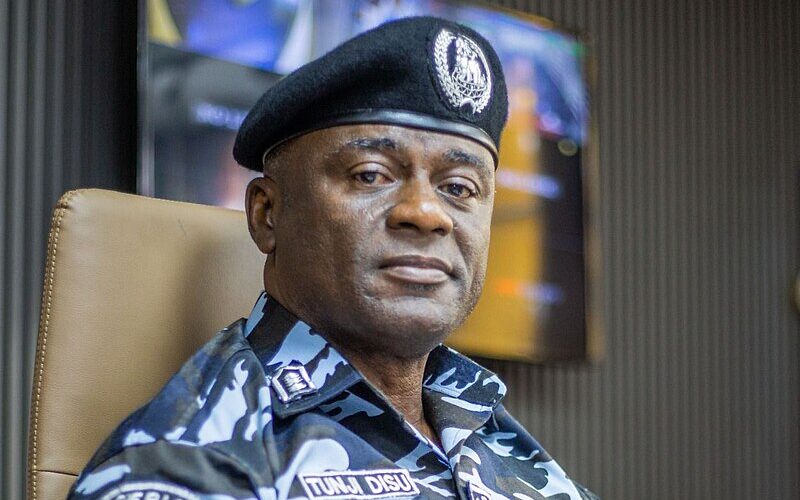
The IGP seeks a more professional and a more accountable police in Nigeria and to serve with dignity and integrity.
The Inspector General of Police, Olatunji Disu, on Friday, expressed commitment to put an end to impunity, especially by police officers, in Nigeria.
Mr Disu, who was represented by the Head, Complaint Response Unit, Anietie Okoro, said, “I have heard the cries of many Nigerians, and we are presently putting a lot together to ensure that this administration, moving forward, ends impunity in our nation.”
He said this at a town hall meeting organised by the National Human Rights Commission (NHRC) on a rights-based approach to policing at the commission’s headquarters in Abuja.
The IGP expressed optimism that the engagements would strengthen the police’s “goal and our mandate and our desire for a more professional and a more accountable police in Nigeria and to serve with dignity and integrity.”
Speaking on the importance of the town hall meeting, the Executive Secretary of the NHRC, Tony Ojukwu, a Senior Advocate of Nigeria (SAN), said the meeting was necessary, to “harmonise statutory obligations with the operational realities of policing in Nigeria.”
The meeting’s focal points centred on adherence to the Administration of Criminal Justice Act (2015) and the Anti-Torture Act (2017).
Babatunde Dada, representing the chairperson of the Police Service Commission, noted that the town hall is important in light of several complaints the commission has received.
Mr Dada lamented that despite efforts to ensure that the human rights approach is enshrined in policing, these “efforts have not been seen in practice, in practical application among police officers in the field.”
He cited multiple fundamental human rights suits that Nigerians have filed against the police. He expressed optimism that the meeting would help in building an acceptable standard for a civilised society.
Data from NHRC’s 2025 dashboard report revealed that gross violations by law enforcement officers consistently ranked among the top three abuses reported.
Reports of police impunity are commonplace in Nigeria.
In October 2020, the #EndSARS protests broke out across Nigeria to protest against police brutality. The protest led to the proscription of police unit, the Special Anti-Robbery Squad (SARS) notorious for inhuman treatment of citizens.
Besides the disbanding of SARS, the government promised to reform the police.
The NHRC and many state governments also set up panels of inquiries to probe cases of police brutality and recommend compensations for victims.
But the promised reforms did not materialise. Also, apart from the NHRC and the Lagos State Government, the rest of the state governments never made the reports of the panels public or took any action to implement their recommendations.
Observers say police brutality has persisted and remains pervasive after #EndSARS.
A businessman, Moses Abiodun, was detained for 16 years without charge and it took the intervention of the ECOWAS Court of Justice, which ordered his release.
Also, on 30 March, rights activist, Harrison Gwamnishu, raised the alarm over alleged abduction, torture and extortion of more than N1 million from some Nigerians by police operatives in Anambra State.
On 4 April, police officers in Anambra State refunded N1.4 million they allegedly extorted.
Also, police indiscriminately use tear gas to disperse gatherings and rampantly subject many citizens to torture in custody.
The Director of the Civil Rights Department unit of the NHRC, Halilu Adamu, who represented Mr Ojukwu, told the several Divisional Police Officers in attendance (DPOs) at the meeting that they served as the primary gatekeepers of justice.
Part of the objectives of the interaction was for officers to understand the specific legal liabilities attached to non-compliance with existing laws, Mr Adamu said.
Similarly, he noted that the police needed to understand and put in place electronic recording of statements, mandatory presence of legal counsel during interrogation and de-escalate the reliance on torture for confessions.
The NHRC held an interactive session that addressed issues related to prolonged detention and custodial abuse, and illegal arrests.
The Commissioner of Police, Federal Capital Territory (FCT) Command, represented by Unung Hilary, said, “The command is readily open to improve on its performance and embrace new technologies in line with extant laws. The command will ensure total compliance with respect to the fundamental rights of citizens and will not hesitate to sanction erring officers.”