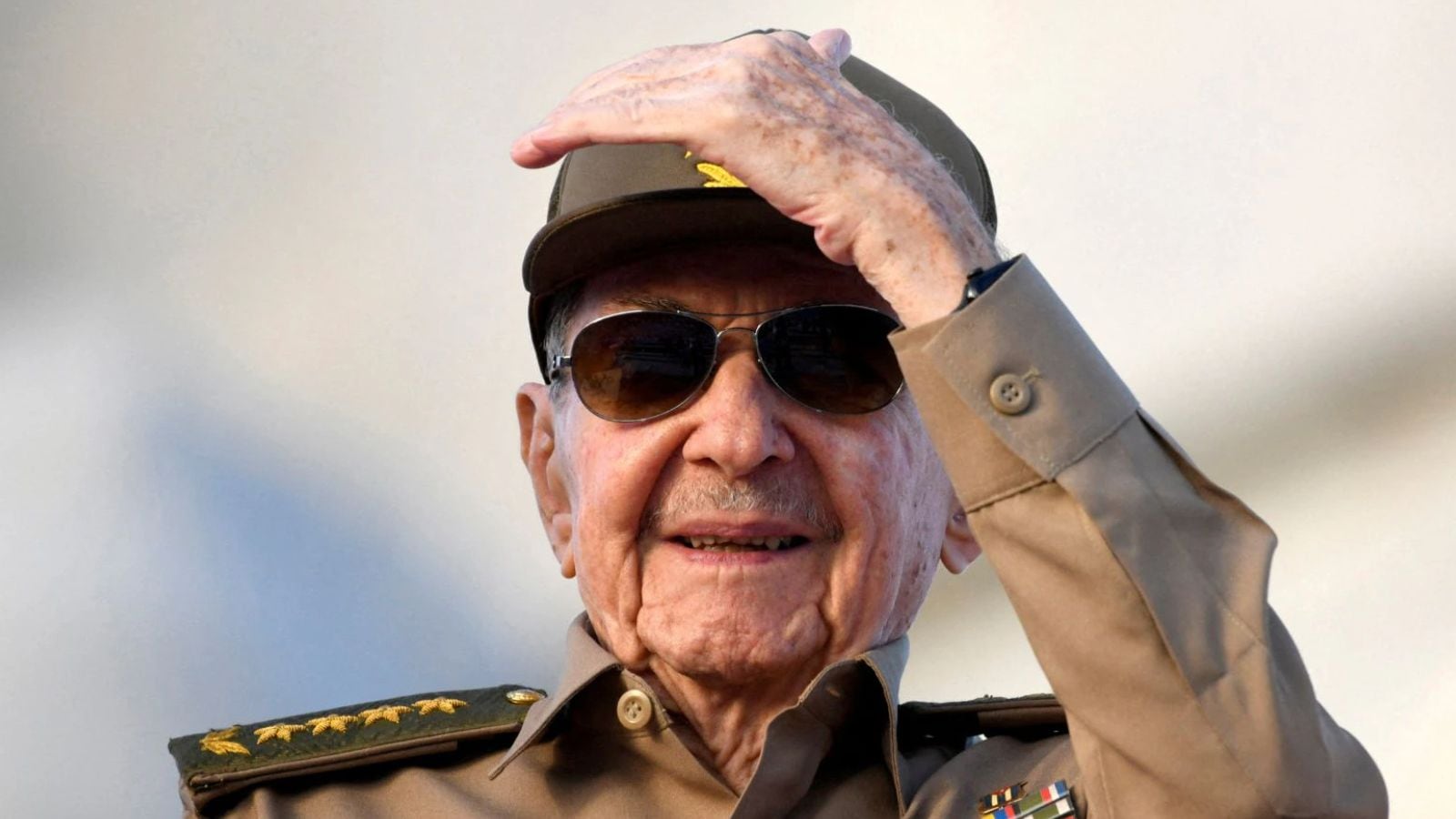
The United States has indicted Cuba’s former President Raúl Castro on charges of murder and conspiracy to kill American citizens. These charges stem from a 1996 shootdown and fatal downing of civilian aircraft by Cuban fighter jets, The New York Times reported.
US Secretary of State Marco Rubio on Friday described Cuba as a failed state, calling it a national security threat to the United States. He added, “Diplomacy remains our preference with Cuba. However, given who we are dealing with, the likelihood of that happening right now is not high.”
Rubio also accused Cuba of being one of the leading sponsors of terrorism in the entire region. Cuba’s Foreign Minister Bruno Rodriguez denied these claims in a post shared on X, calling them all lies. He said Cuba is not and never was a threat to the United States. It was the US, he claimed, that continually and systematically aggressed against the Cuban people.
Miente nuevamente el Secretario de Estado de #EEUU para instigar una agresión militar que provocaría el derramamiento de sangre de cubanos y estadounidenses.#Cuba no es, ni nunca ha sido, una amenaza para la seguridad nacional de EEUU. Es el gobierno estadounidense el que…
— Bruno Rodríguez P (@BrunoRguezP) May 21, 2026
Since the beginning of this year, the US has been mounting multifaceted pressure on the Cuban administration against the Communist Government. The indictment of former President Raúl Castro, brother of former President Fidel Castro, escalates tensions between the two countries and strengthens the Trump administration’s alleged plan of toppling the government.
Here are three possible ways in which the Cuba crisis could play out:
Scenario 1: A Panama-style military operation
The BBC reported that after the Trump administration captured Venezuelan President Nicholas Maduro in January 2026, the US forces could launch an operation to capture Raúl Castro and bring him to an American courtroom. Such an operation is not without precedent.
In 1989, the US launched a much larger military operation called Operation Just Cause, sending thousands of troops into Panama to remove and arrest the country’s leader, Manuel Noriega.
President Trump has so far avoided directly answering questions about whether he was considering a similar action in Cuba.
However, some US lawmakers have openly supported the idea. Florida Senator Rick Scott said, “We shouldn’t take anything off the table,” adding that “the same thing that happened to Maduro should happen to Raúl Castro.”
Story continues below this ad
Castro stepped down as president of Cuba in 2018. Removing him may not have a significant impact on the wider Cuban government, the BBC reported.
“They’d love to humiliate the Castros and get one of the original revolutionaries from 1959 behind bars. But the strategic value of that is questionable,” Adam Isacson, a regional expert with the Washington Office on Latin America, an NGO, told the BBC.
Scenario 2: A Venezuela-style leadership swap
According to a report by the BBC, one option being discussed by US officials is a change in leadership in Havana, with a new government taking over while keeping much of the current system in place.
This could be similar to what happened in Venezuela, where the government stayed largely intact but began dealing directly with the Trump administration.
Story continues below this ad
Secretary of State Marco Rubio said the US prefers a “negotiated agreement”, but added that Cuba’s leaders need to decide because “their system just doesn’t work”, reported the BBC.
The US is said to want major changes, including opening up Cuba’s economy, allowing more foreign investment, involving Cuban exile groups and ending the presence of Russian or Chinese intelligence agencies on the island, says the BBC.
Cuba is facing a fuel crisis made worse by a US oil blockade and growing pressure from the Trump administration to reach a deal.
In recent months, people in Cuba have faced long power cuts and food shortages.
Story continues below this ad
On Thursday, Marco Rubio said Cuba has accepted a US offer of $100 million (£74.4 million) in humanitarian aid.
Scenario 3: Economic collapse forces capitulation
A third possibility is that Cuba gives in under growing economic pressure, with the country already facing daily power cuts and severe food shortages.
President Trump, speaking at the White House, said there was no need for further escalation, adding that Cuba is ‘falling apart’ and that its leaders have ‘lost control to some extent’.
However, experts say there is a difference between the struggling economy and the government itself. While the economy may be collapsing, the Cuban state, especially its security system, is still functioning, the BBC reported.
(With inputs from The New York Times and BBC)