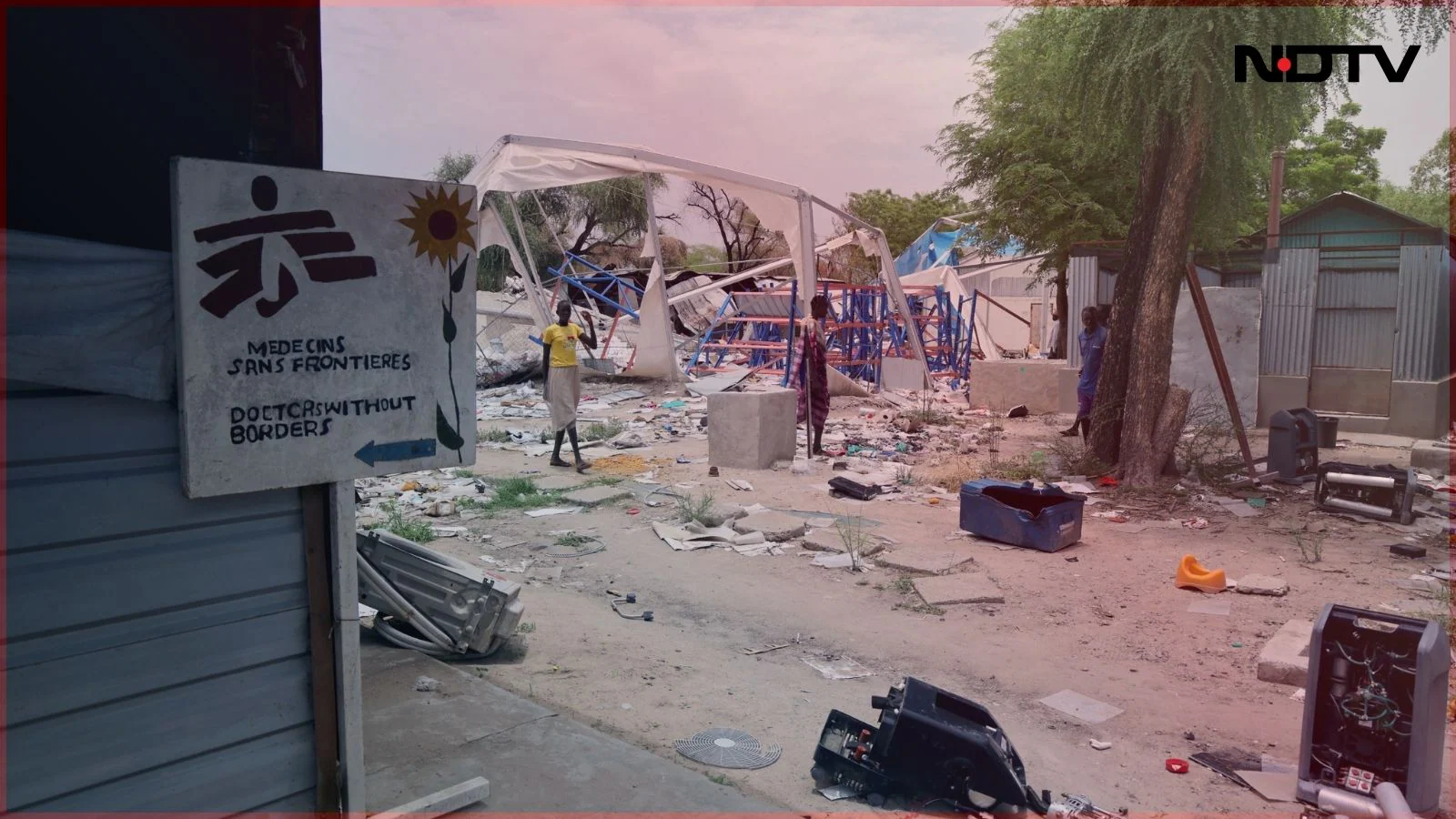
In the chaos of early February, the only hospital serving nearly a quarter of a million people in South Sudan was silenced forever. Hours after Medecins Sans Frontieres (MSF) or Doctors Without Borders staff shut down the Lankien facility amid rising threats and evacuated what patients they could, bombs began falling on the compound and town market on February 3. As ground forces moved in, terrified families fled into the surrounding swamps and bushland, clutching children, sacks of grain and whatever medicines they could carry. Many never made it out.
Among the dead was an MSF nurse.
“He was running with everyone else,” said Yashovardhan, MSF’s Head of Mission in South Sudan, in an interview with NDTV. “There was no vehicle. People were literally running into the bushes and swamps around Lankien. And while doing so, he was hit by a bullet. And he died.”
Yashovardhan, MSF’s South Sudan Director, in the ruins of the bombed hospital.
Photo Credit: MSF
For the people of Lankien, the destruction of the hospital meant the disappearance of the only secondary healthcare facility serving nearly 250,000 people across the region.
Advertisement – Scroll to continue
READ | NDTV Exclusive: A Catastrophe Captured By Satellites, Ignored By The World
“Lankien hospital was run by MSF for 31 years,” Yashovardhan told NDTV. “We started working there in 1995. And that was the only secondary healthcare facility for those people. Now, with the closure of it, the population around Lankien does not have any facility that provides secondary healthcare.”
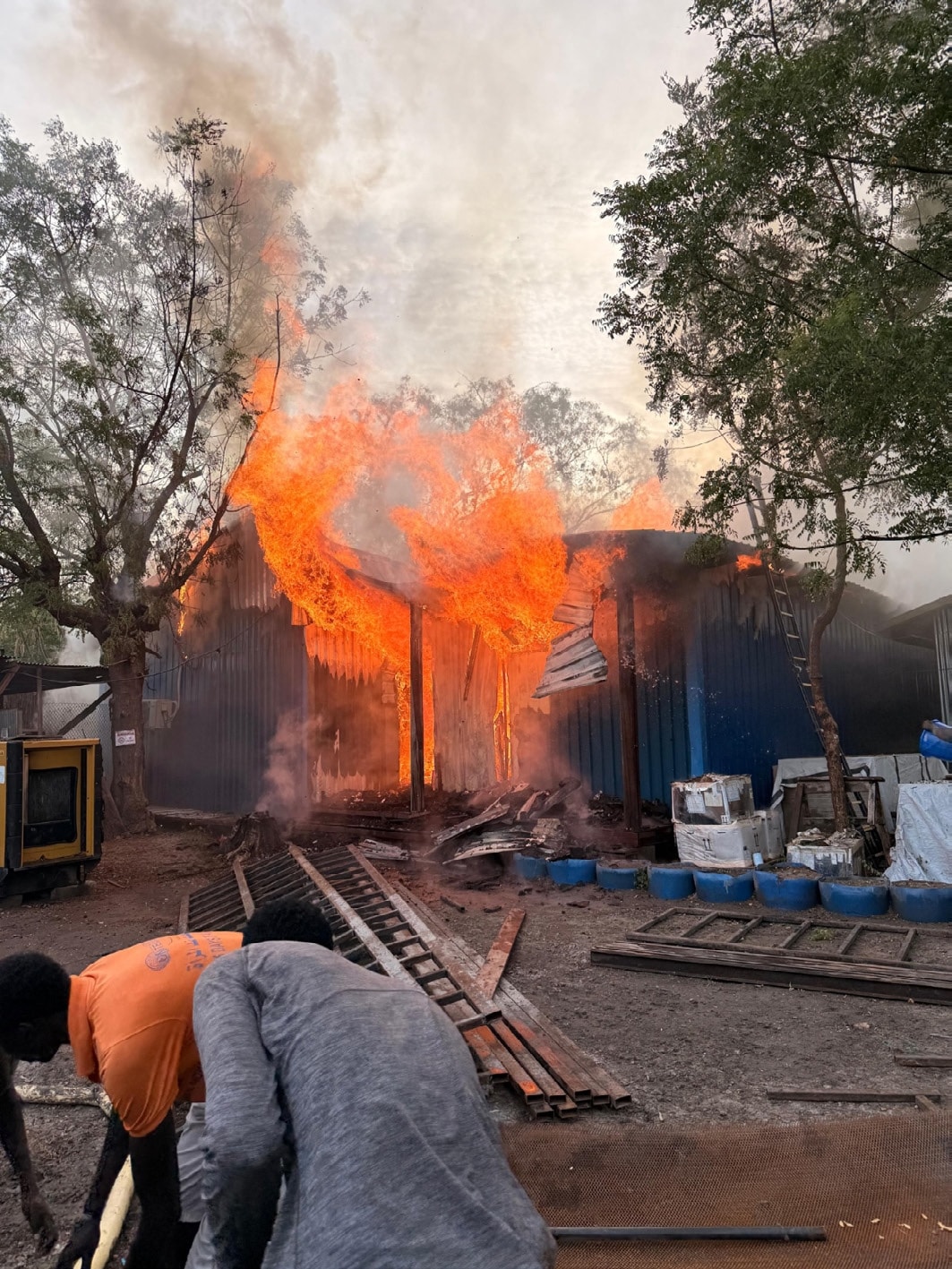
MSF hospital in Old Fangak, South Sudan, after being deliberately bombed on 3 May 2025
Photo Credit: MSF
Staff had evacuated patients hours earlier amid warnings of an attack, but many in labour were discharged prematurely. Ground forces followed, with reports of civilians – including women, children, the elderly and disabled — chased, shot and subjected to sexual violence.
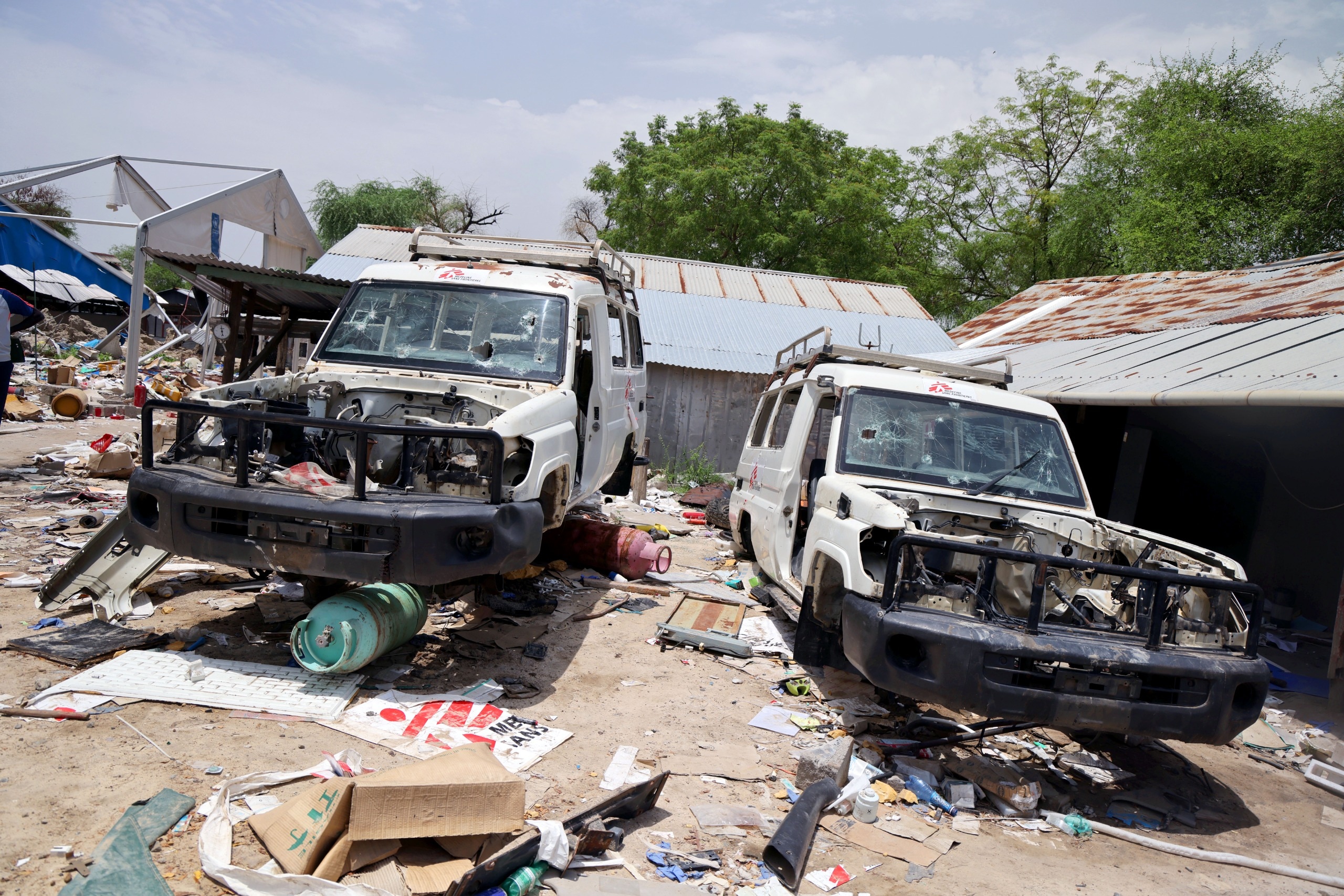
Photo Credit: MSF
The MSF has reported a marked escalation in the intensity, scale and geographic reach of violence across South Sudan, with both targeted killings and indiscriminate assaults on civilians becoming disturbingly routine.
Since the beginning of 2025, the organisation has been operating in more than 18 locations spanning six states — Jonglei, Upper Nile, Central Equatoria, Lakes, Warrap and Western Equatoria — and two administrative areas, Abyei and Greater Pibor.
According to MSF, four of its hospitals — in Ulang, Old Fangak, Akobo and Lankien — have been forced to close since the start of 2025 after repeated attacks and violent incidents. The organisation says at least 12 attacks or violent events have directly affected its facilities and staff this year alone, leaving an estimated 762,000 people without access to healthcare.
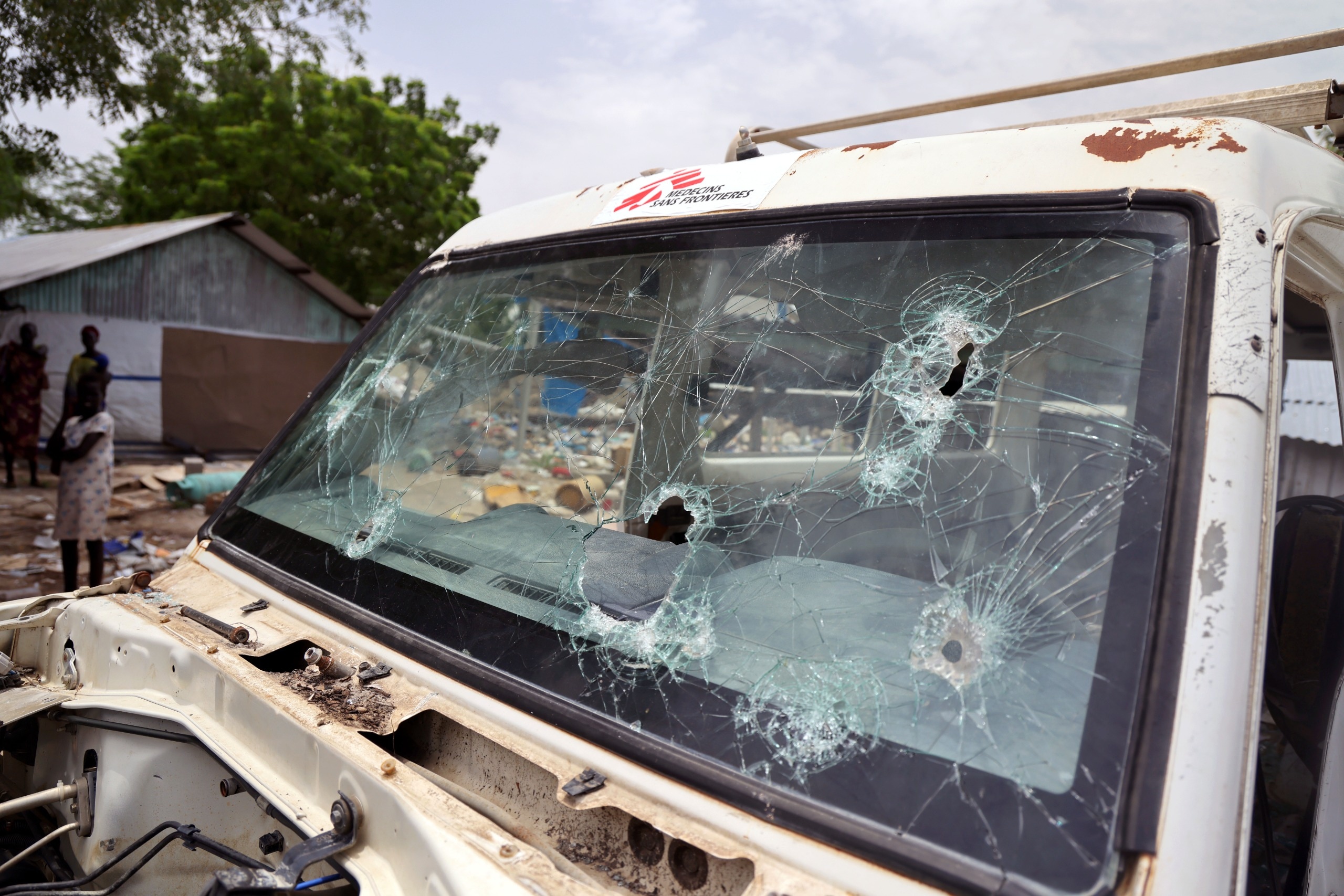
Photo Credit: MSF
In Old Fangak, another MSF facility was attacked earlier this year. Seven people were killed and 27 injured, including four MSF staff members and two patients receiving care when the attack began.
Similar patterns emerged in Akobo, where airstrikes preceded clashes, looting of the MSF-supported hospital and mass flight.
Birth Of A Nation
South Sudan became independent from Sudan in 2011 after decades of war. It was celebrated internationally as the birth of the world’s newest nation. But within two years, political rivalry between President Salva Kiir and his deputy Riek Machar descended into civil war, unleashing cycles of ethnic violence, displacement and famine that have repeatedly crippled the country.
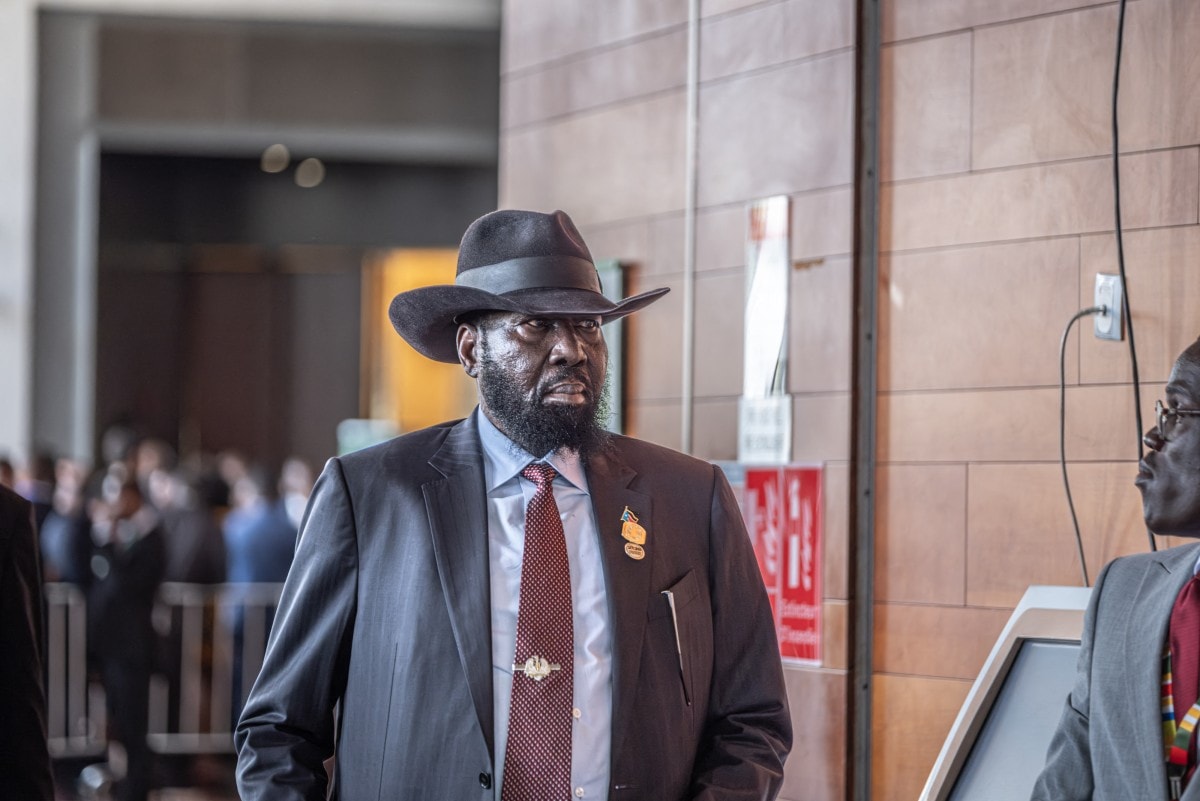
Salva Kiir Mayardit, President of the Republic of South Sudan, leaves the Nelson Mandela Hall after a family photo during the 39th Ordinary Session of the Assembly of the African Union at the AU Headquarters in Addis Ababa on February 14, 2026.
Photo Credit: AFP
“The whole country was kind of shaped up with violence and conflict,” Yashovardhan said. “First, there was the war with Sudan, then the second war, then independence came in 2011, and then in 2013 the conflict started. So it never got anything in terms of a complete healthcare structure or system in place.”
South Sudan does have government-run hospitals and clinics. But many lack staff, medicine, equipment or reliable access routes. Aid agencies often provide the backbone of operations, from salaries and vaccines to emergency surgeries and nutritional support. That dependency is becoming more dangerous as aid budgets shrink globally.
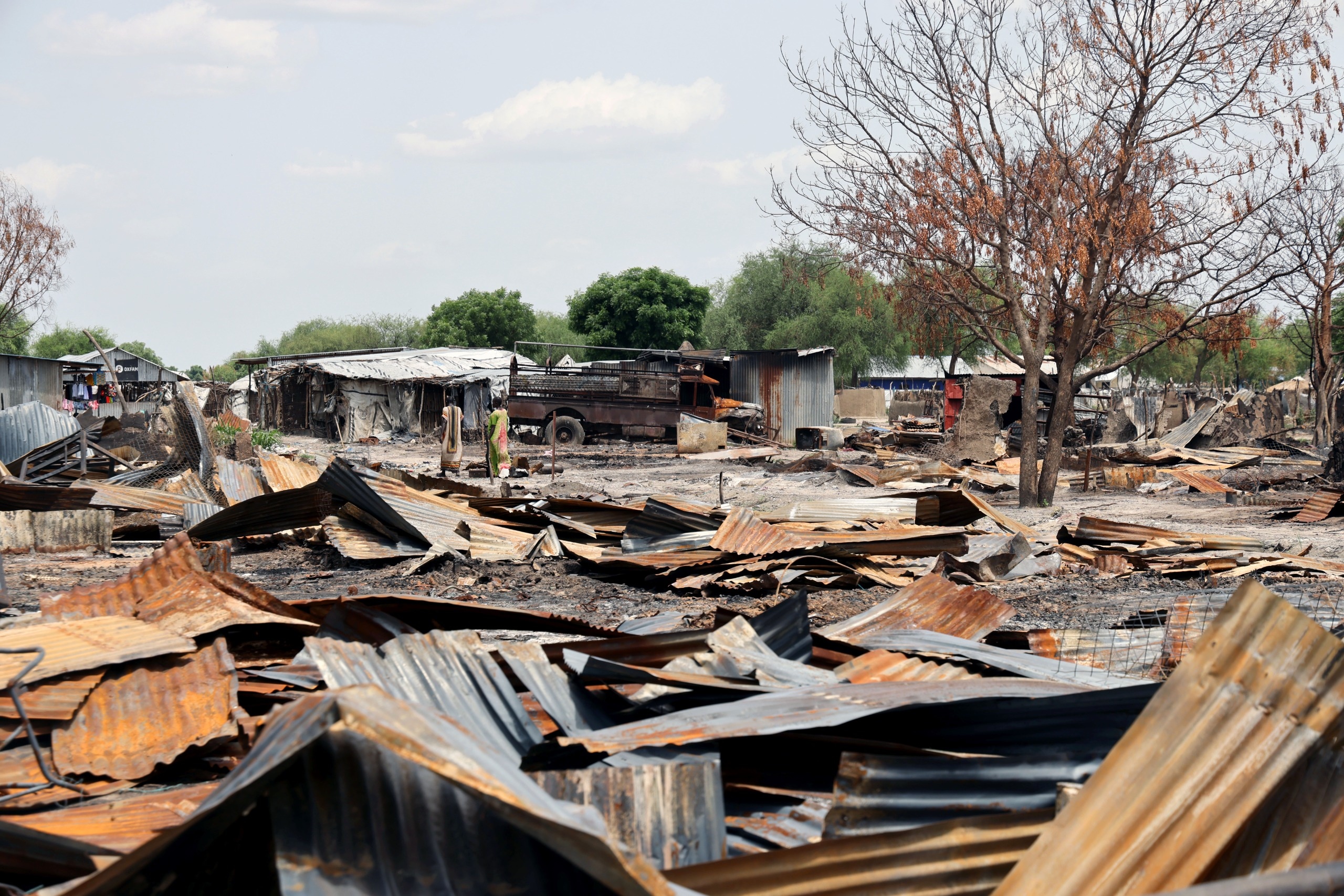
Photo Credit: MSF
“The country never established a complete healthcare structure or system. South Sudan has a very fragile healthcare system that is heavily dependent on aid and international organisations to provide various services. That is how it has been, and that is what it is right now. With the aid cuts that have been introduced, it is only going to get worse,” he added.
How MSF Operates In South Sudan
The collapse of healthcare in South Sudan is inseparable from the country’s geography. Large areas remain inaccessible by road for months due to flooding, conflict or lack of infrastructure. In many parts of the country, aircraft are the only practical way to move staff, medicine and critically ill patients. The MSF operates at 18 locations in South Sudan, and to reach many of these places, doctors and aid workers have to get on planes.
“South Sudan is a country where most access is through aeroplanes,” Yashovardhan explained. “We have to fly.”
The airstrips themselves are primitive stretches of dirt, often between 600 and 800 metres long.
“These are runways where only single-engine propeller planes can land,” he said.
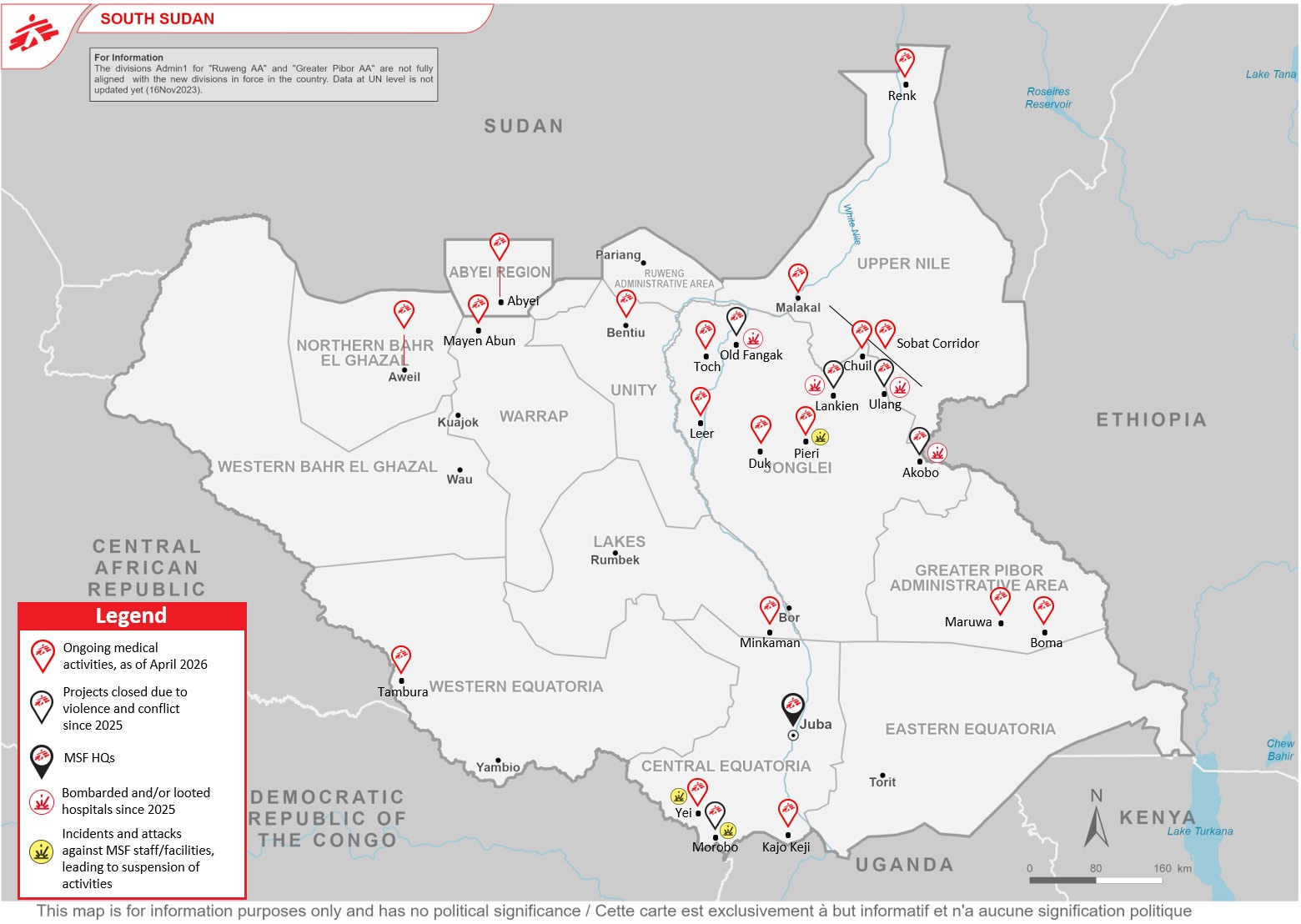
Photo Credit: MSF
By late 2024, MSF says it began facing increasing restrictions on flights to Lankien.
“We started facing access denials regarding flight permissions to Lankien back in October. We were even forced to evacuate our relocatable staff — which includes international staff and specialists from other locations in South Sudan who were working on the project — because of the deteriorating security situation,” Yashovardhan told NDTV.
“Following that, we faced a complete denial of access for over a month until the end of January. This meant we could not bring in any medical supplies, nor could we refer patients who needed a higher level of care. Tragically, that directly resulted in many preventable deaths,” he added.
Who is issuing those denials?
MSF has publicly accused South Sudanese authorities of blocking humanitarian access to opposition-controlled areas. The organisation says aid has increasingly become entangled in military and political calculations by all sides in the conflict.
“We are facing numerous challenges,” Yashovardhan said. “One of the challenges is access denials to places where there is displaced population and they need care.”
Humanitarian agencies require permission both to take off from the capital Juba and to land in remote regions. Without those approvals, entire areas can effectively become unreachable.
“The way it works is that we need to get permission from the authorities in Juba to take off, and then permission to land at our destination. We need access permissions from both places, and we have been denied access to these locations,” Yashovardhan told NDTV. “In terms of supplies, the needs are everywhere, and they affect the entire population. MSF is working in 18 locations, but the gaps are universal. Right now, there is an urgent need for food and shelter for the displaced populations. They don’t have access to healthcare, medicine, safe drinking water, or food. These are the core necessities the displaced population lacks.”
How The Conflict Began
Since the civil war in South Sudan is increasingly fragmented, it is difficult to explain in simple military terms. Yet its origins remain rooted in the political and ethnic divisions that erupted after the country’s independence.
Violence escalated rapidly in 2013 and 2014, killing tens of thousands and displacing millions. Peace agreements followed in 2015 and 2018, including a revitalised peace deal between the ruling Sudan People’s Liberation Movement and Machar’s SPLM-IO opposition movement. But the agreements repeatedly fractured under renewed fighting and political distrust.
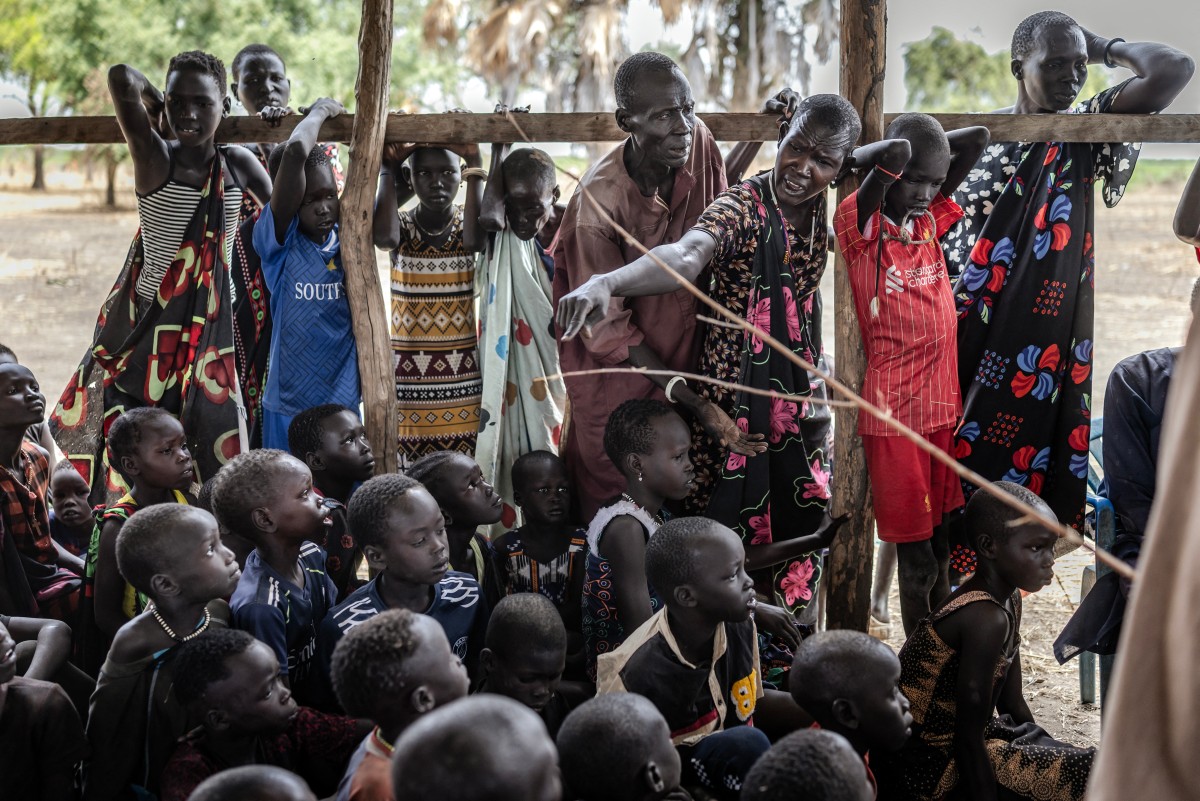
A girl from the Dinka community sits on a tree branch where people have hung their belongings as others gather under its shade at an informal site where displaced people have assembled without assistance or shelter at Yolakot informal camp near Mingkaman, on February 14, 2026.
Photo Credit: AFP
“The 2018 agreement was signed between those two factions, but the region has continued to experience cycles of violence. Over time, the opposition umbrella expanded to include various distinct ethnic groups. Today, you have the government forces, which comprise the national army called the South Sudan People’s Defence Forces
(SSPDF), pitted against opposition forces made up of various rebel groups, militias, and diverse ethnic backgrounds.
In 2025, this ethnic and political divide escalated severely once again. The current wave of violence has impacted almost the entire country. According to the World Food Programme (WFP), it has reached a point where up to 70 per cent of the population is now facing severe food shortages.
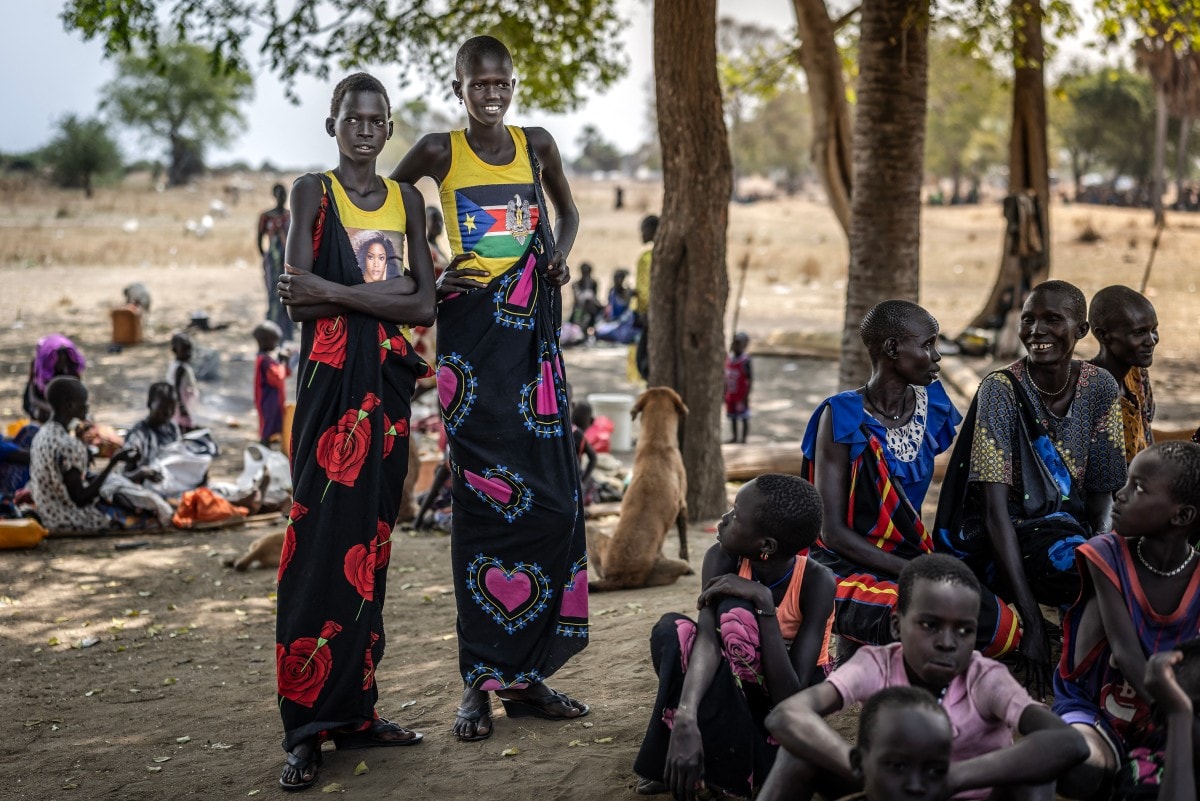
Girls from the Dinka community gather under the shade of a tree at an informal site where displaced people have assembled without assistance or shelter at Yolakot informal camp near Mingkaman, on February 14, 2026.
Photo Credit: AFP
Who Are The Actors
The conflict has taken on a deadlier character with the sharp rise in airstrikes. Armed Conflict Location & Event Data Project (ACLED) figures show 138 airstrikes in 2025, compared with just two in 2024. Another 18 were recorded in the first three months of 2026, mostly in Jonglei.
Government forces (SSPDF) and allied Ugandan troops (UPDF) are the only actors with air capability. Strikes have concentrated in opposition-held Nuer areas of Jonglei and Upper Nile.
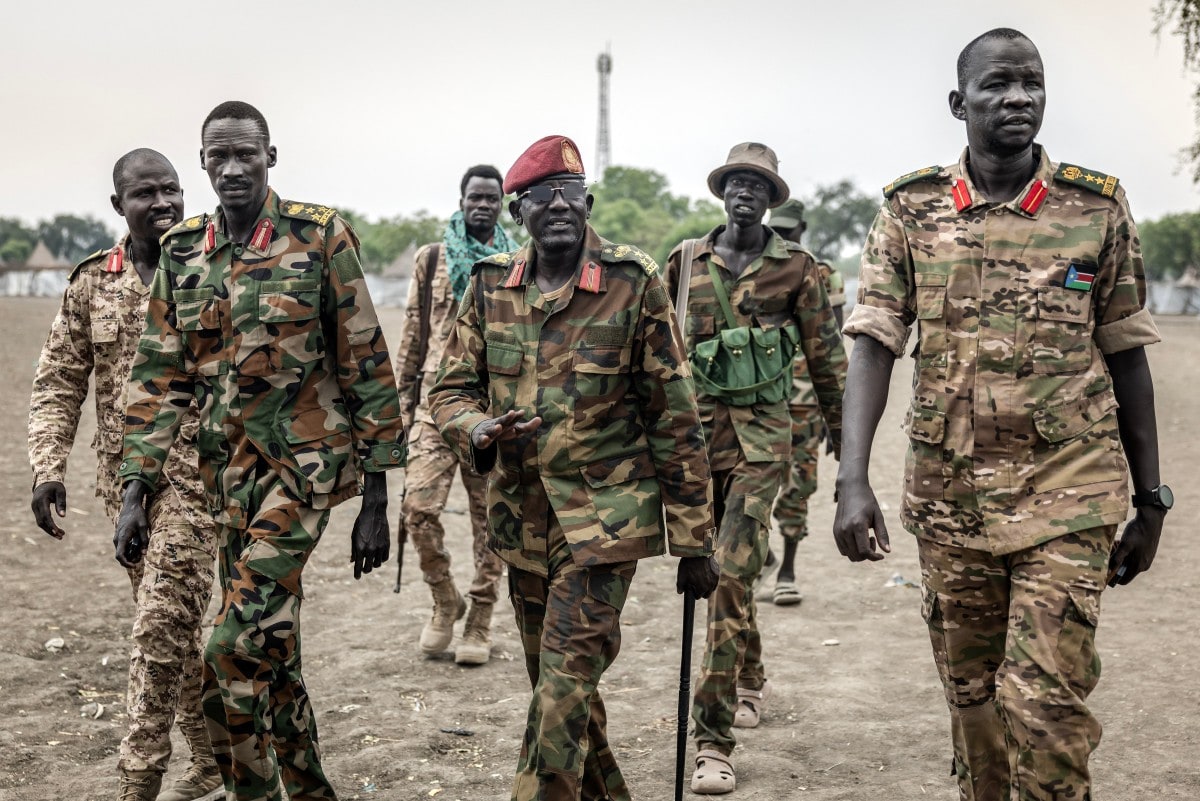
Members of the South Sudan People’s Liberation Army in Opposition (SPLA-IO) surround a general as they walk toward their base in the strategic opposition-controlled town of Akobo, Jonglei State, on February 12, 2026.
Photo Credit: AFP
In March 2025, after clashes in Nasir, Upper Nile, multiple airstrikes along the Sobat Corridor killed and injured civilians.
MSF’s Ulang hospital received 34 patients, including 11 with burns. Five women and a 70-year-old woman with 90 per cent burns were among those treated; civilian structures, including a market, nutrition clinic and an MSF-supported health centre in Kuich, were hit.
In March 2026, an attack on Dinka communities in Abiemnhom, Ruweng, left MSF teams treating 84 patients, mostly with gunshot wounds, including 23 women and girls and 11 children under 15.
Local authorities reported nearly 180 deaths; 20,000 people were displaced. In Adong, Baliet County, reprisal attacks killed dozens, with MSF receiving 49 gunshot victims, including pregnant women and children.
The Cost Of War
According to the MSF’s own data, in 2025, it treated 6,095 people for violence-related injuries and trauma, up from 4,765 the previous year. In January and February 2026 alone, the organisation had already cared for more than 1,800 patients affected by violence, including over 885 survivors of SGBV.
Among weapon-wounded patients in 2025, 16 per cent were women and girls, and 13 per cent were children under 15. Gunshot wounds dominated, with 3,479 patients treated for gunshot, knife and blast injuries – a sharp rise from 2,485 in 2024. Blast injuries, often linked to airstrikes and explosive remnants of war, accounted for 409 cases.
SGBV cases are particularly alarming. MSF provided care to 2,616 survivors in 2025 across 11 projects, with 96 per cent being women and girls and 3 per cent under the age of 15. Only 29 per cent reached care within the critical 72-hour window.
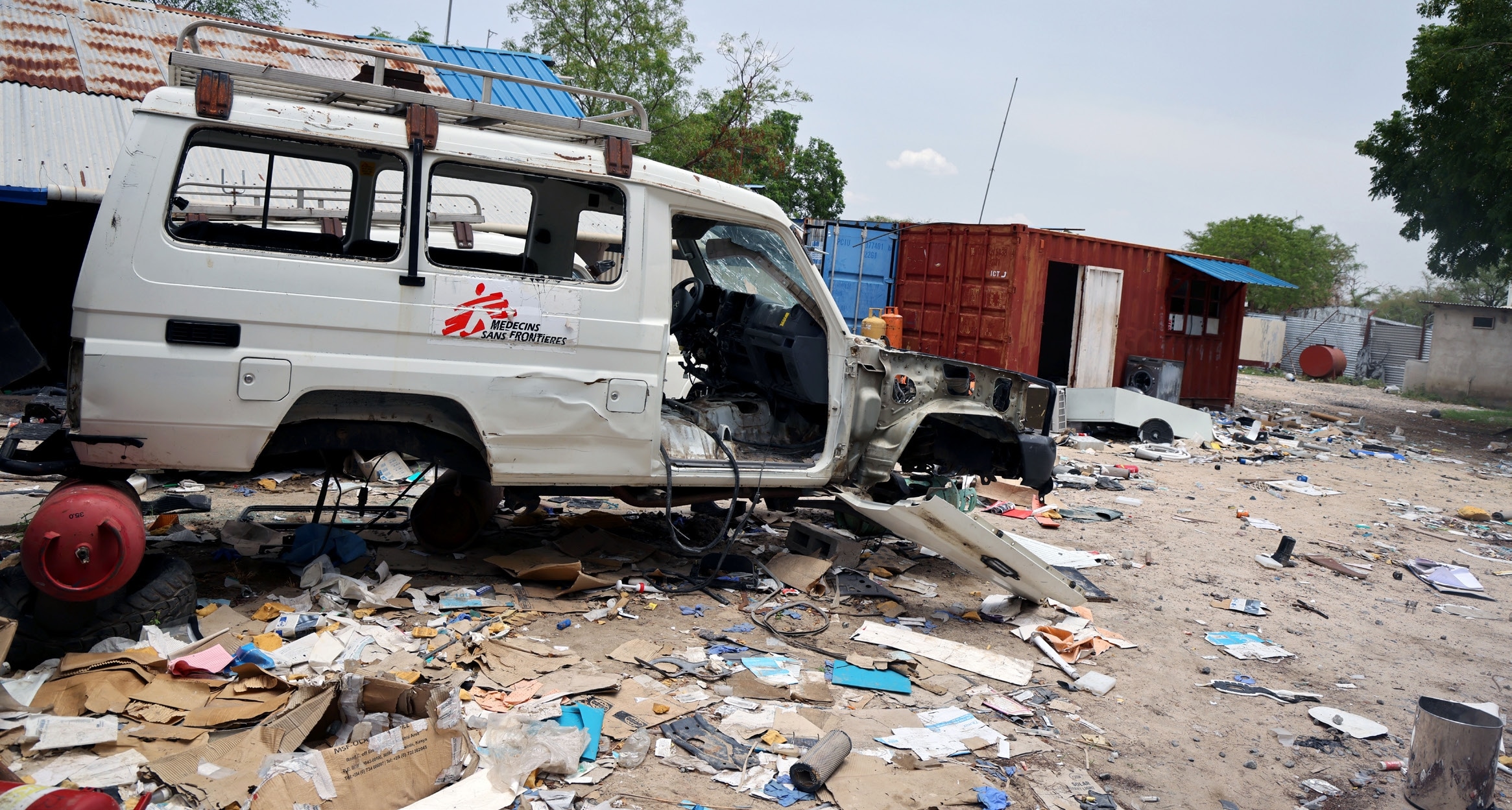
Photo Credit: MSF
In the first three months of 2026, more than 885 SGBV survivors had already sought help.
“What we are seeing since the beginning of 2025 is that the attacks have intensified,” he said. “Unfortunately, common people are the ones facing the brunt of it.”
The violence, he said, cannot be reduced to a single cause.
The opposition itself has splintered into multiple militias and ethnic factions, while government forces continue operations across contested areas. Earlier this year, the arrest of Machar renewed fears that South Sudan could slide back into full-scale civil war. He and 20 others are currently on trial on charges including treason linked to militia raids in the northeast. They deny the allegations.
The United Nations warned earlier this year that South Sudan stood at “a dangerous point”. For civilians, those warnings translate into displacement on a vast scale.
Photo Credit: MSF
“In northern Jonglei alone, where our teams were present, we are talking about over 300,000 people displaced,” Yashovardhan told NDTV. “Just in one state.”
MSF has suspended or evacuated from multiple sites, including Lankien, Pieri, Akobo, Nasir and Ulang. The Malakal hospital remains one of the few with surgical capacity in the region. Overall, humanitarian space is “shrinking to an alarming degree,” the organisation said.
Hundreds of thousands have fled. In Jonglei alone, waves of displacement followed offensives such as “Operation Enduring Peace” launched in January 2026. Families describe running through bush under fire, leaving elderly and disabled relatives behind, losing children to drowning or kidnapping, and surviving on wild fruits and rainwater.
By April 2026, an estimated 418,775 people were displaced internally or to Ethiopia, facing dire shortages of food, water, shelter and healthcare.
In Leer, Unity state, MSF treated 202 SGV survivors in a three-week period straddling December 2025 and January 2026, many linked to village attacks. Perpetrators include soldiers from all sides, armed youth and unidentified men. Survivors report gang rapes, death threats and humiliation tactics. In displacement, women-headed households face heightened risks when foraging for food or firewood.
MSF has treated at least 12 victims, including young men held in dire conditions with beatings and food deprivation, women and girls subjected to domestic and sexual slavery, and children taken by Murle groups.
Families fear speaking out due to reprisals.