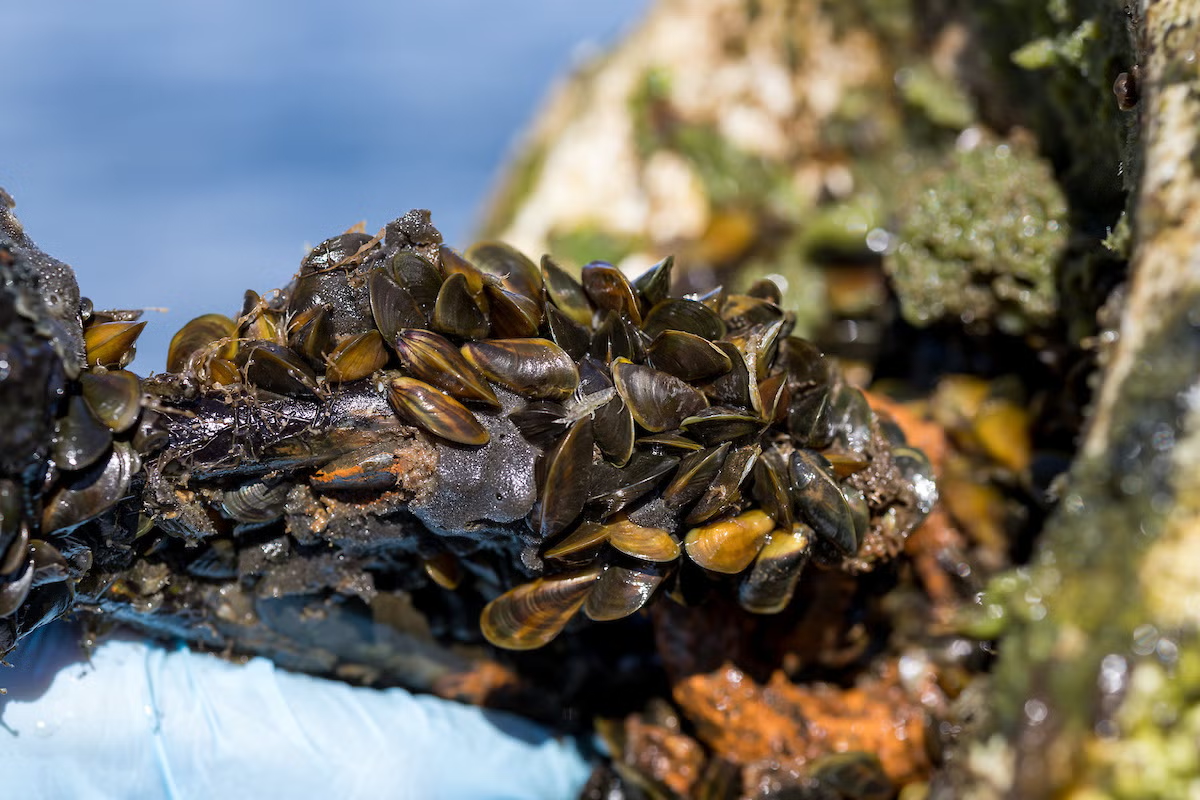
A destructive invasive species is threatening America’s West Coast — and it may not be what you think.
Pipe-clogging golden mussels have forced a state of emergency in California’s San Joaquin and Kern Counties, affecting water quality and key water infrastructure, including a $100 million floodgate.
“The threat is real,” Sam Blue, with the Arvin-Edison Water Storage District, told Kern county supervisors at a meeting earlier this month, noting that the mussels move “with terrifying speed” and that a single female can produce over one million eggs each year.
The county has already spent $3 million on a chemical eradication campaign after the yellowish-brown mussels were discovered in the Sacramento–San Joaquin Delta in 2024, according to KGET. They’ve since been found hitchhiking on the hull of a boat in Oregon waters, sparking fears about additional spread to Washington.
“Since 2024, golden mussels have spread south of the Sacramento-San Joaquin Delta, but the Oregon interception confirms an active pathway north for golden mussels through movement of contaminated recreational boating and aquatic equipment,” Washington’s Department of Fish and Wildlife wrote in a blog post on Medium. “No longer a distant threat, the risk that golden mussels could be introduced to our waters is significant.”
For people living in threatened areas, the Asian mollusks could affect water flow to homes and food production.
Growing up to two inches long, invasions of the freshwater species – which can survive short periods in saltwater, too – can also lead to water body closures and costly repairs for boats and hydroelectric facilities.
And, they can further threaten humans and other animals by raising the risk of harmful algal blooms that kill native species of fish.
That’s because the mussels are filter feeders, the California Department of Fish and Wildlife says. They consume large qualities of microscopic aquatic plants and animals that native species depend on, the Central Oregon Daily News notes.
A similar link was found in two other invasive species of mussels, known as zebra and quagga mussels.
But unlike zebra and quagga mussels, which spread by falling off and reattaching to hard surfaces, golden mussels have the ability to swim. That means they are better at moving into places they aren’t wanted and forming what Washington authorities call “dense carpets.”
They “actually decide when they want to hop up, swim around and move,” Nathan Richey, an Aquatic Invasive Species Technician with Oregon’s Department of Fish and Wildlife, told the Central Oregon Daily News.
So, how can people fight them off?
Boat, kayak, paddleboard and other watercraft owners can prevent mussel spread by removing any visible animals attached to their boat before leaving that area of the water, draining any water-containing devices and drying everything for at least five days.
Owners can have their vessel inspected by the state, as well. An inspection stopped a boat headed for California’s beloved Lake Tahoe just in time last May, the non-profit Keep Tahoe Blue said.
Recently, Congressman Vince Fong said he had secured $5 million for an inspection and prevention program to protect Central Valley water infrastructure.
Prevention is crucial to stopping this species, all authorities say.
“Preventing introduction is far more effective – and far less costly – than managing an established population of golden mussels. Once invasive mussels take hold, eradication is often not possible,” the Washington Department of Fish and Wildlife warns.
More details here...