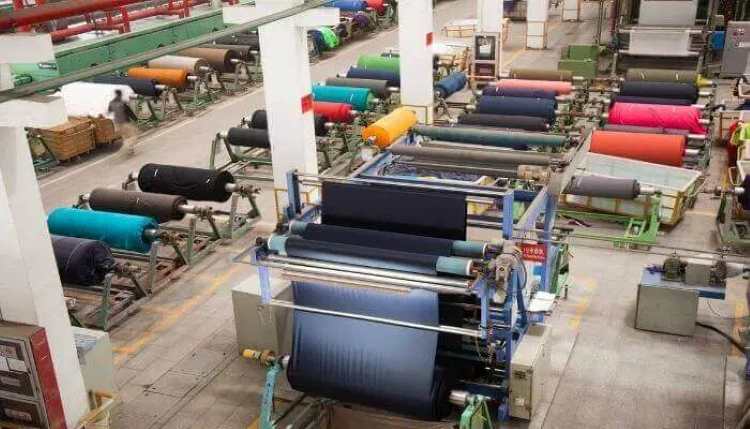
The federal government has intensified efforts to revive Nigeria’s Cotton, Textile and Garment (CTG) industry following a sharp decline in cotton production from about 200,000 metric tonnes in 2001 to roughly 10,000 metric tonnes in 2025.
Senator John Enoh, minister of state for industry disclosed this during the National CTG value chain Activation pilot milestone event, where the government unveiled plans aimed at repositioning the textile sector as a major driver of industrialisation, job creation and economic diversification.
Enoh said the collapse in cotton production had weakened Nigeria’s industrial base and contributed to the decline of a sector that once employed hundreds of thousands of Nigerians.
He, however, expressed optimism that ongoing reforms and pilot initiatives would restore confidence in the industry and rebuild an integrated cotton-to-garment value chain capable of competing globally.
According to him, the pilot scheme has already demonstrated that cotton can be cultivated, processed and transformed into finished garments locally within six to seven months.
The minister revealed that the initiative successfully produced 10,000 made-in-Nigeria T-shirts using locally grown cotton, describing the achievement as proof that the country has the capacity to manufacture garments competitively.
“The initiative has proven that Nigeria can produce garments at better quality, better pricing and in larger quantities than imported alternatives,” Enoh said.
He added that the Federal Government was moving beyond policy discussions to practical implementation aimed at reviving local industries and reducing dependence on imported clothing.
“What you have seen today is not a concept note or policy proposal. It is proof that these things are possible and are already happening,” he stated.
Enoh explained that the CTG sector remains central to the implementation of Nigeria’s Industrial Policy introduced earlier this year, noting that reviving the textile industry would stimulate manufacturing activities, strengthen local supply chains and expand employment opportunities.
He also identified poor coordination among cotton farmers, textile manufacturers and garment producers as a major challenge affecting the sector.
According to him, previous interventions failed because they focused on isolated segments of the industry instead of building an integrated production system.
“The problem is not entirely funding or infrastructure. The real issue is that the value chain was never designed to function as one coordinated system,” he said.
The minister said the government would scale up the initiative by improving market linkages, strengthening financing structures and supporting smallholder cotton farmers across the country.
He disclosed that the Bank of Agriculture had indicated readiness to finance cotton production, especially for smallholder farmers.
Also speaking, Chris Osa Isokpunwu, permanent secretary of the federal ministry of industry, trade and investment described the initiative as a strategic intervention designed to revive the textile industry, deepen economic diversification and create large-scale employment opportunities.
He said the CTG sector has the potential to generate more than 1.5 million jobs annually, particularly for women and youths, while boosting Nigeria’s competitiveness under the African Continental Free Trade Area.